ASTRONOMY
idea-no-tane の全引用から選んだ超精選による、概念ごとの読み物。
入口 THE WORD
この概念が扱うのは、星空を読むとはどういう営みか、という問いである。星の巡りに法則を読むのか、神の秩序を読むのか、それとも人間の運命を読むのか。場面の声は、天空は放っておけという声から、星空への畏敬までをめぐって争う。
語源 ― astron(星)+ nomos(法)
英語の astronomy は、ギリシャ語の astronomia に由来し、astron(星)+ nomos(法、秩序)の組み合わせで、「星の法」を意味する(Wikipedia「Astronomy」)。星々はばらばらに光るのではなく、割り当てられた秩序に従って巡る——その秩序を読むことが、この学の名に刻まれている。もっとも、歴史の大部分において、この「法を読む」営みは、星の位置が地上の出来事や運命を示すと考える占星術(ギリシャ語で astrologia)と分かれてはいなかった。両者が別の営みとして線引きされるのは、近代になってからのことである。場面で争われる境界線は、この古い一体性の中に引かれる。
日本語の「天文」 ― 天の文を読む営み
日本語の「天文」は漢語以来の古い語で、「天の文(あや)」、すなわち天空に現れる現象そのものを指し、あわせてそれを読む学をも指した。『漢書』芸文志では、天文とは、二十八宿の順序を定め、日月と五星の運行を測って吉凶の象を記録し、聖王の政治に資するものと定義されていた——星を読むことは、暦を作ることと、兆しを読むことを兼ねていた。日本では奈良時代から室町時代まで、天文学を表す語は「天文」だけだった。江戸時代になると、「天文」に現象と学の二義があって紛らわしいことを避けるため、「天学」「星学」「天文学」が現れ、やがて「天文学」に収まっていった(梶原滉太郎「『天文学』の語史」、国立国語研究所)。
場面 THE SCENE
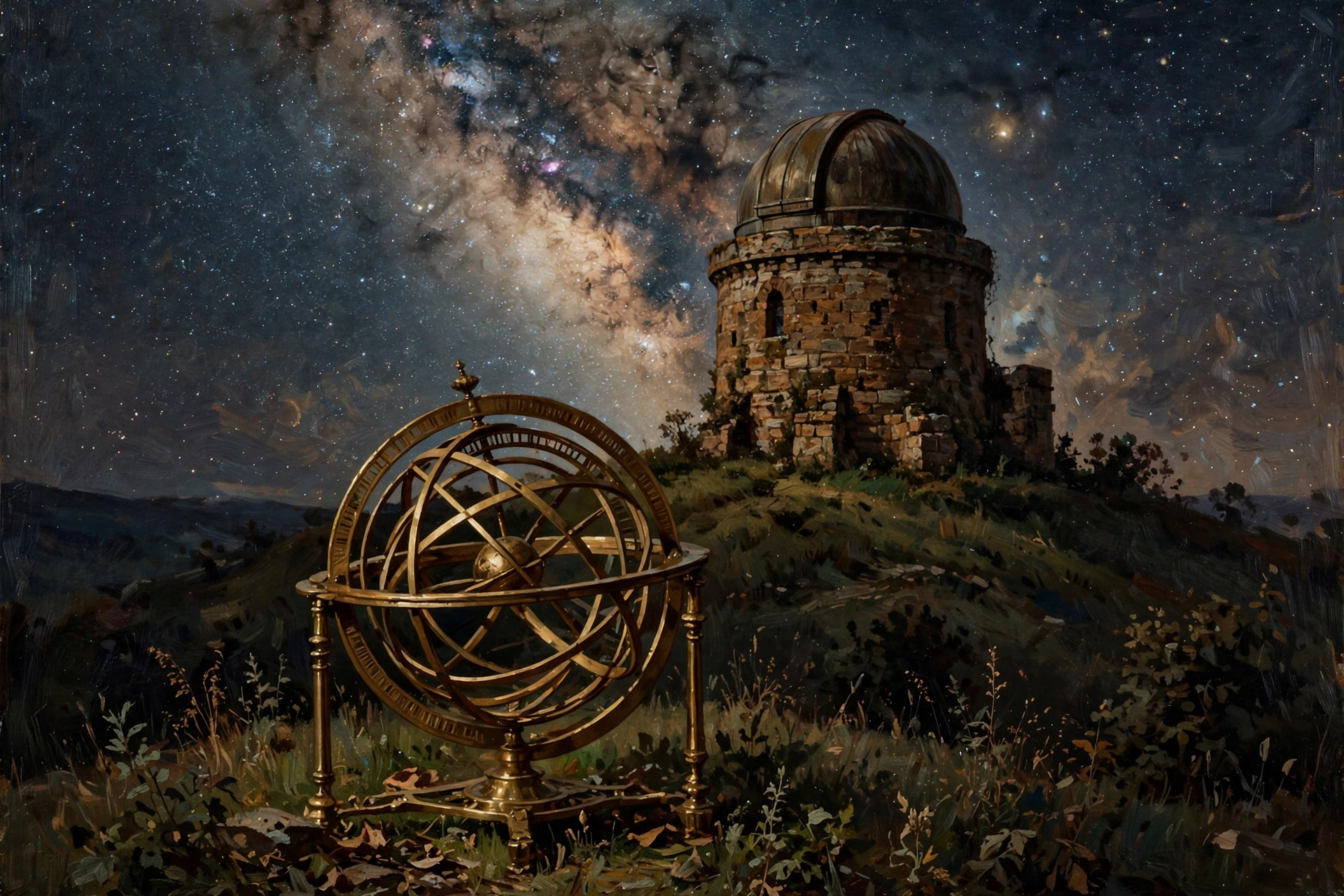
この絵について
描かれているのは、夜の丘の上に立つ石造りの天文台の塔と、その手前に置かれた大きな真鍮の渾天儀(天球の輪を組み合わせた器)である。頭上には天の川が流れ、無数の星が瞬いている。人は描かれていない。
この渾天儀は、入口で見た天文学の像である。天文学の名は「星の法」を意味した。渾天儀は、その法——天球の秩序——を地上に写し取った小さな模型である。場面で争われるのは、その秩序をどう読むかである。放っておくべき見かけか、神の設計の証しか、それとも地上と同じ法則の現れか。
※モチーフは、「天文学」について一般に共有されている像(星空と、それを測る器)を既定として選んだ。絵は差し替え可能とする。
天文学とは何か。——最初に口を開いたのはソクラテスだった。天文学においても幾何学と同じく、問題を用いるべきであり、正しい仕方でこの主題に近づき、理性という生まれつきの贈り物を本当に役立てようとするなら、天空のほうは放っておくべきなのだ、と。見える星空は出発点の模型にすぎず、学の仕事はその背後の比例を理性で探ることとして置かれて始まった。
Socrates(ソクラテス)立てる ― 天空は放っておき、問題と理性によって真の比例を探るべきである
では、と私は言った、天文学においても幾何学と同じく、問題を用いるべきであり、正しい仕方で この主題に近づき、理性という生まれつきの贈り物を本当に役立てようとするなら、天空のほうは 放っておくべきなのだ。
原文
Then, I said, in astronomy, as in geometry, we should employ problems, and let the heavens alone if we would approach the subject in the right way and so make the natural gift of reason to be of any real use.
— Plato『The Republic』 BOOK VII(Benjamin Jowett 訳) / `plato_republic#L19651`
バルブスは、その秩序の読み方を神の側へ向けた。彼の第四の原因、しかも最も強力な原因は、天の運動と回転の規則性、太陽、月、あらゆる星々の明瞭さ、多様性、美、秩序から引き出される。それらを一目見るだけで、偶然の結果ではないと確信するに十分である。家や法廷に入って秩序を見れば、命令を下し服従を受ける何者かがいると結論するのと同じだ、と。星の巡りは、それを整えた知性の証しとして読まれた。
Balbus(バルブス)秩序の側 ― 天の運動の規則性と美は、それを整えた知性を示す
彼の第四の原因、しかも最も強力な原因は、天の運動と回転の規則性、太陽、月、あらゆる星々の 明瞭さ、多様性、美、秩序から引き出される。 それらを一目見るだけで、偶然の結果ではないと確信するに十分である。 われわれが家、学校、法廷に入り、その正確な秩序、規律、仕組みを見るとき、原因もなくそのよ うに整えられているとは考えられず、命令を下し服従を受ける何者かがいると結論せざるをえない のと同じである。
原文
His fourth cause, and that the strongest, is drawn from the regularity of the motion and revolution of the heavens, the distinctness, variety, beauty, and order of the sun, moon, and all the stars, the appearance only of which is sufficient to convince us they are not the effects of chance; as when we enter into a house, or school, or court, and observe the exact order, discipline, and method of it, we cannot suppose that it is so regulated without a cause, but must conclude that there is some one who commands, and to whom obedience is paid.
— Cicero『On the Nature of the Gods』 BOOK II(Charles Duke Yonge 訳) / `cicero_nature_of_the_gods#L9030`
コッタは、同じ対話の中でその推論を切り返した。もし月が神であるなら、明けの明星も、他の惑星も、すべての恒星も神である。ではなぜ虹をその数に入れてはならないのか、と。秩序あるものをすべて神と呼ぶなら、神の数は際限なく増える——設計の読みは、線引きの問いに突き当たった。
Cotta(コッタ)覆す ― 月が神であるなら、なぜ虹を神の数に入れないのか
もし月が神であるなら、明けの明星も、他の惑星も、すべての恒星も神である。 ではなぜ虹をその数に入れてはならないのか。
原文
If the moon is a Deity, the morning-star, the other planets, and all the fixed stars are also Deities; and why shall not the rainbow be placed in that number?
— Cicero『On the Nature of the Gods』 BOOK III(Charles Duke Yonge 訳) / `cicero_nature_of_the_gods#L11671`
ニュートンは、その争いの外に、別の決着の形を示した。第三編では、前二編で数学的に論証した命題によって、天体現象から、物体を太陽と個々の惑星へ向かわせる重力を導き出す。次いでこれらの力から、惑星、彗星、月、海の運動を演繹する、と。天の秩序は、神の証しとしてではなく、地上の物体と同じ法則の現れとして読まれるようになった。
Isaac Newton(ニュートン)法則の側 ― 天体現象から重力を導き、惑星と彗星と月の運動を演繹する
第三編では、「世界体系」の説明においてこの例を示す。 すなわち、前二編で数学的に論証した命題によって、第三編では天体現象から、物体を太陽と個々 の惑星へ向かわせる重力を導き出す。次いでこれらの力から、同じく数学的な別の命題によって、 惑星、彗星、月、海の運動を演繹する。
原文
In the third book we give an example of this in the explication of the System of the World; for by the propositions mathematically demonstrated in the former books, we in the third derive from the celestial phænomena the forces of gravity with which bodies tend to the sun and the several planets. Then from these forces, by other propositions which are also mathematical, we deduce the motions of the planets, the comets, the moon, and the sea.
— Isaac Newton『Newton's Principia: The Mathematical Principles of Natural Philosophy』(Andrew Motte 訳) / `newton_principia#L2273`
最後にカントが、星空を人間の内側へ返した。二つのものが、それについて考えれば考えるほど、常に新しく増大する驚嘆と畏敬で精神を満たす。すなわち、われわれの上なる星空と、われわれの内なる道徳法則である、と。放っておけと言われた天空は、法則の対象となり、設計の証しとなり、最後に畏敬の源として戻ってきて、議論は締められた。
Immanuel Kant(カント)締め ― われわれの上なる星空と、われわれの内なる道徳法則
二つのものが、それについてより頻繁に、より絶えず考えれば考えるほど、常に新しく増大する驚 嘆と畏敬で精神を満たす。すなわち、われわれの上なる星空と、われわれの内なる道徳法則である。 私は、それらが闇に覆われているか、私の地平線を越えた超越的な領域にあるかのように探し求め たり推測したりする必要はない。それらを目の前に見て、私の存在の意識と直接結びつける。
原文
Two things fill the mind with ever new and increasing admiration and awe, the oftener and the more steadily we reflect on them: the starry heavens above and the moral law within. I have not to search for them and conjecture them as though they were veiled in darkness or were in the transcendent region beyond my horizon; I see them before me and connect them directly with the consciousness of my existence.
— Immanuel Kant『The Critique of Practical Reason』 SECOND PART(Thomas Kingsmill Abbott 訳) / `kant_critique_of_practical_reason#L6329`
放っておくべき模型としての天空、設計の証しとしての秩序、神格化への反駁、地上と共通の法則、そして内なる道徳法則と並ぶ星空。——星空の姿は、声ごとに違う読み方で描かれた。
控えの一句 ON THE BENCH
Thomas Aquinas(トマス・アクィナス)
軸3(天文学と占星術の境界) ― 干ばつや雨など、天体によって引き起こされる未来のことを予知するために星を観察するのは、不法な占いでも迷信的な占いでもない。しかし未来の人間の行為を確実に知るために星を観察するのは、迷信的で不法な占いとなる。境界は「星が引き起こすこと」と「星が決めること」のあいだに引かれる
したがって、偶発的またはたまたま起こる未来の出来事を予知するため、あるいは未来の人間の行 為を確実に知るために星を観察するなら、その行いは偽りで空しい意見に基づく。 そしてそこには悪霊の働きが入り込むので、それは迷信的で不法な占いとなる。 他方、天体によって引き起こされる未来のこと、たとえば干ばつや雨などを予知するために星の観 察を用いるなら、それは不法な占いでも迷信的な占いでもない。
原文
Accordingly if anyone take observation of the stars in order to foreknow casual or fortuitous future events, or to know with certitude future human actions, his conduct is based on a false and vain opinion; and so the operation of the demon introduces itself therein, wherefore it will be a superstitious and unlawful divination. On the other hand if one were to apply the observation of the stars in order to foreknow those future things that are caused by heavenly bodies, for instance, drought or rain and so forth, it will be neither an unlawful nor a superstitious divination.
— Thomas Aquinas『Summa Theologica, Part II-II (Secunda Secundae)』 II-II, Q. 95, Art. 5(Fathers of the English Dominican Province 訳) / `aquinas_summa_secunda_secundae#L41606`
Blaise Pascal(パスカル)
軸5/軸2 ― ローマがガリレオへの断罪の教令を得ても、地球が静止していることの証明にはならない。確かな観測によって地球の回転が証明されるなら、全人類の議論を合わせても、我々の惑星が回るのを止めることはできない。権威による断罪と観測の対決。なお和文に省略記号(……)がある
あなた方がローマからガリレオに対する断罪の教令を得たことも、同様に無益だった。 地球の運動に関する彼の意見を断罪したところで、地球が静止していることの証明にはならない。…… もし確かな観測によって、回っているのは太陽ではなく地球だと証明されるなら、全人類の努力と 議論を合わせても、我々の惑星が回るのを止めることはできず、彼ら自身がそれとともに回るのを 止めることもできない。
原文
It was to equally little purpose that you obtained against Galileo a decree from Rome, condemning his opinion respecting the motion of the earth. It will never be proved by such an argument as this that the earth remains stationary; and if it can be demonstrated by sure observation that it is the earth and not the sun that revolves, the efforts and arguments of all mankind put together will not hinder our planet from revolving, nor hinder themselves from revolving along with her.
— Blaise Pascal『The Provincial Letters』 Letter XVIII(Thomas M'Crie 訳) / `pascal_provincial_letters#L14398`
John Stuart Mill(ミル)
軸1 ― 惑星が楕円を描いて動くという主張は、観察された事実を表現する一つの仕方、ただの照合にすぎない。一方、惑星が太陽へ引かれる傾向をもつという主張は、帰納によって推論された新しい事実の陳述である。見ることと推すことの区別
惑星が楕円を描いて動くという主張は、観察された事実を表現する一つの仕方にすぎず、ただの照 合であった。一方、惑星が太陽へ引かれる、あるいは向かう傾向をもつという主張は、帰納によっ て推論された新しい事実の陳述であった。
原文
The assertion that the planets move in ellipses, was but a mode of representing observed facts; it was but a colligation; while the assertion that they are drawn, or tend, toward the sun, was the statement of a new fact, inferred by induction.
— John Stuart Mill『A System of Logic, Ratiocinative and Inductive』 Chapter II / `mill_system_of_logic#L10704`
Arthur Schopenhauer(ショーペンハウアー)
軸4 ― 宇宙の無限の大きさに没入し、夜の天が無数の世界を示すとき、われわれは自分が無へ縮んでいくのを感じる。星空が与える畏敬の、暗い側の姿
空間と時間における宇宙の無限の大きさに没入し、過ぎ去った、あるいは来るべき数千年を思いめ ぐらすとき、また夜の天が実際に無数の世界を目の前へ示し、宇宙の途方もない広大さをわれわれ の意識に押しつけるとき、われわれは自分が無へ縮んでいくのを感じる。 個体として、生きた身体として、意志のはかない現象として、われわれは海の滴のように消え去り、 無へ溶けていくのを感じる。
原文
If we lose ourselves in the contemplation of the infinite greatness of the universe in space and time, meditate on the thousands of years that are past or to come, or if the heavens at night actually bring before our eyes innumerable worlds and so force upon our consciousness the immensity of the universe, we feel ourselves dwindle to nothing; as individuals, as living bodies, as transient phenomena of will, we feel ourselves pass away and vanish into nothing like drops in the ocean.
— Arthur Schopenhauer『The World as Will and Idea (Vol. 1 of 3)』 THIRD BOOK(R. B. Haldane; J. Kemp 訳) / `schopenhauer_world_as_will_v1#L8313`
William James(ジェイムズ)
軸1 ― 「われわれは天の星々をいくつかの群に切り分け、それを星座と呼ぶ」。星座の秩序は、星の側ではなく、分ける側の仕組みであるという一句
われわれは天の星々をいくつかの群に切り分け、それを星座と呼ぶ。 星々は辛抱強くそうされるままになっている――もっとも、もし彼らがわれわれのしていることを 知ったなら、自分に組み合わされた仲間にひどく驚く星もあるかもしれない。
原文
We carve out groups of stars in the heavens, and call them constellations, and the stars patiently suffer us to do so--tho if they knew what we were doing, some of them might feel much surprised at the partners we had given them.
— William James『Pragmatism』 INDIRECTLY OR ONLY POTENTIALLY VERIFYING PROCESSES MAY THUS BE TRUE AS / `james_pragmatism#L4294`