AUTHORITY
idea-no-tane の全引用から選んだ超精選による、概念ごとの読み物。
入口 THE WORD
この概念が扱うのは、人はなぜ人の言うことに従うのか、という問いである。従わせるものは力そのものなのか、それとも「従うべきだ」という承認なのか。場面の声は、権威の定義、服従の根拠、抵抗の可否、そして権威が良心と結びつくときの危うさをめぐって争う。
語源 ― auctor は「始めた者、増し加える者」
英語の authority は、ラテン語の auctoritas に由来する。その核にある auctor は「始めた者、生み出した者、保証する者」で、動詞 augere(増やす、大きくする)から派生した(Merriam-Webster「author」「authority」)。言語学者バンヴェニストによれば、auctor とは「他者の行為や法的状態を増し加えて、確かなものにする者」(is qui auget)である(Wikipedia「Auctoritas」所引)。古代ローマで auctoritas は、元老院や家父長が他者の行為に承認を与えて効力を持たせる力を指し、命令し強制する権力(potestas や imperium)とは区別された。つまり権威の語の底には、「力で従わせる」ではなく「始めた者・保証する者が承認して、行為に効力を与える」という像がある。author(著者)と authority(権威)が同じ語源を分かつのも、このためである。
日本語の「権威」 ― 服従させる威力
日本語の「権威」は、辞書では「他人を服従させる威力」と説明される(デジタル大辞泉)。「権」はもともと秤の分銅(おもり)を指し、はかる基準から転じて力を意味するようになった字であり、「威」は畏れさせる威厳を指す(Wikipedia「権威」)。英語の authority が「承認による効力」の像を底に持つのに対し、日本語の「権威」は「服従させる威力」の像が前面に出る。このずれは、場面でトルストイが「権威とは暴力である」と定義するとき、その言葉が日本語ではいっそうすんなり響く一因かもしれない。
場面 THE SCENE
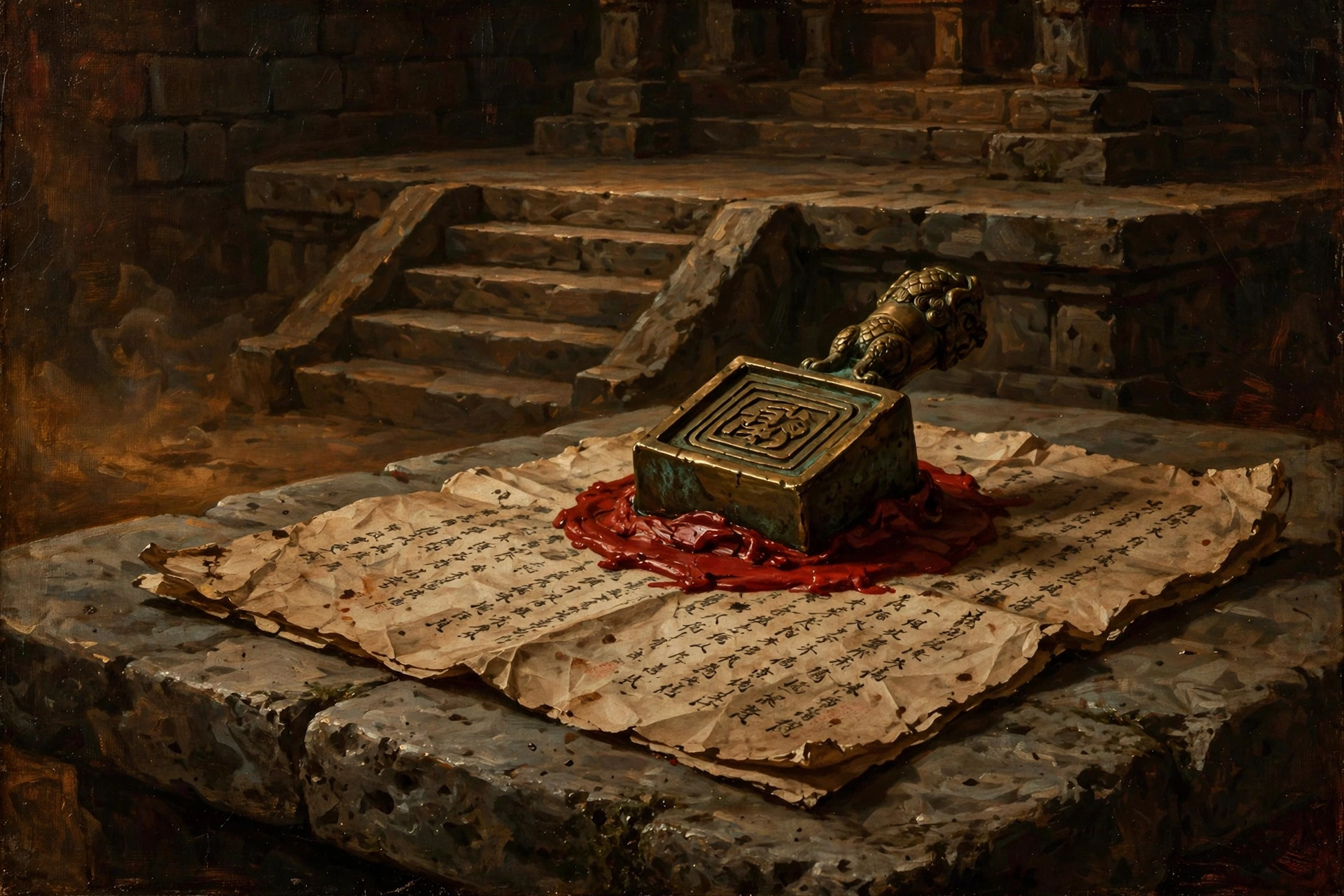
この絵について
描かれているのは、石のテーブルの上に広げられた古い文書と、その上に置かれた大きな青銅の印章である。印章の下には朱い封が広がり、背後には石段の高い壇がそびえている。印を押す者は描かれていない。
この印章は、入口で見た権威の像である。権威の語の底には、「始めた者・保証する者が承認して、他者の行為に効力を与える」という像があった。印章はまさにその器である——それ自体は何も命じないが、印の押された文書は効力を持ち、人はそれに従う。場面で争われるのは、その効力がどこから来るのかである。授けた者の権利か、従う者の同意か、それとも背後にある力か。
※モチーフは、「権威」について一般に共有されている像(効力を与える印章)を既定として選んだ。絵は差し替え可能とする。
権威とは何か。——最初に口を開いたのはホッブズだった。行為者の言葉と行動を自らのものと認める者が授権者であり、行為者は権限によって行動する。何らかの行為を行う権利を権限と呼ぶ。したがって、権限とは常に何らかの行為を行う権利を意味し、権限によってなされるとは、その権利をもつ者からの委任または許可によってなされることを意味する、と。権威はまず、力ではなく、授けられた権利として置かれて始まった。
Thomas Hobbes(ホッブズ)立てる ― 権限とは、授権に基づく行為の権利である
そして、その人格は行為者であり、その言葉と行動を自らのものと認める者が授権者である。 この場合、行為者は権限によって行動する。 財貨と所有物について所有者と呼ばれ、ラテン語でドミヌス、ギリシア語でキュリオスと呼ばれる 者は、行為については授権者と呼ばれるからである。 そして、所有の権利を支配権と呼ぶように、何らかの行為を行う権利を権限と呼ぶ。 したがって、権限とは常に何らかの行為を行う権利を意味し、権限によってなされるとは、その権 利をもつ者からの委任または許可によってなされることを意味する。
原文
And then the Person is the Actor; and he that owneth his words and actions, is the AUTHOR: In which case the Actor acteth by Authority. For that which in speaking of goods and possessions, is called an Owner, and in latine Dominus, in Greeke Kurios; speaking of Actions, is called Author. And as the Right of possession, is called Dominion; so the Right of doing any Action, is called AUTHORITY. So that by Authority, is alwayes understood a Right of doing any act: and Done By Authority, done by Commission, or Licence from him whose right it is.
— Thomas Hobbes『Leviathan』 CHAPTER XVI / `hobbes_leviathan#L5303`
ルソーは、その権利の根拠を問うた。誰にも同胞に対する自然的な権威はなく、力はいかなる権利も生まないのだから、人間の間のすべての正当な権威は約定を基礎にすると結論しなければならない、と。授けられた権利という像は、授ける側の同意なしには立たないものとして置かれた。
Jean-Jacques Rousseau(ルソー)根拠 ― 誰にも自然的な権威はなく、正当な権威はすべて約定に基づく
誰にも同胞に対する自然的な権威はなく、力はいかなる権利も生まないのだから、人間の間のすべ ての正当な権威は約定を基礎にすると結論しなければならない。
原文
Since no man has a natural authority over his fellow, and force creates no right, we must conclude that conventions form the basis of all legitimate authority among men.
— Jean-Jacques Rousseau『The Social Contract & Discourses』 CHAPTER IV(G. D. H. Cole 訳) / `rousseau_social_contract#L1865`
ロックは、その授権に限界を引いた。王の権限も法律によってのみ与えられるので、誰かに法律に反して行動する権限を与えることはできず、権限のないところでの為政者の委任や命令は、私人のものと同じく、無効で無意味である。行動する権利を与えるのは、委任状ではなく権限であり、法律に反する権限はありえない、と。授権は、授けた者への抵抗を封じるどころか、その範囲を越えた力への抵抗の根拠になった。
John Locke(ロック)限界 ― 法律に反する権限はありえず、権限のない命令は無効である
それでも、その権限をもつ者は、たとえ委任状に例外が書かれていなくても、そのために人の家を 破って入ることも、ある日やある場所で王の命令を執行することもできない。 それらは法律の制限であり、それに違反した者は、王の委任状によって免責されない。 王の権限も法律によってのみ与えられるので、誰かに法律に反して行動する権限を与えることも、 そのような行動を委任状によって正当化することもできないからである。 権限のないところでの為政者の委任や命令は、私人のものと同じく、無効で無意味である。 両者の違いは、為政者には一定の範囲と目的について権限があり、私人には全くないことにある。 行動する権利を与えるのは、委任状ではなく権限であり、法律に反する権限はありえないからであ る。しかし、そのような抵抗にもかかわらず、王の身体と権威はともに保護され、したがって、統 治者にも統治にも危険はない。
原文
and yet he that has it cannot break open a man’s house to do it, nor execute this command of the king upon certain days, nor in certain places, though this commission have no such exception in it; but they are the limitations of the law, which if any one transgress, the king’s commission excuses him not: for the king’s authority being given him only by the law, he cannot impower any one to act against the law, or justify him, by his commission, in so doing; the commission, or command of any magistrate, where he has no authority, being as void and insignificant, as that of any private man; the difference between the one and the other, being that the magistrate has some authority so far, and to such ends, and the private man has none at all: for it is not the commission, but the authority, that gives the right of acting; and against the laws there can be no authority. But, notwithstanding such resistance, the king’s person and authority are still both secured, and so no danger to governor or government.
— John Locke『Second Treatise of Government』 CHAPTER. XVIII / `locke_second_treatise#L4319`
トルストイは、その権利の装いを剥いだ。普通に理解される意味での権威とは、人にその欲望に反して行動させる手段である。権威に従う人は、権威によって強いられるとおりに行動する。望まないことをするよう人に強いることができるのは、物理的な力か、その威嚇だけである。すなわち自由の剥奪、殴打、投獄、あるいは容易に実行できるこうした処罰の威嚇である。権威とはこれで成り立ち、つねにこれで成り立ってきた、と。権威は、権利の名を着た暴力として置かれた。
Leo Tolstoy(トルストイ)覆す ― 権威とは、人にその欲望に反して行動させる手段、すなわち暴力である
道徳的影響に動かされる人は、自分の欲するところに従って行動する。 普通に理解される意味での権威とは、人にその欲望に反して行動させる手段である。 権威に従う人は、選ぶとおりではなく、権威によって強いられるとおりに行動する。 望まないことをするよう人に強いることができるのは、物理的な力か、その威嚇だけである。 すなわち自由の剥奪、殴打、投獄、あるいは容易に実行できるこうした処罰の威嚇である。 権威とはこれで成り立ち、つねにこれで成り立ってきた。
原文
The man who is controlled by moral influence acts in accordance with his own desires. Authority, in the sense in which the word is ordinarily understood, is a means of forcing a man to act in opposition to his desires. The man who submits to authority does not do as he chooses but as he is obliged by authority. Nothing can oblige a man to do what he does not choose except physical force, or the threat of it, that is--deprivation of freedom, blows, imprisonment, or threats--easily carried out--of such punishments. This is what authority consists of and always has consisted of.
— Leo Tolstoy『\"The Kingdom of God Is Within You\』 CHAPTER VII(Constance Garnett 訳) / `tolstoy_kingdom_of_god_within_you#L6242`
最後に大審問官が、その力の使い方を静かに告白した。この無力な反逆者たちの良心を、その幸福のために征服し、永遠に捕らえておける力は三つ、ただ三つある。その力とは、奇跡、神秘、権威だ。おまえはその三つとも退け、そうする模範を示した、と。権威は、権利か暴力かという争いの果てに、人の良心そのものを捕らえる力として描かれて、議論は締められた。
Grand Inquisitor(大審問官)締め ― 人の良心をその幸福のために捕らえる力は、奇跡、神秘、権威である
この無力な反逆者たちの良心を、その幸福のために征服し、永遠に捕らえておける力は三つ、ただ 三つある。その力とは、奇跡、神秘、権威だ。 おまえはその三つとも退け、そうする模範を示した。
原文
There are three powers, three powers alone, able to conquer and to hold captive for ever the conscience of these impotent rebels for their happiness—those forces are miracle, mystery and authority. Thou hast rejected all three and hast set the example for doing so.
— Fyodor Dostoyevsky『The Brothers Karamazov』 Chapter V(Constance Garnett 訳) / `dostoyevsky_brothers_karamazov#L11837`
授けられた権利としての権限、約定という根拠、法律による限界、暴力への還元、そして良心を捕らえる力。——権威の姿は、声ごとに違う効力の源で描かれた。
控えの一句 ON THE BENCH
Robert H. Jackson(ジャクソン)
軸6/軸7 ― 「ここでは権威が世論によって統制されるのであって、世論が権威によって統制されるのではない」。国旗への敬礼の強制を退けたバーネット事件の判決で、同意を強制する権威を斥けた一句。なお和文に太字記号(**)の混入がある
アメリカの国家の観念にも、その権威の本性や起源にも、神秘主義は無い。 我々は被治者の同意による政府を打ち立てたのであり、権利章典は権力の座にある者からその同意 を強制するいかなる法的機会も奪っている。 **ここでは権威が世論によって統制されるのであって、世論が権威によって統制されるのではな い。**
原文
There is no mysticism in the American concept of the State or of the nature or origin of its authority. We set up government by consent of the governed, and the Bill of Rights denies those in power any legal opportunity to coerce that consent. Authority here is to be controlled by public opinion, not public opinion by authority.
— Supreme Court of the United States『West Virginia State Board of Education v. Barnette, 319 U.S. 624 (1943)』 West Virginia State Board of Education v. Barnette, 319 U.S. 624 (1943) / `case_west_virginia_state_board_of_education_v_barnette_1943#L381`
Sandra Day O'Connor, Anthony Kennedy, and David Souter(オコナー/ケネディ/スーター)
軸6 ― 「裁判所の力はむしろその正統性のうちにある」。命令への服従を独力で強制できない司法の権威が、人々が司法を受け入れることのうちに成り立つという、ケイシー事件の共同意見。なお和文に太字記号(**)の混入がある
後に続く世代のアメリカ人が正しく教えられているように、**裁判所は金を使ってその判決への 支持を買うことはできず、わずかな程度を除いて、その命令への服従を独力で強制することもでき ない。裁判所の力はむしろその正統性のうちにあり、**それは実質と認識の産物であって、国の 法が何を意味し何を求めるかを決めるにふさわしいものとして人々が司法を受け入れることのうち に現れる。
原文
the Court cannot buy support for its decisions by spending money and, except to a minor degree, it cannot independently coerce obedience to its decrees. The Court's power lies, rather, in its legitimacy, a product of substance and perception that shows itself in the people's acceptance of the Judiciary as fit to determine what the Nation's law means and to declare what it demands.
— Supreme Court of the United States『Planned Parenthood v. Casey, 505 U.S. 833 (1992)』 Planned Parenthood v. Casey, 505 U.S. 833 (1992) / `case_planned_parenthood_v_casey_1992#L1169`
Francis Bacon(ベーコン)
軸8(知的権威を退ければよいのか) ― 「真理は権威の娘ではなく、時間の娘と正しく呼ばれる」。特定の著者に無限の信用を与え、時間にその固有の特権を認めないのは最大の弱さだという、知的権威への線引き。なお出典表記に「([要確認] 訳)」の印がある
権威についていえば、特定の著者に無限の信用を与え、すべての著者の著者であり、したがってす べての権威の著者である時間に、その固有の特権を認めないのは、最大の弱さである。 真理は権威の娘ではなく、時間の娘と正しく呼ばれるからである。 したがって、古代、権威、全員一致という絆が人間の力をこれほど鎖につなぎ、まるで魔法をかけ られたかのように、事物そのものに親しめなくしてきたとしても不思議ではない。
原文
With regard to authority, it is the greatest weakness to attribute infinite credit to particular authors, and to refuse his own prerogative to time, the author of all authors, and, therefore, of all authority. For truth is rightly named the daughter of time, not of authority. It is not wonderful, therefore, if the bonds of antiquity, authority, and unanimity, have so enchained the power of man, that he is unable (as if bewitched) to become familiar with things themselves.
— Francis Bacon『Novum Organum』 ON THE INTERPRETATION OF NATURE AND THE EMPIRE OF MAN([要確認] 訳) / `bacon_novum_organum#L1461`
Immanuel Kant(カント)
軸10(道徳の権威と制裁の源泉) ― 法則の権威を少しでも減らしてはならず、意志の規定原理を、法則そのものと、その法則への尊敬以外のどこかに置いてはならない。自らの理性が与えた権威への服従
われわれは理性の規律の下にあり、すべての格率において、それへの服従を忘れてはならず、何か をそこから取り去ったり、利己的な思い上がりによって、法則の権威を少しでも減らしたりしては ならない。たとえ自らの理性がその権威を与えるとしても、そうである。 それによって、たとえ法則に適合していても、意志の規定原理を、法則そのものと、その法則への 尊敬以外のどこかに置いてはならないのである。
原文
We stand under a discipline of reason and in all our maxims must not forget our subjection to it, nor withdraw anything therefrom, or by an egotistic presumption diminish aught of the authority of the law (although our own reason gives it) so as to set the determining principle of our will, even though the law be conformed to, anywhere else but in the law itself and in respect for this law.
— Immanuel Kant『The Critique of Practical Reason』 CHAPTER III(Thomas Kingsmill Abbott 訳) / `kant_critique_of_practical_reason#L3314`
John Stuart Mill(ミル)
軸11(家族や教育の権威は自立を育てるか) ― 「真の愛情があっても、一方の権威と他方の従属は、完全な信頼を妨げる」。家庭内の権威と従属への、一句の批判
真の愛情があっても、一方の権威と他方の従属は、完全な信頼を妨げる。
原文
Even with true affection, authority on the one side and subordination on the other prevent perfect confidence.
— John Stuart Mill『The Subjection of Women』 CHAPTER I / `mill_subjection_of_women#L977`