EMOTION
idea-no-tane の全引用から選んだ超精選による、概念ごとの読み物。
入口 THE WORD
この概念が扱うのは、心が動くことである。怒り、憐れみ、恐れ、喜び。それは理性に従うべきものか、理性を従えるものか、それとも道徳の根そのものか。場面の声は、感情の地位をめぐって争う。
語源 ― emovere、外へ動かす、かき立てる
英語の emotion は、フランス語の émotion を経て、ラテン語の emovere「外へ動かす、取り除く、揺り動かす」(ex「外へ」+movere「動かす」)に由来する(Etymonline)。英語に入った16世紀の時点では、この語はまず「世間の騒ぎ、動揺」を指していた。心の動きという現在の意味が中心になるのは19世紀初めからである(Oxford Advanced Learner's Dictionary の語源欄)。もともとは社会のざわめきを指す語が、一人ひとりの内面の動きの名になった——この来歴は、感情が個人の内側だけの出来事なのかという場面の問いと、遠くで響き合う。
日本語の「感情」 ― 「情」の射程の広さ
漢字の「情」について、『説文解字』は「情、人の陰氣にして欲ある者なり。心に从い、青聲」と解く。日本語の「感情」は、emotion のほか passion、feeling、sentiment といった射程の違う語の訳語としても使われてきた。総括は、この英語諸語の射程が著者・訳者によって異なり、日本語の一語に重なって収まっていることを未解決の論点として記録している。「感情」という訳語が emotion の翻訳語として定着した経緯の詳細は、未確認である。場面の声を読むときも、同じ「感情」の語が、声ごとに違う広がりを持ちうることを承知しておきたい。
場面 THE SCENE
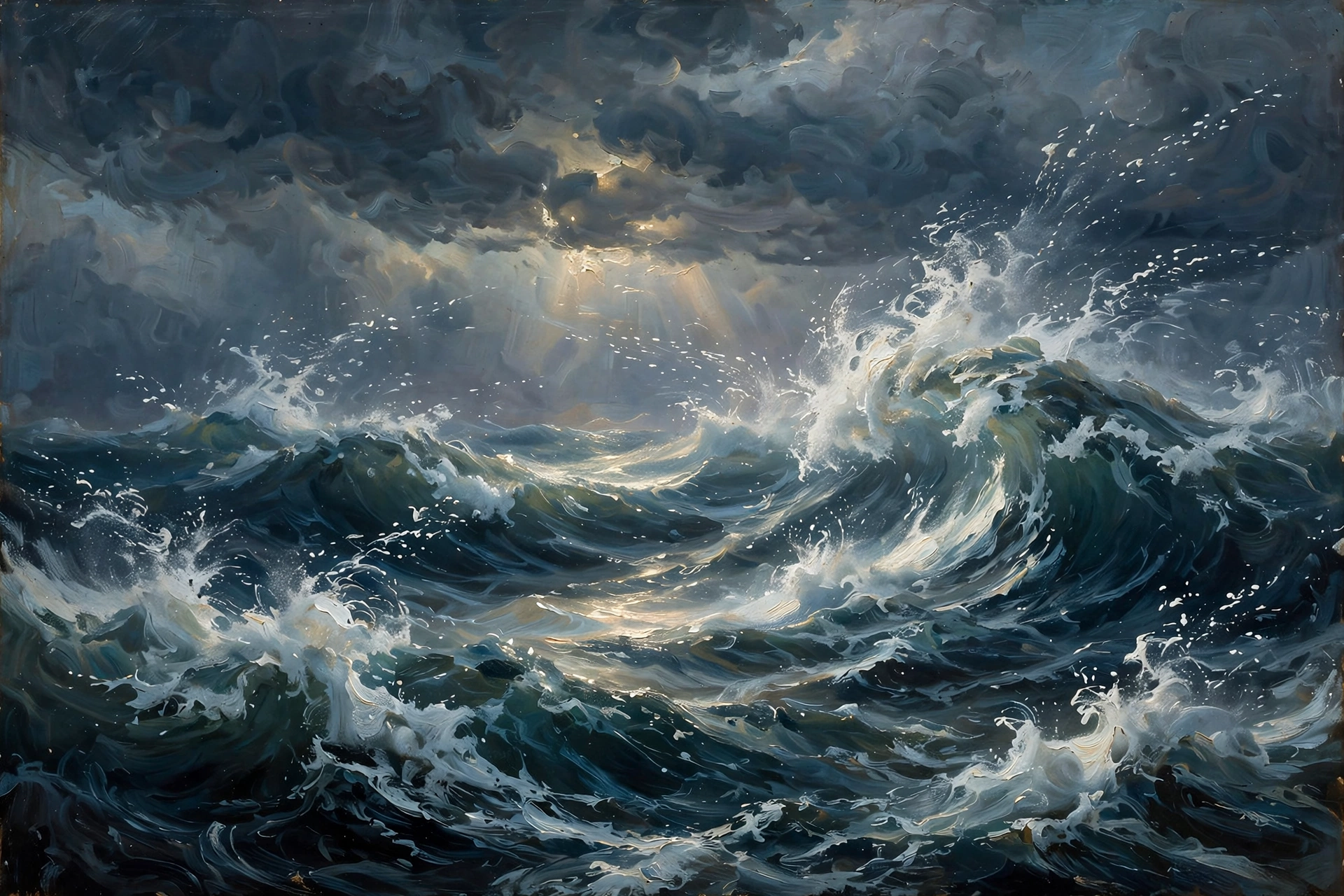
この絵について
描かれているのは、嵐の海である。大きくうねる波が砕け、白い飛沫が風に舞い、暗い雲のあいだから、かすかな光が波間に差している。船も人も描かれておらず、海そのものが画面の主役である。
このうねりは、入口で見た emovere の像である。感情の語の底には「外へ動かす、かき立てる」があった。場面で争われるのは、この動きを鎮めるべきか、理性に仕えさせるべきか、それとも道徳の源として迎えるべきか、である。
※モチーフは、「感情」について一般に共有されている像(心の嵐に喩えられる荒れた海)を既定として選んだ。絵は差し替え可能とする。
感情とは何か。——最初に口を開いたのはアリストテレスだった。感情とは、人々が判断について意見を変える原因となり、快と苦痛を伴うあらゆる情態である。怒り、憐れみ、恐れ、その他同様の感情とその反対がそれにあたる、と。感情は、心を動かすだけでなく、判断まで動かすものとして置かれた。
Aristotle(アリストテレス)立てる ― 感情とは、判断を変え、快と苦痛を伴うあらゆる情態である
感情とは、人々が判断について意見を変える原因となり、快と苦痛を伴うあらゆる情態である。 怒り、憐れみ、恐れ、その他同様の感情とその反対がそれにあたる。
原文
The emotions are all those affections which cause “4, men to change their opinion in regard to their judgements, and are accompanied by pleasure and pain; such are anger, pity, fear, and all similar emotions and their contraries.
— Aristotle『The \"Art\" of Rhetoric』 BK II(John Henry Freese 訳) / `aristotle_rhetoric#L11058`
エピクテトスは、乱れの原因を出来事から考えへ移した。人を乱すのは出来事ではなく、出来事についての考えである。たとえば死は何ら恐ろしいものではない。もし恐ろしいものなら、ソクラテスにもそう見えたはずだからである。死は恐ろしいという考えこそが、恐ろしいものなのだ、と。
Epictetus(エピクテトス)判断へ寄せる ― 人を乱すのは出来事ではなく、出来事についての考えである
人を乱すのは出来事ではなく、出来事についての考えである。 たとえば死は何ら恐ろしいものではない。 もし恐ろしいものなら、ソクラテスにもそう見えたはずだからである。 死は恐ろしいという考えこそが、恐ろしいものなのだ。 だから我々が妨げられたり、乱されたり、悲しんだりするとき、決して他人を責めず、自分自身を ——つまり自分の考えを責めよう。
原文
Men are disturbed not by the things which happen, but by the opinions about the things; for example, death is nothing terrible, for if it were it would have seemed so to Socrates; for the opinion about death that it is terrible, is the terrible thing. When then we are impeded, or disturbed, or grieved, let us never blame others, but ourselves—that is, our opinions.
— Epictetus『A Selection from the Discourses of Epictetus with the Encheiridion』 ENCHEIRIDION(George Long 訳) / `epictetus_discourses#L4625`
ヒュームは、その主従を逆転させた。情念と理性の闘いなどと語るとき、我々は厳密にも哲学的にも語っていない。理性は情念の奴隷であり、ただそうあるべきものであって、情念に仕え従うこと以外のいかなる役目をも主張しえないのだ、と。
David Hume(ヒューム)覆す ― 理性は情念の奴隷であり、ただそうあるべきものである
情念と理性の闘いなどと語るとき、我々は厳密にも哲学的にも語っていない。 理性は情念の奴隷であり、ただそうあるべきものであって、情念に仕え従うこと以外のいかなる役 目をも主張しえない。
原文
We speak not strictly and philosophically when we talk of the combat of passion and of reason. Reason is, and ought only to be the slave of the passions, and can never pretend to any other office than to serve and obey
— David Hume『A Treatise of Human Nature』 BOOK II / `hume_treatise_human_nature#L14357`
スピノザは、感情を身体から定義し直した。感情とは、身体の変状であって、それによってその身体の活動する力能が増大あるいは減少し、促進あるいは阻害されるもの、およびそうした変状の観念のことである、と。感情は、心の騒ぎである前に、力の増減だった。
Baruch Spinoza(スピノザ)定義し直す ― 感情とは、身体の活動する力能を増減させる変状と、その観念である
三。感情とは、身体の変状であって、それによってその身体の活動する力能が増大あるいは減少し、 促進あるいは阻害されるもの、およびそうした変状の観念のことを、私は意味する。
原文
III. By emotion I mean the modifications of the body, whereby the active power of the said body is increased or diminished, aided or constrained, and also the ideas of such modifications.
— Benedict de Spinoza『Ethics』 PART III(R. H. M. Elwes 訳) / `spinoza_ethics#L3659`
最後にニーチェが、道徳の根とされる感情そのものを疑った。同情は進化の法則全体を、すなわち自然淘汰の法則を妨げる。それは滅びるべきものを保存し、生から相続権を奪われ断罪された者たちの側で戦う。人類はあえて同情を徳と呼んできた。同情によって生は否定され、否定に値するものにされる——同情はニヒリズムの技術である、と。
Friedrich Nietzsche(ニーチェ)疑う ― 同情は自然淘汰の法則を妨げ、生を否定に値するものにする
同情は進化の法則全体を、すなわち自然淘汰の法則を妨げる。 それは滅びるべきものを保存し、生から相続権を奪われ断罪された者たちの側で戦う。…… 人類はあえて同情を徳と呼んできた(――あらゆる上位の道徳体系においては同情は弱さとして現 れる――)。……ショーペンハウアーはこの点で正しかった。 同情によって生は否定され、否定に値するものにされる――同情はニヒリズムの技術である。
原文
Pity thwarts the whole law of evolution, which is the law of natural selection. It preserves whatever is ripe for destruction; it fights on the side of those disinherited and condemned by life; by maintaining life in so many of the botched of all kinds, it gives life itself a gloomy and dubious aspect. Mankind has ventured to call pity a virtue (--in every _superior_ moral system it appears as a weakness--); going still further, it has been called _the_ virtue, the source and foundation of all other virtues--but let us always bear in mind that this was from the standpoint of a philosophy that was nihilistic, and upon whose shield _the denial of life_ was inscribed. Schopenhauer was right in this: that by means of pity life is denied, and made _worthy of denial_--pity is the technic of nihilism.
— Friedrich Nietzsche『The Antichrist』 §7(H. L. Mencken 訳) / `nietzsche_antichrist#L816`
判断を変える情態、考えによって乱れる心、情念に仕える理性、力能の増減としての感情、そして疑われる同情。——感情の地位は、声ごとに違う場所に置かれた。
控えの一句 ON THE BENCH
Thomas Aquinas(トマス・アクィナス)
軸1 ― ストア派は怒りとすべての情念を悪とみなしたが、逍遙学派によれば情念は感覚的欲求の動きであり、理性に従って節度を与えられていてもいなくても、常に悪であるわけではない
異論一への答え。ストア派は怒りと他のすべての情念を、理性の秩序に反する情動と呼び、したが って情念を扱った際に先に述べたように(第一部第二篇第二十四問第二項)、怒りと他のすべての 情念を悪とみなした。ヒエロニムスが怒りを考えるのはこの意味においてであり、隣人に不正を加 える意図をもって、その人に怒る怒りについて述べている。 だが、アウグスティヌスが『神の国』第九巻第四章でその見解に傾く逍遙学派によれば、怒りと魂 の他の情念は、理性に従って節度を与えられていてもいなくても、感覚的欲求の動きであり、この 意味では怒りは常に悪であるわけではない。
原文
Reply Obj. 1: The Stoics designated anger and all the other passions as emotions opposed to the order of reason; and accordingly they deemed anger and all other passions to be evil, as stated above (I-II, Q. 24, A. 2) when we were treating of the passions. It is in this sense that Jerome considers anger; for he speaks of the anger whereby one is angry with one's neighbor, with the intent of doing him a wrong.--But, according to the Peripatetics, to whose opinion Augustine inclines (De Civ. Dei ix, 4), anger and the other passions of the soul are movements of the sensitive appetite, whether they be moderated or not, according to reason: and in this sense anger is not always evil.
— Thomas Aquinas『Summa Theologica, Part II-II (Secunda Secundae)』 II-II, Q. 158, Art. 1(Fathers of the English Dominican Province 訳) / `aquinas_summa_secunda_secundae#L63435`
Baruch Spinoza(スピノザ)
軸2 ― 「感情は、それに反対しかつ感情を抑えるより大きな力を持つ別の感情によってしか、抑えられも滅ぼされもしない」。感情には、より強い感情でしか抗えない
定理七。感情は、それに反対しかつ感情を抑えるより大きな力を持つ別の感情によってしか、抑え られも滅ぼされもしない。
原文
PROP. VII. An emotion can only be controlled or destroyed by another emotion contrary thereto, and with more power for controlling emotion.
— Benedict de Spinoza『Ethics』 PART IV(R. H. M. Elwes 訳) / `spinoza_ethics#L6445`
Arthur Schopenhauer(ショーペンハウアー)
軸3 ― 「共苦こそが唯一の非利己的な動機であり、それゆえ唯一の真に道徳的な動機である」。場面のニーチェと正反対の、同情の評価
私がここに立てた真理、すなわち**共苦こそが唯一の非利己的な動機であり、それゆえ唯一の真 に道徳的な動機である**という真理は、奇妙な、実際ほとんど理解しがたい逆説である。 それゆえ私は、それが経験によって、そして人間の感情の普遍的な証言によって裏づけられること を示すことで、読者にとってこれをいくらか異様でないものにしたいと思う。
原文
The truth I have here laid down, that Compassion is the sole non-egoistic stimulus, and therefore the only really moral one, is a strange, indeed almost incomprehensible paradox. I shall hope, therefore, to render it less extraordinary to the reader, if I show that it is confirmed by experience, and by the universal testimony of human sentiment.
— Arthur Schopenhauer『The Basis of Morality』 PART IV(Arthur Brodrick Bullock 訳) / `schopenhauer_basis_of_morality#L5618`
John Stuart Mill(ミル)
軸1 ― 「自然な感情を最も多くもつ者こそ、育成された感情を最も強くできる者である」。強い感受性は、情熱的な徳への愛と最も厳格な自制の源でもある
活力は悪く用いられうるが、怠惰で感情のない本性より、活力ある本性から常により多くの善を引 き出しうる。自然な感情を最も多くもつ者こそ、育成された感情を最も強くできる者である。 個人的な衝動を生き生きと力強くするのと同じ強い感受性が、最も情熱的な徳への愛と最も厳格な 自制を生む源でもある。
原文
Energy may be turned to bad uses; but more good may always be made of an energetic nature, than of an indolent and impassive one. Those who have most natural feeling, are always those whose cultivated feelings may be made the strongest. The same strong susceptibilities which make the personal impulses vivid and powerful, are also the source from whence are generated the most passionate love of virtue, and the sternest self-control.
— John Stuart Mill『On Liberty』 CHAPTER III / `mill_on_liberty#L2637`
Leo Tolstoy(トルストイ)
軸6 ― 「観客や聴衆が、作者の感じた感情に感染しさえすれば、それは芸術である」。芸術を感情の感染と定義する一句
観客や聴衆が、作者の感じた感情に感染しさえすれば、それは芸術である。
原文
If only the spectators or auditors are infected by the feelings which the author has felt, it is art.
— Leo Tolstoy『What Is Art?』 CHAPTER V(Aylmer Maude 訳) / `tolstoy_what_is_art#L2933`