Equity
idea-no-tane の全引用から選んだ超精選による、概念ごとの読み物。
入口 THE WORD
衡平は、法の文言の一般性が個別の事件で不都合を生むとき、それを正す働きの名である。場面の声たちは、衡平が正義の内側にあるのか外側にあるのか、それは規則にできるのか、それを揮うのは誰か、そして衡平は結局固定されてしまうのかをめぐって争う。
語源 ― 「平らで、等しい」こと
equity は古フランス語 equité を経て、ラテン語 aequitas「等しさ、公平」に由来し、その形容詞 aequus は「平らな、等しい、正しい」を意味する(Online Etymology Dictionary)。ラテン語の aequitas は、ギリシア語のエピエイケイア(ἐπιείκεια、自分の権利を厳密には主張しすぎない穏当さ)の通常の訳語として用いられた(同辞典が引く OED の注記)。アリストテレスは『ニコマコス倫理学』第5巻で、衡平を「法が一般性ゆえに欠けるところでの、法の矯正」と定義し、レスボスの建築で使う鉛の定規の比喩を引いた——その定規は硬直せず、石の形に合わせて曲がり、個別の定めは事実に合わせて作られる(1137b)。この比喩が、本ページの絵のモチーフである。
日本語の「衡平」 ― 天秤の梁
日本語の「衡平」の衡は、天秤の梁(はり)を指す。equity の訳語として「衡平」が当てられ、一般的な「公平」とは使い分けられて、個別の事情への目配りを担う法の言葉として定着した。その定着の経緯の詳細は未確認である。
場面 THE SCENE
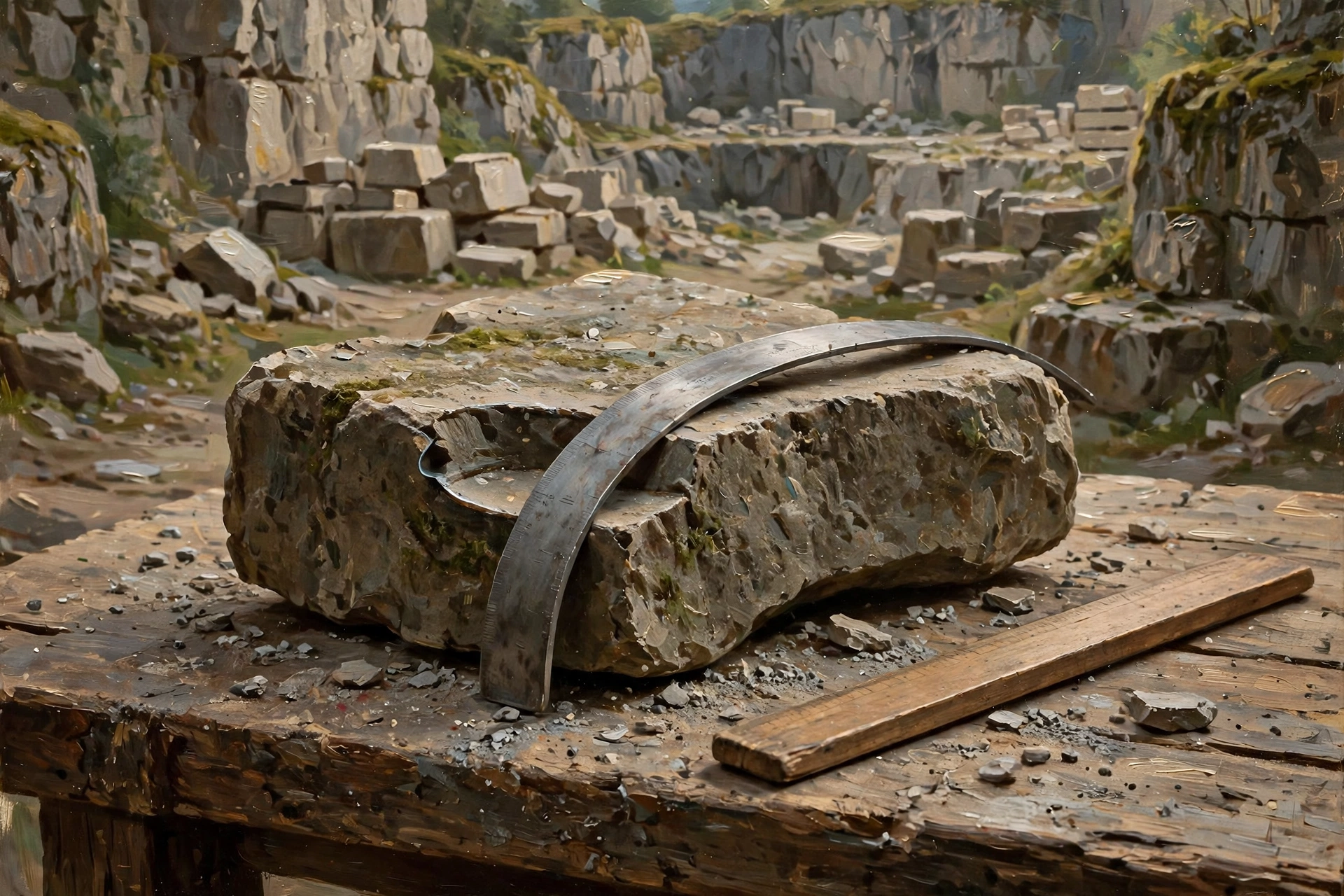
この絵について
石切り場の作業台の上に、不規則な石塊がある。その曲線に沿って、柔らかい金属の定規が曲げられて沿わされている。傍らには、まっすぐで硬い木の定規が置かれている。
アリストテレスは衡平を論じる同じ箇所で、レスボスの建築で使う鉛の定規の比喩を引いた。鉛の定規は硬直せず、石の形に合わせて曲がる。曲がる定規と、曲がらない定規。その対比が、衡平という概念の最も古い像である。
絵はモチーフの置き換えが可能であり、この絵でなければならない必然はない。アリストテレス自身の比喩を、そのまま場面にした。
場面は定義から始まる。アリストテレスは、法が一般的に語り、一般規則の例外である事件が生じたとき、立法者自身がそこに居ればそう裁定するであろうように裁定して欠落を正すのが衡平だと言う。衡平は正義であり、一つの種類の正義より優れている。それは法の外ではなく、法の矯正として正義の内側に置かれる。
アリストテレス(Aristotle)立てる
法が一般的に語り、一般規則の例外である事件が生じたとき、立法者がその事件を欠落させ、その 普遍的言明ゆえに誤っている限りにおいて、立法者自身がそこに居ればそう裁定するであろうよう に、また事件の発生を予見していれば法として定めたであろうように裁定して、その欠落を正すの が適切である。このように衡平は正義であるが、一つの種類の正義より優れている。 抽象的な正義ではなく、普遍的言明から生じる誤りを言うのである。 これが衡平の本性、すなわち「その普遍性ゆえに法が欠陥を持つところでの、法の矯正」である。
原文
When then the law has spoken in general terms, and there arises a case of exception to the general rule, it is proper, in so far as the lawgiver omits the case and by reason of his universality of statement is wrong, to set right the omission by ruling it as the lawgiver himself would rule were he there present, and would have provided by law had he foreseen the case would arise. And so the Equitable is Just but better than one form of Just; I do not mean the abstract Just but the error which arises out of the universality of statement: and this is the nature of the Equitable, “a correction of Law, where Law is defective by reason of its universality.”
— Aristotle『The Nicomachean Ethics of Aristotle』 Chapter XV(D. P. Chase 訳) / `aristotle_nicomachean_ethics#L5413`
アクィナスは、衡平を徳の名で呼ぶ。法の文言を脇に置いて、正義と共通善の命じるところに従うことは善であり、それが我々の衡平と呼ぶエピエイケイアの目的である。したがってエピエイケイアは徳である、と。衡平は制度の仕組みである前に、判断する者の性質として立てられる。
アクィナス(Thomas Aquinas)徳として立てる
これらおよび同様の場合において、法に従うことは悪であり、法の文言を脇に置いて、正義と共通 善の命じるところに従うことは善である。 これが、我々が衡平と呼ぶエピエイケイアの目的である。 したがって、エピエイケイアが徳であることは明らかである。
原文
In these and like cases it is bad to follow the law, and it is good to set aside the letter of the law and to follow the dictates of justice and the common good. This is the object of _epikeia_ which we call equity. Therefore it is evident that _epikeia_ is a virtue.
— Thomas Aquinas『Summa Theologica, Part II-II (Secunda Secundae)』 II-II, Q. 120, Art. 1(Fathers of the English Dominican Province 訳) / `aquinas_summa_secunda_secundae#L50236`
プラトンは、衡平の位置を裏返す。衡平と寛容は、完全で厳密な正義の規則に対する違反であるからだ、と。矯正として正義の内側に置くアリストテレスの像と、違反として正義の外に置くプラトンの像は、真正面からぶつかる。
プラトン(Plato)覆す
衡平と寛容は、完全で厳密な正義の規則に対する違反であるからである。
原文
For equity and indulgence are infractions of the perfect and strict rule of justice.
— Plato『Laws』 BOOK VI(Benjamin Jowett 訳) / `plato_laws#L14025`
ブラックストンは、衡平を揮う者の側から警告する。衡平を欠く法は辛く不愉快でも、法を欠く衡平よりはるかに望ましい。後者はすべての裁判官を立法者にし、人間の心の違いと同じだけ多くの行動規則を生んで、最も無限の混乱をもたらすからである。
ブラックストン(William Blackstone)揮う者を問う
そして、衡平を欠く法は、辛く不愉快ではあっても、法を欠く衡平より、公の善にとってはるかに 望ましい。後者はすべての裁判官を立法者にし、最も無限の混乱をもたらすだろう。 我々の裁判所で、人間の心の能力と感情の違いとほぼ同じだけ多くの異なる行動規則が立てられる ことになるからである。
原文
And law, without equity, tho' hard and disagreeable, is much more desirable for the public good, than equity without law; which would make every judge a legislator, and introduce most infinite confusion; as there would then be almost as many different rules of action laid down in our courts, as there are differences of capacity and sentiment in the human mind.
— William Blackstone『Commentaries on the Laws of England, Book the First』 OF THE NATURE OF LAWS IN GENERAL / `blackstone_commentaries_v1#L2520`
最後にパウンドが、衡平の運命を示す。衡平は間もなくエルドン卿によって体系化され、法そのものと「ほとんど同じくらい固定し、確定した」ものになるはずであった、と。法の硬直を正すために生まれたものが、やがて法と同じくらい硬直する。曲がる定規の行く末である。
パウンド(Roscoe Pound)締める
実際に、それらのうちいくつかは覆されるはずであった。 衡平は間もなくエルドン卿によって体系化され、法そのものと「ほとんど同じくらい固定し、確定 した」ものになるはずであった。
原文
Indeed some of them were to be undone. Equity was soon to be systematized by Lord Eldon and to become "almost as fixed and settled" as the law itself.
— Roscoe Pound『An Introduction to the Philosophy of Law』 / `pound_philosophy_of_law#L728`
衡平は、法の矯正として正義の内側に置かれ、徳と呼ばれ、厳密な正義への違反と断じられ、裁判官を立法者にする危険を警告され、最後に法と同じくらい固定される運命を示された。曲がる定規は、曲がり続けることができるのか。この概念の争いは、そこに集まっている。
控えの一句 ON THE BENCH
メイン(Henry Sumner Maine)
軸4
法を社会の欲求に適応させる次の手段を、私は衡平と呼ぶ。 この語によって私は、元の市民法の傍らに存在し、異なる原理に基礎を持ち、それらの原理に固有 の優れた神聖さのゆえに、付随的に市民法に取って代わることを主張する規則の集合を意味する。
原文
The next instrumentality by which the adaptation of law to social wants is carried on I call Equity, meaning by that word any body of rules existing by the side of the original civil law, founded on distinct principles and claiming incidentally to supersede the civil law in virtue of a superior sanctity inherent in those principles.
— Henry Sumner Maine『Ancient Law』 CHAPTER II / `maine_ancient_law#L1159`
アール(Robert Earl)
軸2
ある事件が法令の衡平の内にあるかどうかを正しく判断するには、立法者が臨席していると想定し、 「あなたはこの事件を含む意図でしたか」とその者に問うてみるのがよい方法である。
原文
In order to form a right judgment whether a case be within the equity of a statute, it is a good way to suppose the law-maker present, and that you have asked him this question, did you intend to comprehend this case ?
— New York Court of Appeals『Riggs v. Palmer, 115 N.Y. 506 (1889)』 / `case_riggs_v_palmer_1889#L76`
ニーチェ(Friedrich Nietzsche)
軸4
正義の起源――正義(衡平)は、ほぼ等しい力の間に起源を持つ。 トゥキディデスが(アテナイとメロスの大使の間の恐るべき対話で)正しく理解したとおりである。 すなわち、明確に認められる優越がなく、争いが無益で双方を傷つけるであろうところでは、理解 し合い、対立する請求を解決しようとする考えが生じる。 交換の性格が、正義の原初の性格である。
原文
THE ORIGIN OF JUSTICE.--Justice (equity) has, its origin amongst powers which are fairly equal, as Thucydides (in the terrible dialogue between the Athenian and Melian ambassadors) rightly comprehended: that is to say, where there is no clearly recognisable supremacy, and where a conflict would be useless and would injure both sides, there arises the thought of coming to an understanding and settling the opposing claims; the character of _exchange_ is the primary character of justice.
— Friedrich Nietzsche『Human, All-Too-Human, Part 1』 THE HISTORY OF THE MORAL SENTIMENTS(Helen Zimmern 訳) / `nietzsche_human_all_too_human#L2506`
パスカル(Blaise Pascal)
軸4
この混乱から結果するのは、ある者は正義の本質を立法者の権威であると宣言し、別の者は君主の 便宜、別の者は現行の慣習であるとする。 そしてこれが最も確実である。理性だけに従うものは、それ自体で正しいものは何もない。 すべては時間とともに揺れ動き、変化する。 慣習が衡平を作るのは、それが受け入れられているという単純な理由による。
原文
From this confusion it results that one declares the essence of justice to be the authority of the legislator, another, the convenience of the sovereign, another, existing custom, and this is the most sure; nothing which follows reason alone is just in itself, all shifts and changes with time; custom creates equity, by the simple reason that this is received.
— Blaise Pascal『The Thoughts of Blaise Pascal』 OF JUSTICE, CUSTOMS, AND PREJUDICES(C. Kegan Paul 訳) / `pascal_thoughts#L2603`
ユスティニアヌス(Justinian I)
軸2
30 衡平訴訟において裁判官は、善と公正の根拠に基づいて、原告に支払われるべき額を査定す る完全な権限を持ち、その際に被告の反対請求を考慮して、被告にはその差額についてのみ責めを 負わせる。
原文
30 In equitable actions the judge has full power to assess on good and fair grounds the amount due to the plaintiff, and in so doing to take into account counterclaims of the defendant, condemning the latter only in the balance.
— Justinian I『The Institutes of Justinian』 BOOK IV(J. B. Moyle 訳) / `justinian_institutes#L7319`