ETERNITY
idea-no-tane の全引用から選んだ超精選による、概念ごとの読み物。
入口 THE WORD
この概念が扱うのは、終わりなきものとは何かという問いである。永遠は、無限に長く続く時間なのか、それとも時間の外にある、全体を一度に抱くあり方なのか。場面の声は、その二つの像のあいだで争う。
語源 ― aevum は「一つの生、ひとつの時代」だった
英語の eternity は、ラテン語の aeternitas に由来し、aeternus、aeviternus を経て、aevum「時代、生涯」に遡る。さらにその根は印欧語根 *aiw-「生命力、生命、長い生」にある(Etymonline)。ギリシャ語の aiōn も、ホメロスではまず「生命、生命力」を意味し、後に「生涯、時代」、そして「永遠」へと意味を広げた。プラトンは『ティマイオス』で、時間は aiōn(永遠)の「動く像」だと述べた。つまり「永遠」の語の底には、果てしない長さよりも先に、「ひとつの生、ひとつの時代」という単位が横たわっている。永遠は、時間の量の話として始まったのではなく、生の全体の話として始まったのである。
日本語の「永遠」 ― 明治に哲学の語として定着した
「永遠」は漢語で、「永」は水の流れが長く続くさまを象った字(『説文解字』は「長し」と説く)、「遠」は「はるか」の意である。漢籍では『書経』君奭に「弗永遠念天威」の用例がある。日本語でこの語が「時間を超えて存在する」という哲学的な意味を持つようになったのは明治で、精選版日本国語大辞典は、第一義の用例として中村正直訳『西国立志編』(1870–71年)の「永遠無疆の福」を、哲学的な意味の用例として『哲学字彙』(1881年)の「Eternity 永遠」を引く。それより古い大和言葉では、「とこしえ(常しえ)」が、絶えることなく続くさまを指した。場面で争われるのは、永遠が時間の無限の延長なのか、時間とは別の全体なのか、である。
場面 THE SCENE
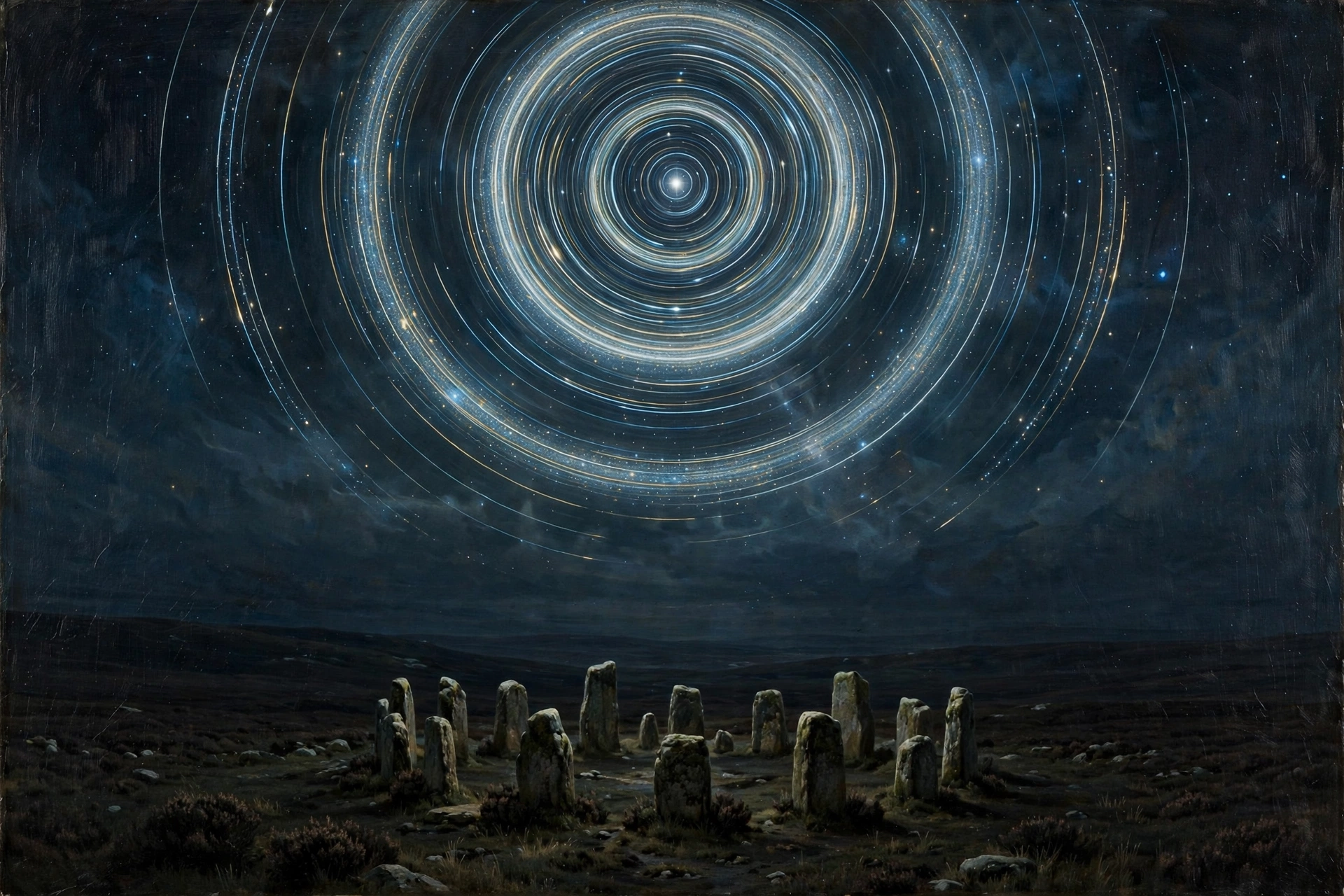
この絵について
描かれているのは、夜の野に立つ石の環と、その上空に大きく円を描く星の軌跡である。星々は北極星を中心に同心の輪を描き、地平の石の環と呼応している。人は描かれていない。
この円環は、入口で見た aiōn の像である。永遠の語の底には「ひとつの生、ひとつの時代」があった。星の軌跡は、その生の単位が何度も巡る姿であり、同時に、全体を一度に見渡す眺めでもある。場面で争われるのは、永遠がこの円の外にある全体なのか、円を巡り続ける継起なのか、そしてその円をもう一度生きることを欲せるか、である。
※モチーフは、「永遠」について一般に共有されている像(巡る星空と円環)を既定として選んだ。絵は差し替え可能とする。
永遠とは何か。——最初に口を開いたのは、ボエティウスの対話相手である「哲学(フィロソフィア)」だった。永遠とは、終わりなき生を、全体として完全に、ただ一つの瞬間において所有することである。時間のうちに生きるものはすべて、過去から未来へと進む現在であり、自分の生の全体を一度に抱くことはできない。明日の状態はまだ掴んでおらず、昨日の状態はすでに失っている。いや、今日の生においてさえ、ただ一つの束の間の瞬間より長くは生きていないのだ、と。
Philosophy(哲学(フィロソフィア))立てる ― 永遠とは、終わりなき生を全体として一度に所有することである
神は永遠である。この判断においてはあらゆる理性的存在が一致する。 ではその永遠とは何かを考えてみよう。 この語は神の本性についても神の知についても、ひとしく啓示をもたらすからである。 さて、永遠とは、終わりなき生を、全体として完全に、ただ一つの瞬間において所有することであ る。これが何であるかは、時間のうちにあるものと比べればいっそう明らかになる。 時間のうちに生きるものはすべて、過去から未来へと進む現在であり、時間のうちに置かれたもの で自分の生の全体を一度に抱きうるものは何一つない。 明日の状態をまだ掴んでおらず、昨日の状態はすでに失っている。 いや、今日の生においてさえ、諸君はただ一つの束の間の瞬間より長くは生きていないのだ。
原文
God is eternal; in this judgment all rational beings agree. Let us, then, consider what eternity is. For this word carries with it a revelation alike of the Divine nature and of the Divine knowledge. Now, eternity is the possession of endless life whole and perfect at a single moment. What this is becomes more clear and manifest from a comparison with things temporal. For whatever lives in time is a present proceeding from the past to the future, and there is nothing set in time which can embrace the whole space of its life together. To-morrow's state it grasps not yet, while it has already lost yesterday's; nay, even in the life of to-day ye live no longer than one brief transitory moment.
— Boethius『The Consolation of Philosophy』 BOOK V(H. R. James 訳) / `boethius_consolation#L5297`
ロックは、その永遠の考え方を、考える側の作業として解いた。永遠について考えるとき、われわれがするのは、数の観念を過去と未来の両方向へ、考えられず不定で無限な長さへ延ばし続けることではないか。年、時代、その他指定できる持続の部分の観念を、精神のうちで反復し、重ね続けることだ、と。永遠は、継起の側から数え上げられる像になった。
John Locke(ロック)継起の側 ― 永遠は、数の無限の反復として考えられる
持続においては、この数の線が両方向へ、考えられず不定で無限な長さへと延ばされるかのように 考えるからである。永遠についてどのように考えているかを反省しさえすれば、誰にもこれは明ら かであり、それは、いわゆる過去の方向と未来の方向の両方へ、この数の無限を向けることにほか ならないとわかるだろう。過去の方向で永遠を考えようとするとき、われわれがするのは、自分自 身と今いる現在の時点から始め、数のあらゆる無限をもって加え続ける見通しのもと、年、時代、 その他指定できる過去の持続の部分の観念を、精神のうちで反復することではないか。 そして未来の方向で永遠を考えようとするときも、まったく同じ仕方で自分自身から始め、これか ら来る期間を重ねて数え、以前と同じようにその数の線をなお延ばしてゆくのである。
原文
For in duration we consider it as if this line of number were extended BOTH ways—to an unconceivable, undeterminate, and infinite length; which is evident to anyone that will but reflect on what consideration he hath of Eternity; which, I suppose, will find to be nothing else but the turning this infinity of number both ways, a parte ante and a parte post, as they speak. For, when we would consider eternity, a parte ante, what do we but, beginning from ourselves and the present time we are in, repeat in our minds ideas of years, or ages, or any other assignable portion of duration past, with a prospect of proceeding in such addition with all the infinity of number: and when we would consider eternity, a parte post, we just after the same rate begin from ourselves, and reckon by multiplied periods yet to come, still extending that line of number as before.
— John Locke『An Essay Concerning Humane Understanding, Volume 1』 CHAPTER XVII / `locke_essay_human_understanding_v1#L7429`
ベルクソンは、その数え上げの像そのものを退けた。質料であれ精神であれ、実在はわれわれに絶えざる生成として現れた。それは自らを作り、あるいは自らを解体するが、決して作られた何かではない、と。永遠は、止まった全体でも、数え続ける継起でもなく、作られ続ける動きの側に置かれた。
Henri Bergson(ベルクソン)ずらす ― 実在は絶えざる生成であり、決して作られた何かではない
質料であれ精神であれ、実在はわれわれに絶えざる生成として現れた。 それは自らを作り、あるいは自らを解体するが、決して作られた何かではない。
原文
Matter or mind, reality has appeared to us as a perpetual becoming. It makes itself or it unmakes itself, but it is never something made.
— Henri Bergson『Creative Evolution』 CHAPTER IV(Arthur Mitchell 訳) / `bergson_creative_evolution#L8455`
ニーチェは、永遠を定義ではなく試練に変えた。ある日あるいはある夜、デーモンが君の最も孤独な孤独のなかに忍び寄り、こう言ったらどうか。お前がいま生き、これまで生きてきたこの生を、お前はもう一度、さらに無数回生きねばならない、と。君は身を投げ出して歯ぎしりし、デーモンを呪うか。それとも「お前は神だ、これほど神々しいことを聞いたことはない」と答える瞬間を、一度でも経験したことがあるか、と。
Friedrich Nietzsche(ニーチェ)試練 ― 同じ生をもう一度、さらに無数回生きることを欲せるか
最も重い重し。――ある日あるいはある夜、デーモンが君の最も孤独な孤独のなかに忍び寄り、こ う言ったらどうか。「お前がいま生き、これまで生きてきたこの生を、お前はもう一度、さらに無 数回生きねばならない。そこには何も新しいものはなく、あらゆる苦痛とあらゆる喜び、あらゆる 思考と溜息、お前の生の言いようもなく小さなことも大きなことも、すべてが同じ順序と連なりで 戻ってくる……存在の永遠の砂時計は繰り返し逆さにされ、お前もそれと共に回る、塵の一粒よ!」 ――君は身を投げ出して歯ぎしりし、そう語ったデーモンを呪わないだろうか。 それとも、こう答えるような途方もない瞬間を一度でも経験したことがあるか。 「お前は神だ、これほど神々しいことを聞いたことはない!」……
原文
_The Heaviest Burden._--What if a demon crept after thee into thy loneliest loneliness some day or night, and said to thee: "This life, as thou livest it at present, and hast lived it, thou must live it once more, and also innumerable times; and there will be nothing new in it, but every pain and every joy and every thought and every sigh, and all the unspeakably small and great in thy life must come to thee again, and all in the same series and sequence--and similarly this spider and this moonlight among the trees, and similarly this moment, and I myself. The eternal sand-glass of existence will ever be turned once more, and thou with it, thou speck of dust!"--Wouldst thou not throw thyself down and gnash thy teeth, and curse the demon that so spake? Or hast thou once experienced a tremendous moment in which thou wouldst answer him: "Thou art a God, and never did I hear anything so divine!" If that thought acquired power over thee as thou art, it would transform thee, and perhaps crush thee; the question with regard to all and everything: "Dost thou want this once more, and also for innumerable times?" would lie as the heaviest burden upon thy activity! Or, how wouldst thou have to become favourably inclined to thyself and to life, so as _to long for nothing more ardently_ than for this last eternal sanctioning and sealing?
— Friedrich Nietzsche『The Joyful Wisdom (La Gaya Scienza)』 BK IV, §341(Thomas Common / Paul V. Cohn / Maude D. Petre 訳) / `nietzsche_joyful_wisdom#L7435`
最後にウィトゲンシュタインが、永遠の置き場所を現在へ戻した。死は人生の出来事ではない。人は死を体験しない。永遠を、時間の無限の持続ではなく無時間性と解するなら、現在に生きる者は永遠に生きる。われわれの生は、視野が限界をもたないのと同じ仕方で終わりがない、と。全体でも継起でも回帰でもなく、「今」に生きることの別名として、永遠は締められた。
Ludwig Wittgenstein(ウィトゲンシュタイン)締め ― 永遠を無時間性と解するなら、現在に生きる者は永遠に生きる
死は人生の出来事ではない。人は死を体験しない。 永遠を、時間の無限の持続ではなく無時間性と解するなら、現在に生きる者は永遠に生きる。 われわれの生は、視野が限界をもたないのと同じ仕方で終わりがない。
原文
Death is not an event of life. Death is not lived through. If by eternity is understood not endless temporal duration but timelessness, then he lives eternally who lives in the present. Our life is endless in the way that our visual field is without limit.
— Ludwig Wittgenstein『Tractatus Logico-Philosophicus』 §6.4311(C. K. Ogden 訳) / `wittgenstein_tractatus#L4684`
全体を一度に抱く所有、数の無限の反復、絶えざる生成、同じ生の回帰、そして現在に生きる無時間性。——永遠の姿は、声ごとに違う時間の外と内に描かれた。
控えの一句 ON THE BENCH
Thomas Aquinas(トマス・アクィナス)
軸1 ― 「永遠が同時に全体であることから、永遠と時間の相違は生じる」。時間が永遠に続くと認めても相違は残るという、全体の側の裏づけ
答えて言う。時間と永遠が同じでないことは明らかである。 永遠には始まりも終わりもなく、時間には始まりと終わりがあるという事実に、この相違の根拠を 置く者がいる。しかしこれは絶対的な相違ではなく、単なる偶有的な相違を作るにすぎない。 天の運動は永遠に続くと考える人々の観念に従い、時間がつねに存在してきて、つねに存在し続け ると認めても、ボエティウスが『哲学の慰め』第五巻で述べるように、永遠と時間の相違はなお残 るからである。それは永遠が同時に全体であることから生じるが、これは時間には適用できない。 永遠は恒久的な存在の尺度であり、時間は運動の尺度だからである。
原文
_I answer that,_ It is manifest that time and eternity are not the same. Some have founded this difference on the fact that eternity has neither beginning nor an end; whereas time has a beginning and an end. This, however, makes a merely accidental, and not an absolute difference because, granted that time always was and always will be, according to the idea of those who think the movement of the heavens goes on for ever, there would yet remain a difference between eternity and time, as Boethius says (De Consol. v), arising from the fact that eternity is simultaneously whole; which cannot be applied to time: for eternity is the measure of a permanent being; while time is a measure of movement.
— Thomas Aquinas『Summa Theologica, Part I (Prima Pars)』 I. Q. 10, Art. 4(Fathers of the English Dominican Province 訳) / `aquinas_summa_prima_pars#L4056`
Benedict de Spinoza(スピノザ)
軸1 ― 「永遠とは、存在そのものを意味する」。永遠であるものの定義のみから必然的に従うと考えられる限りでの存在として
八、永遠とは、永遠であるものの定義のみから必然的に従うと考えられる限りでの、存在そのもの を意味する。
原文
VIII. By eternity, I mean existence itself, in so far as it is conceived necessarily to follow solely from the definition of that which is eternal.
— Benedict de Spinoza『Ethics』 PART I(R. H. M. Elwes 訳) / `spinoza_ethics#L105`
Isaac Newton(ニュートン)
軸2(永遠なる神は永遠そのものか) ― 「神は永遠や無限ではなく、永遠で無限なのである」。常にどこにでも存在することによって、持続と空間を構成する
神は永遠かつ無限であり、全能かつ全知である。 すなわちその持続は永遠から永遠へ、その現在は無限から無限へ及ぶ。 神はあらゆるものを統べ、なされうるすべてを知る。 神は永遠や無限ではなく、永遠で無限なのである。 神は持続や空間ではなく、持続し現在する。 神は永遠に持続し、どこにでも現在する。 そして常にどこにでも存在することによって、持続と空間を構成する。
原文
He is eternal and infinite, omnipotent and omniscient; that is, his duration reaches from eternity to eternity; his presence from infinity to infinity; he governs all things, and knows all things that are or can be done. He is not eternity or infinity, but eternal and infinite; he is not duration or space, but he endures and is present. He endures for ever, and is every where present; and by existing always and every where, he constitutes duration and space.
— Isaac Newton『Newton's Principia: The Mathematical Principles of Natural Philosophy』 BK III, General Scholium(Andrew Motte 訳) / `newton_principia#L21716`
Epicurus(エピクロス)
軸5(永生は幸福の条件か) ― 理性は永遠に関する恐れからわれわれを解放し、もはや欲望のうちに永遠を含める必要がないほど完全に幸福を与える
「しかし理性は、身体の終わりと解体を理解させ、永遠に関する恐れからわれわれを解放すること で、生命の可能とする幸福のすべてを、もはや欲望のうちに永遠を含める必要がないほど完全に与 える。この心の状態では、苦難によって生を去るよう促されても人間は幸福であり、このように死 ぬことは、その人にとって幸福な生命を中断することにすぎない。
原文
“But reason, enabling us to conceive the end and dissolution of the body, and liberating us from the fears relative to eternity, procures for us all the happiness of which life is capable, so completely that we have no further occasion to include eternity in our desires. In this disposition of mind, man is happy even when his troubles engage him to quit life; and to die thus, is for him only to interrupt a life of happiness.
— Diogenes Laertius『The Lives and Opinions of Eminent Philosophers』 BOOK X(Charles Duke Yonge 訳) / `diogenes_laertius_lives#L18050`
Ivan Karamazov(イワン・カラマーゾフ)
軸14(永遠の調和は個々の苦しみを償えるか) ― 「永遠の調和の代価を払うために誰もが苦しまねばならないなら、子供に何の関係があるのか」。全体の帰結による犠牲の正当化を拒む問い。話者は母データの表記のまま
百回目に繰り返すが、問題はいくらでもある。 だが僕は子供だけを取り上げた。子供の場合には、僕の言いたいことが反論の余地なく明らかだか らだ。いいかい、永遠の調和の代価を払うために誰もが苦しまねばならないなら、子供に何の関係 があるのか、どうか教えてくれ。
原文
For the hundredth time I repeat, there are numbers of questions, but I’ve only taken the children, because in their case what I mean is so unanswerably clear. Listen! If all must suffer to pay for the eternal harmony, what have children to do with it, tell me, please?
— Fyodor Dostoyevsky『The Brothers Karamazov』 Chapter IV(Constance Garnett 訳) / `dostoyevsky_brothers_karamazov#L11346`