LAW
idea-no-tane の全引用から選んだ超精選による、概念ごとの読み物。
入口 THE WORD
この概念が扱うのは、人を縛る決まり——法とは何か、それはどこから来て、なぜ従わなければならないのかという問いである。場面に入る前に、まずこの語そのものの旅をたどる。語源は「真の意味」ではない。だが、語がどこから来て、どう意味を変えてきたかという経緯は、後ろに並ぶ偉人たちの議論を読むための地図になる。
語源 ― law は「横たえて置かれたもの」
英語の law は、古英語の lagu を経て、古ノルド語の lagu に由来する。それは lag「層、目盛り、一打ち」の集合的な複数形で、字義は「横たえて置かれたもの、定められたもの」であり、印欧祖語の根 *legh-「横たわる、横たえる」に遡る(Etymonline)。「一つの法」を表す言葉は、印欧語ではしばしば「置く、据える、横たえる」という動詞から来ている。ギリシャ語の thesmos は tithemi「置く」から、ドイツ語の Gesetz は setzen「据える」から、英語の statute もラテン語の statuere「立てる」から来た(Etymonline)。法は、その言葉の生まれでは、誰かが置いて、置いたままにしてあるものである。このページのキー画像の法廷の石段と列柱は、その「置かれたもの」の像である。では、置いたのは誰か。置かれたものは、動かしてよいのか。場面の争いはここから始まる。
もう一つの系譜 ― 「正しいこと」の側から来た言葉
一方で、「法一般」を表す言葉の多くは、語源的には「正しいこと」を意味し、「まっすぐな、正しい、ふさわしい」という形容詞と結びついてきた。ギリシャ語の nomos、フランス語の droit、ドイツ語の Recht がその系譜である(Etymonline)。ラテン語は、一つの法を指す lex と、権利・法一般を指す ius を区別した(Etymonline)。つまり法の言葉には、二つの根の像が競い合っている。誰かが「置いたもの」としての法と、もともと「正しいもの」としての法である。場面の最初の声、キケロの「真の法は自然にかなった正しい理性」は第二の系譜の極致であり、パスカルの「法は簒奪にすぎない」は第一の系譜を冷たく言い切ったものだ。
日本語との対応 ― 「法」は神獣のいた字
日本語の「法」の旧字は「灋」で、水と、廌(チ)と、去の組み合わせだった。廌は「獬廌(かいち)」という想像上の一角の神獣で、物事の当否や善悪を正しく判断できる能力をもつとされていた。古代中国では裁判にこの神獣が使われ、誤っている人間を角で突いたと信じられていた。「灋」は複雑な字形のため、のちに廌の部分が省かれて今の「法」になった(漢字カフェ・阿辻哲次『漢字漫談』)。法の字の底には、人が決めるのではなく神獣が見分けるという、判断を人間の外に置いた時代の像が残っている。なお日本語の「法」は、法律の意味のほかに、仏教の「仏法」のように真理・教えを指す用法も担ってきた——この概念の母データでも、「法」はダルマの意味で現れる箇所がある。同じ一字が、国家の決まりと世界の真理の両方を受けてきたのである。
語の旅をまとめると、法は「置かれたもの」の言葉として生まれ、「正しいもの」の言葉と競い合い、日本語では神獣のいた字で迎えられた。このあとの場面で争われるのは、まさにその正体である。法は理性か、定義か、弱者の発明か、隠すべき簒奪か、それとも経験の蓄積か。
場面 THE SCENE
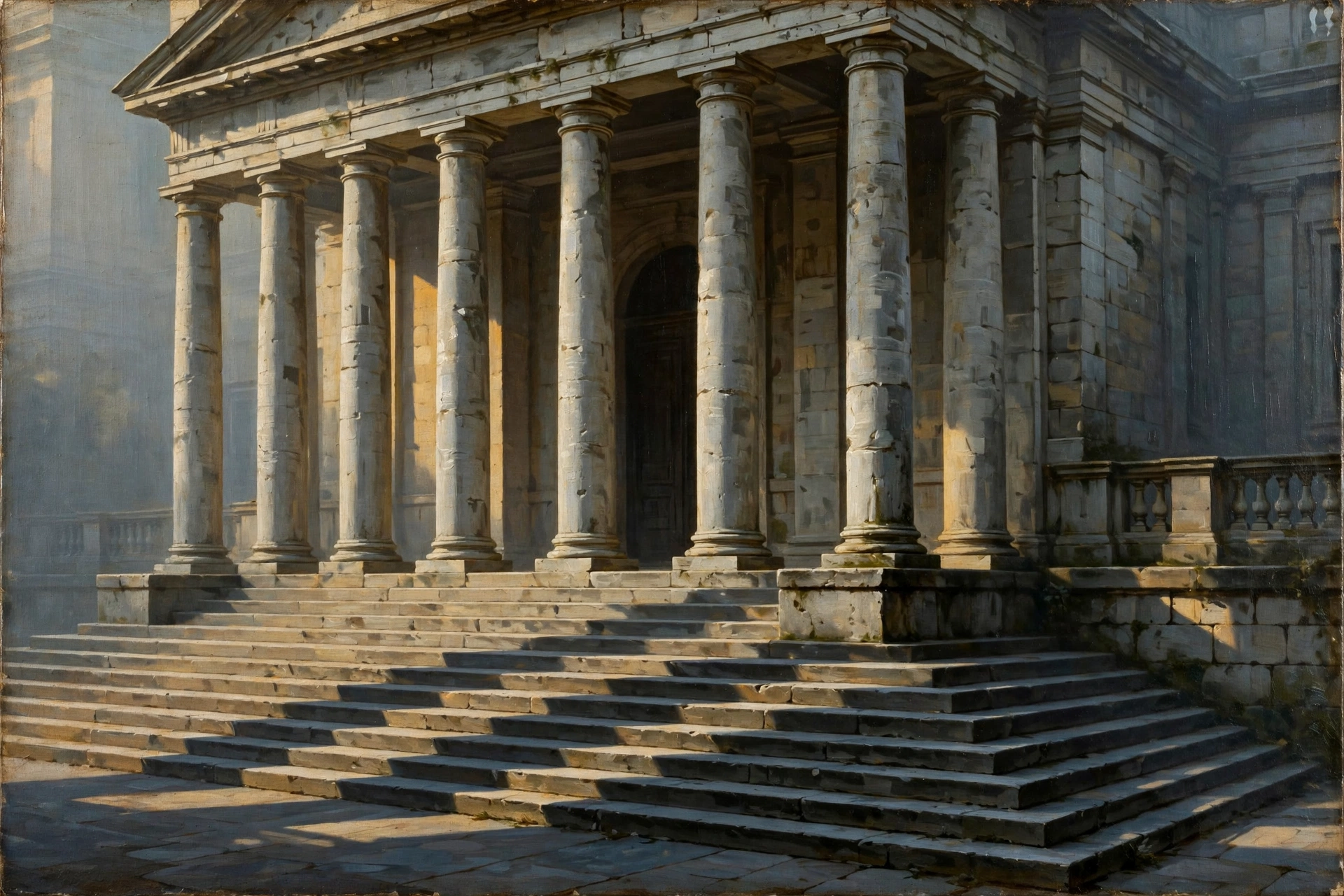
この絵について
描かれているのは、朝の光の中に立つ法廷の石の柱廊と、幅の広い石段である。扉は暗く、人影はない。
入口で見たとおり、law は「横たえて置かれたもの」だった。列柱と石段はその言葉の石の姿である——誰かが置き、置いたままにしてある決まり。だが場面で争われるように、置かれたものの重さは、それを置いた者の正しさを保証しない。
※モチーフは、「法」について一般に共有されている像(法廷の列柱)を既定として選んだ。絵は差し替え可能とする。
法とは何か。——最初に口を開いたのは、法を理性の名で呼ぶキケロだった。真の法は、自然にかなった正しい理性だ、と。
Cicero(キケロ)立てる ― 真の法は自然にかなった正しい理性
真の法とは、自然に適合した正しい理性であり、普遍的で、不変で、永遠である。 その命令は我々を義務へと促し、その禁止は我々を悪から遠ざける。 命じるにせよ禁じるにせよ、善き者はその命令を尊び、悪しき者はそれを顧みない。 この法は他のいかなる法によっても否定されえず、一部の廃止にも全部の廃止にも服さない。 元老院も民衆も、この普遍的な正義の法に従わずにすむ免除を我々に与えることはできない。 この法は我々自身の良心のほかに解説者も解釈者も必要としない。 ローマで一つ、アテナイで別、今日一つ、明日別、ということはない。 あらゆる時代とあらゆる民族において、この普遍の法は永遠に、不滅のものとして支配しなければ ならない。それはあらゆる存在の至高の主であり皇帝である。 神自身がその作者であり、公布者であり、執行者である。 これに従わない者は自分自身から逃げ出し、人間の本性そのものに暴力を加えるのである。 そうすることによって彼は、通常罰と見なされる他の災いを免れたとしても、最も重い罰を受ける ことになるだろう。
原文
True law is right reason conformable to nature, universal, unchangeable, eternal, whose commands urge us to duty, and whose prohibitions restrain us from evil. Whether it enjoins or forbids, the good respect its injunctions, and the wicked treat them with indifference. This law cannot be contradicted by any other law, and is not liable either to derogation or abrogation. Neither the senate nor the people can give us any dispensation for not obeying this universal law of justice. It needs no other expositor and interpreter than our own conscience. It is not one thing at Rome, and another at Athens; one thing to-day, and another to-morrow; but in all times and nations this universal law must forever reign, eternal and imperishable. It is the sovereign master and emperor of all beings. God himself is its author, its promulgator, its enforcer. And he who does not obey it flies from himself, and does violence to the very nature of man. And by so doing he will endure the severest penalties even if he avoid the other evils which are usually accounted punishments.
— Cicero『On the Commonwealth』 BOOK III(Charles Duke Yonge 訳) / `cicero_on_the_commonwealth#L15358`
アクィナスは、それを定義に締めた。共通善のための理性の秩序づけ、作られ、公布されたもの、と。
Thomas Aquinas(トマス・アクィナス)立てる・定義 ― 法とは共通善のための理性の秩序づけ
こうして先立つ四つの項から、法の定義を集めることができる。 すなわち法とは、共通善のための理性の秩序づけであって、共同体を配慮する者によって作られ、 公布されたものにほかならない。
原文
Thus from the four preceding articles, the definition of law may be gathered; and it is nothing else than an ordinance of reason for the common good, made by him who has care of the community, and promulgated.
— Thomas Aquinas『Summa Theologica, Part I-II (Prima Secundae)』 I-II, Q. 90, Art. 4(Fathers of the English Dominican Province 訳) / `aquinas_summa_prima_secundae#L39172`
カリクレスは、その定義の裏側を見せた。法を作るのは弱い多数者だ、と。なおこの引用の原文は、母データでは「And」で途切れている。そのまま置く。
Callicles(カリクレス)覆す ― 法は弱い多数者が強者を縛る発明
私の考えでは、その理由はこうだ。法を作る者は弱い多数者である。 彼らは自分たち自身と自分たちの利益を目当てに法を作り、賞賛と非難を配分する。 そして、より強い種類の人間、自分たちを出し抜くことのできる人間を脅して、彼らが出し抜かな いようにする。そして彼らは、人より多く持とうとする欲望を不正という語で意味しながら、それ を恥ずべきこと、不正なことだと言うのだ。 自分たちの劣等を知っているからこそ、彼らは平等をこそありがたがるのだと私は思う。
原文
The reason, as I conceive, is that the makers of laws are the majority who are weak; and they make laws and distribute praises and censures with a view to themselves and to their own interests; and they terrify the stronger sort of men, and those who are able to get the better of them, in order that they may not get the better of them; and they say, that dishonesty is shameful and unjust; meaning, by the word injustice, the desire of a man to have more than his neighbours; for knowing their own inferiority, I suspect that they are too glad of equality. And
— Plato『Gorgias』(Benjamin Jowett 訳) / `plato_gorgias#L4390`
パスカルは、法の生まれのほうへ問いをずらした。法は簒奪にすぎない。だから始まりを隠せ、と。
Blaise Pascal(パスカル)ずらす ― 法は簒奪、その始まりを隠せ
法が簒奪にすぎないということを、人は感じてはならない。 法はかつて理由なく導入され、やがて理にかなったものとなったのである。 法を永遠で権威あるものと見なさせ、その始まりを隠さなければならない。 そうしなければ、法はまもなく終わってしまう。
原文
We ought not to feel the truth that law is but usurpation; it was once introduced without reason, and has become reasonable; it is necessary to cause it to be regarded as eternal and authoritative, and to conceal the beginning if we do not wish it should soon come to an end.
— Blaise Pascal『The Thoughts of Blaise Pascal』 OF JUSTICE, CUSTOMS, AND PREJUDICES(C. Kegan Paul 訳) / `pascal_thoughts#L2627`
最後にホームズが、法を歴史の中へ返した。法の生命は論理ではない、経験だ、と。なお和文には母データ由来の太字記号が混入している。そのまま置く。
Oliver Wendell Holmes Jr.(ホームズ)締め ― 法の生命は論理ではなく経験
**法の生命は論理ではなかった。それは経験であった。 **時代の感じられた必要、支配的な道徳的・政治的理論、公言されたものであれ無意識のもので あれ公共政策についての直観、裁判官が同胞と分かち持つ偏見でさえ、人が従うべき規則を定める にあたっては三段論法よりもはるかに大きく与ってきた。 法は幾世紀にもわたる一国民の発展の物語を体現しており、数学書の公理と系のみを含むものであ るかのように扱うことはできない。それが何であるかを知るためには、それが何であったか、そし てそれが何になろうとしているかを知らなければならない。
原文
The life of the law has not been logic: it has been experience. The felt necessities of the time, the prevalent moral and political theories, intuitions of public policy, avowed or unconscious, even the prejudices which judges share with their fellow-men, have had a good deal more to do than the syllogism in determining the rules by which men should be governed. The law embodies the story of a nation's development through many centuries, and it cannot be dealt with as if it contained only the axioms and corollaries of a book of mathematics. In order to know what it is, we must know what it has been, and what it tends to become.
— Oliver Wendell Holmes Jr.『The Common Law』 LECT I / `holmes_common_law#L73`
理性、定義、弱者の発明、隠すべき簒奪、経験。——法の正体は、声ごとに違う顔を見せた。
控えの一句 ON THE BENCH
Antigone(アンティゴネ)
軸:悪法とより高い法(軸3)。人の法の上に不文の法
これらの掟はゼウスが定めたものではありません。 地下の神々とともに座す正義の女神も、こんな人間の法を制定しはしませんでした。 あなたが、一人の死すべき人間が、一息のもとに天の不変の不文律を無効にし覆しうるとは、私は 思いませんでした。それらは今日生まれたのでも昨日生まれたのでもない。 それらは死なず、どこから来たのかを誰も知りません。
原文
Yea, for these laws were not ordained of Zeus, And she who sits enthroned with gods below, Justice, enacted not these human laws. Nor did I deem that thou, a mortal man, Could’st by a breath annul and override The immutable unwritten laws of Heaven. They were not born today nor yesterday; They die not; and none knoweth whence they sprang.
— Sophocles『Plays of Sophocles: Oedipus the King; Oedipus at Colonus; Antigone』 ANTIGONE(Francis Storr 訳) / `sophocles_theban_plays#L7340`
Thomas Aquinas(トマス・アクィナス)
軸:悪法も法か(軸3)。正しい法は永遠法によって良心を拘束する
人間が作る法は、正しいか不正であるかのいずれかである。 もし正しければ、それらが導き出されてくる永遠法によって、良心を拘束する力を持つ。 箴言八章十五節に「私によって王は統治し、立法者は正しいことを定める」とあるとおりである。 ところで法が正しいと言われるのは、目的の点では共通善へ秩序づけられているときであり、作り 手の点では作られた法が立法者の権限を超えないときであり、形式の点では負担が臣民に比例の等 しさにしたがって、しかも共通善を見込んで課されるときである。
原文
_I answer that,_ Laws framed by man are either just or unjust. If they be just, they have the power of binding in conscience, from the eternal law whence they are derived, according to Prov. 8:15: "By Me kings reign, and lawgivers decree just things." Now laws are said to be just, both from the end, when, to wit, they are ordained to the common good--and from their author, that is to say, when the law that is made does not exceed the power of the lawgiver--and from their form, when, to wit, burdens are laid on the subjects, according to an equality of proportion and with a view to the common good.
— Thomas Aquinas『Summa Theologica, Part I-II (Prima Secundae)』 I-II, Q. 96, Art. 4(Fathers of the English Dominican Province 訳) / `aquinas_summa_prima_secundae#L41486`
Thomas Paine(ペイン)
軸:法の支配。自由な国では法が王である
アメリカでは法が王である。絶対的な政府では王が法であるように、自由な国では法が王であるべ きであり、他のいかなる王もあってはならないからである。
原文
that in America the law is king. For as in absolute governments the King is law, so in free countries the law ought to be King; and there ought to be no other.
— Thomas Paine『Common Sense』 THOUGHTS ON THE PRESENT STATE OF AMERICAN AFFAIRS / `paine_common_sense#L1243`
Montesquieu(モンテスキュー)
軸:法の適用(軸4)。裁判官は法の言葉を発する口にすぎない
しかしすでに述べたように、国の裁判官は、法の言葉を発する口にすぎず、その力や厳しさを和ら げることのできない、受け身の存在にほかならない。
原文
But, as we have already observed, the national judges are no more than the mouth that pronounces the words of the law, mere passive beings, incapable of moderating either its force or rigour.
— Montesquieu『Complete Works, vol. 1 (The Spirit of Laws)』 BOOK XI(Thomas Nugent 訳) / `montesquieu_spirit_of_laws_v1#L8835`
Confucius(孔子)
軸:法の外の声(軸7)。法で導けば民は罰を免れようとするだけで恥を知らない
子曰く「民を法令で導き、刑罰で揃えようとすれば、民は罰を免れようとするだけで恥を知らない。 徳で導き、礼で揃えれば、恥を知り、そのうえ善くなる。」
原文
The Master said, 'If the people be led by laws, and uniformity sought to be given them by punishments, they will try to avoid the punishment, but have no sense of shame. 2. 'If they be led by virtue, and uniformity sought to be given them by the rules of propriety, they will have the sense of shame, and moreover will become good.'
— Confucius『The Analects of Confucius』 BK II(James Legge 訳) / `confucius_analects#L173`