Metaphysics
idea-no-tane の全引用から選んだ超精選による、概念ごとの読み物。
入口 THE WORD
形而上学は、存在の根本を問う学の名でありながら、その学がそもそも可能かどうか自体が二千年争われてきた名でもある。場面の声たちは、再建か、焼却か、境界か、分業か、治療かをめぐって争う。
語源 ― 「自然学の後の書」
metaphysics は、ギリシア語 ta meta ta physika「自然学の後の(書)」に由来する。アリストテレスの死後、その著作を編集したロドスのアンドロニコス(前1世紀)が、第一哲学の書を『自然学』の後に配列したことから付いた題名だと伝えられる(Online Etymology Dictionary/Stanford Encyclopedia of Philosophy)。アリストテレス自身はこの学を「第一哲学」「知恵」「神学」と呼んだ。のちに meta が「〜を超えた」と読み替えられ、この名は「自然を超えたものの学」という意味を帯びるようになった。配列の偶然が、学の性格の像を作ったのである。
日本語の「形而上学」 ― 形の上にあるもの
「形而上学」は、『易経』繋辞伝の「形而上なる者は之を道と謂い、形而下なる者は之を器と謂う」から取られた訳語で、ラテン語 metaphysica の訳として『哲学字彙』(1881年)に現れる(精選版日本国語大辞典/ブリタニカ国際大百科事典、いずれもコトバンク収録)。形あるもの(器)の上にあるもの(道)を問う学。原語の「後の書」という書誌的な偶然とは別に、漢字の側でも「上」という像が重ねられた。
場面 THE SCENE
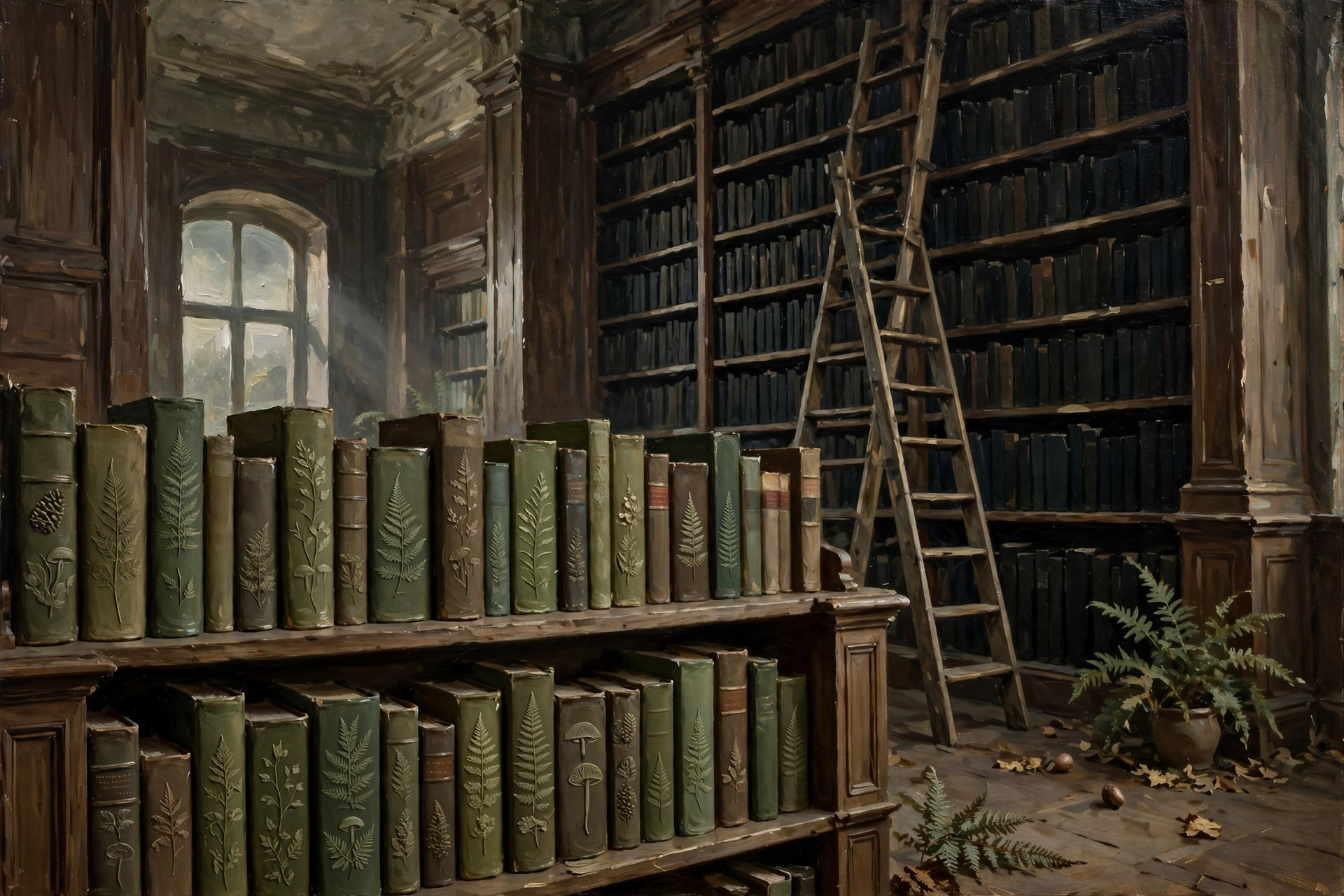
この絵について
古い図書室で、手前の書架には植物の姿を背に刻んだ自然の書物が並んでいる。その奥には、さらに高い書架に、題名のない暗い書物の一群があり、木の梯子が掛かっている。
metaphysics の名は、もともと書架の配列の名だった。アリストテレスの第一哲学の書が『自然学』の「後ろ」に置かれたことから付いた題名である。自然の書の後ろにある書。それがのちに、自然を超えたものの学の名になった。
絵はモチーフの置き換えが可能であり、この絵でなければならない必然はない。語源となった書架の配列を、そのまま場面にした。
場面は、再建の宣言から始まる。カントは、信仰に場所を空けるために知識を廃棄しなければならなかったと言う。事前の批判なしに形而上学において前進できるという独断論こそ、道徳に敵対する不信仰の真の源泉である。形而上学は捨てるのではなく、理性の能力への批判的吟味を経て、立て直される。
カント(Immanuel Kant)立てる
したがって私は、信仰に場所を空けるために知識を廃棄しなければならなかった。 形而上学の独断論、すなわち事前の批判なしに形而上学において前進できるという思い上がりは、 道徳に敵対する不信仰(常に独断的な)の真の源泉である。
原文
I must, therefore, abolish _knowledge_, to make room for _belief_. The dogmatism of metaphysics, that is, the presumption that it is possible to advance in metaphysics without previous criticism, is the true source of the unbelief (always dogmatic) which militates against morality.
— Immanuel Kant『The Critique of Pure Reason』(J. M. D. Meiklejohn 訳) / `kant_critique_of_pure_reason#L1093`
ヒュームは、その書架に火を付ける。神学あるいはスコラ形而上学の巻を手に取り、こう問う——それは量あるいは数についての抽象的推論を含んでいるか。否。それは事実と存在についての経験的推論を含んでいるか。否。ならばそれを炎に投じよ、それが含みうるのは詭弁と幻想だけなのだから、と。再建の綱領のすぐ後に、焼却の宣告が来る。
ヒューム(David Hume)覆す
これらの原理を確信して図書館を見渡すとき、我々はどれほどの破壊をしなければならないだろう か。たとえば神学あるいはスコラ形而上学の巻を手に取って、こう問うてみよう——「それは量あ るいは数についての抽象的推論を含んでいるか」。 否。「それは事実と存在についての経験的推論を含んでいるか」。 否。ならばそれを炎に投じよ。それが含みうるのは詭弁と幻想だけなのだから。
原文
When we run over libraries, persuaded of these principles, what havoc must we make? If we take in our hand any volume; of divinity or school metaphysics, for instance; let us ask, _Does it contain any abstract reasoning concerning quantity or number?_ No. _Does it contain any experimental reasoning concerning matter of fact and existence?_ No. Commit it then to the flames: for it can contain nothing but sophistry and illusion.
— David Hume『An Enquiry Concerning Human Understanding』 SECTION XII / `hume_enquiry_human_understanding#L5282`
ニュートンは、境界の線を科学の側から引く。現象から演繹されないものはすべて仮説と呼ばれるべきであり、形而上学的であれ物理的であれ、仮説は実験哲学に場所を持たない。重力の性質の原因は現象から発見できず、「私は仮説を作らない」。形而上学は、学の内部の争いの対象である前に、学の外へ押し出される対象になる。
ニュートン(Isaac Newton)境界を引く
しかし私はこれまで、重力の諸性質の原因を現象から発見することができず、仮説を作り出さない。 現象から演繹されないものはすべて仮説と呼ばれるべきであり、形而上学的であれ物理的であれ、 隠れた性質のものであれ機械的なものであれ、仮説は実験哲学に場所を持たない。
原文
But hitherto I have not been able to discover the cause of those properties of gravity from phænomena, and I frame no hypotheses; for whatever is not deduced from the phænomena is to be called an hypothesis; and hypotheses, whether metaphysical or physical, whether of occult qualities or mechanical, have no place in experimental philosophy.
— Isaac Newton『Newton's Principia: The Mathematical Principles of Natural Philosophy』 BOOK III(Andrew Motte 訳) / `newton_principia#L21785`
ベルクソンは、排除の線を引き直す。科学と形而上学は対立しながらも相補う二つの知り方であり、前者は瞬間——すなわち持続しないもの——のみを保持し、後者は持続そのものに関わる、と。形而上学は、科学の領分を侵すから退けられるのではない。自らの領分を取り違えるときにだけ、道を誤るのである。
ベルクソン(Henri Bergson)ずらす
これに対して我々の仮説では、科学と形而上学は対立しながらも相補う二つの知り方であり、前者 は瞬間――すなわち持続しないもの――のみを保持し、後者は持続そのものに関わる。
原文
In our hypothesis, on the contrary, science and metaphysics are two opposed although complementary ways of knowing, the first retaining only moments, that is to say, that which does not endure, the second bearing on duration itself.
— Henri Bergson『Creative Evolution』 CHAPTER IV(Arthur Mitchell 訳) / `bergson_creative_evolution#L10536`
最後にウィトゲンシュタインが、争いそのものの身分を変える。哲学の正しい方法は、語りうること、すなわち自然科学の命題以外は何も語らず、誰かが形而上学的なことを語ろうとするたびに、その人が自分の命題のある記号に意味を与えていないことを示してやることだ、と。形而上学は反駁されるのでも、並べ直されるのでもない。治療されるのである。
ウィトゲンシュタイン(Ludwig Wittgenstein)締める
哲学の正しい方法は本来こうであろう。 語りうること、すなわち自然科学の命題――したがって哲学とは何の関係もないもの――以外は何 も語らず、そして誰かが形而上学的なことを語ろうとするたびに、その人が自分の命題のある記号 に意味を与えていないことを示してやる。 この方法はその人には満足のいかないものだろう――哲学を教えられている気がしないだろう―― が、これこそが唯一厳密に正しい方法であろう。
原文
The right method of philosophy would be this: To say nothing except what can be said, i.e. the propositions of natural science, i.e. something that has nothing to do with philosophy: and then always, when someone else wished to say something metaphysical, to demonstrate to him that he had given no meaning to certain signs in his propositions. This method would be unsatisfying to the other—he would not have the feeling that we were teaching him philosophy—but it would be the only strictly correct method.
— Ludwig Wittgenstein『Tractatus Logico-Philosophicus』 §6.53(C. K. Ogden 訳) / `wittgenstein_tractatus#L4762`
形而上学は、批判によって立て直され、検証の物差しで炎に投じられ、実験哲学の外へ押し出され、持続を扱う分業の学として救われ、最後に、意味を与えられていない記号の指摘によって治療される対象となった。可能か、不可能か。その問いは決着しないまま、この学は呼吸のように続いている。書架の後ろの書は、いまだにそこにある。
控えの一句 ON THE BENCH
カント(Immanuel Kant)
軸2
人間の精神が形而上学的な探求を諦めることは、不純な空気を吸うことを避けるために呼吸そのも のを諦めるのと同じくらい期待できない。 したがって形而上学は世界に常にあるだろう。 いや、誰もが、とりわけ思索する人は誰もがそれを持ち、認められた標準を欠くために、自らの流 儀で自ら形作るであろう。これまで形而上学と呼ばれてきたものは、いかなる批判的な心をも満足 させられない。しかしそれを完全に放棄することは不可能である。 したがって純粋理性の批判そのものが今試みられなければならず、あるいは存在するなら、調査さ れ完全な検証に付されなければならない。 この切迫した必要を満たす他の手段はなく、それは単なる知識欲以上のものだからである。
原文
That the human mind will ever give up metaphysical researches is as little to be expected as that we should prefer to give up breathing altogether, to avoid inhaling impure air. There will therefore always be metaphysics in the world; nay, every one, especially every man of reflexion, will have it, and for want of a recognised standard, will shape it for himself after his own pattern. What has hitherto been called metaphysics, cannot satisfy any critical mind, but to forego it entirely is impossible; therefore a Critique of Pure Reason itself must now be attempted or, if one exists, investigated, and brought to the full test, because there is no other means of supplying this pressing want, which is something more than mere thirst for knowledge.
— Immanuel Kant『Kant's Prolegomena to Any Future Metaphysics』 THIRD PART([要確認] 訳) / `kant_prolegomena#L4396`
ヒューム(David Hume)
軸1
我々はこの労苦に耐えなければならない。 その後の安楽な生のために。そして偽りの不純な形而上学を破壊するために、真の形而上学をいく らか注意深く育てなければならない。
原文
We must submit to this fatigue, in order to live at ease ever after: And must cultivate true metaphysics with some care, in order to destroy the false and adulterate.
— David Hume『An Enquiry Concerning Human Understanding』 SECTION I / `hume_enquiry_human_understanding#L314`
ニーチェ(Friedrich Nietzsche)
軸2
我々の科学への信仰が依拠する信念は、今日まで形而上学的な信念であり続けている。 今日の我々知る者、形而上学の神なき敵対者である我々でさえ、千年来の信仰によって点火された あの大火から自らの火を取っている。そのキリスト教的信仰から――それはプラトンの信仰でもあ った、神は真理であり、真理は神的であるという信仰から。
原文
The belief on which our faith in science is based has remained to this day a metaphysical belief--even we knowers of to-day, we godless foes of metaphysics, we too take our fire from that conflagration which was kindled by a thousand-year-old faith, from that Christian belief, which was also Plato's belief, the belief that God is truth, that truth is _divine_.
— Friedrich Nietzsche『The Genealogy of Morals』 WHAT IS THE MEANING OF ASCETIC IDEALS?(Horace B. Samuel 訳) / `nietzsche_genealogy_of_morals#L4714`
バーク(Edmund Burke)
軸4
これらの理論家の言う権利はすべて極端である。 そして形而上学的に真であるのに比例して、道徳的・政治的には偽である。
原文
The pretended rights of these theorists are all extremes; and in proportion as they are metaphysically true, they are morally and politically false.
— Edmund Burke『Reflections on the Revolution in France (The Works of Edmund Burke, vol. 3)』 / `burke_reflections_revolution_france#L8618`
ライプニッツ(Gottfried Wilhelm Leibniz)
軸5
21. 悪は形而上学的に、物理的に、道徳的に取ることができる。 形而上学的悪は単なる不完全性に存し、物理的悪は苦しみに存し、道徳的悪は罪に存する。
原文
21. Evil may be taken metaphysically, physically and morally. _Metaphysical evil_ consists in mere imperfection, _physical evil_ in suffering, and _moral evil_ in sin.
— G. W. Leibniz『Theodicy』 PART ONE(E. M. Huggard 訳) / `leibniz_theodicy#L4946`