MONARCHY
idea-no-tane の全引用から選んだ超精選による、概念ごとの読み物。
入口 THE WORD
この概念が扱うのは、一人の支配は正当か、という問いである。王は法の下にあるのか、法そのものなのか。世襲は秩序の知恵か、後世への押し付けか。場面の声は、一つの座をめぐって争う。
語源 ― monarkhia「一人の支配」
monarchy は、ギリシア語の monarkhia から来ている。monos(ただ一つの、単独の)と arkhein(支配する)の合成で、字義は「一人による支配」である。後期ラテン語の monarchia、古フランス語の monarchie を経て、英語には14世紀半ばに入った。当初の意味は「君主に治められた王国・領土」で、「最高権力を握る一人による支配」を指すようになったのは14世紀末、「一人の君主の手に最高権力がある政体の形式」を指す用法は15世紀初めからである(Online Etymology Dictionary「monarchy」)。
arkhein の根にある arkhē には、「権力・権威」と並んで「始め・起源」の意味がある(Wiktionary「monarchy」)。一人の支配は、秩序の「始め」でもある——この二重の像は、場面で争われる「王は秩序の源泉か、それとも秩序(法)の下の存在か」という問いと響き合う。
場面の絵に選んだのは、誰も座っていない玉座と、その上に置かれた冠と王笏である。monos——ただ一つの座。その座に座る者を法が縛るのか、座る者こそが法なのかは、場面の声たちが決める。
日本語の「君主政」 ― 君主制・王政・君主政
日本語では、monarchy の訳語として「君主制」「君主政」「王政」が並んで使われる。「君主制」は君主を頂点に置く制度そのものを、「王政」は王による政治の形を指す言い方として用いられることが多い。本ページの場面でも、引用の訳文の中では「王制」「君主制」などの表記が母データのまま混在している。なお、これらの訳語が定着した経緯の詳細は未確認である。
場面 THE SCENE
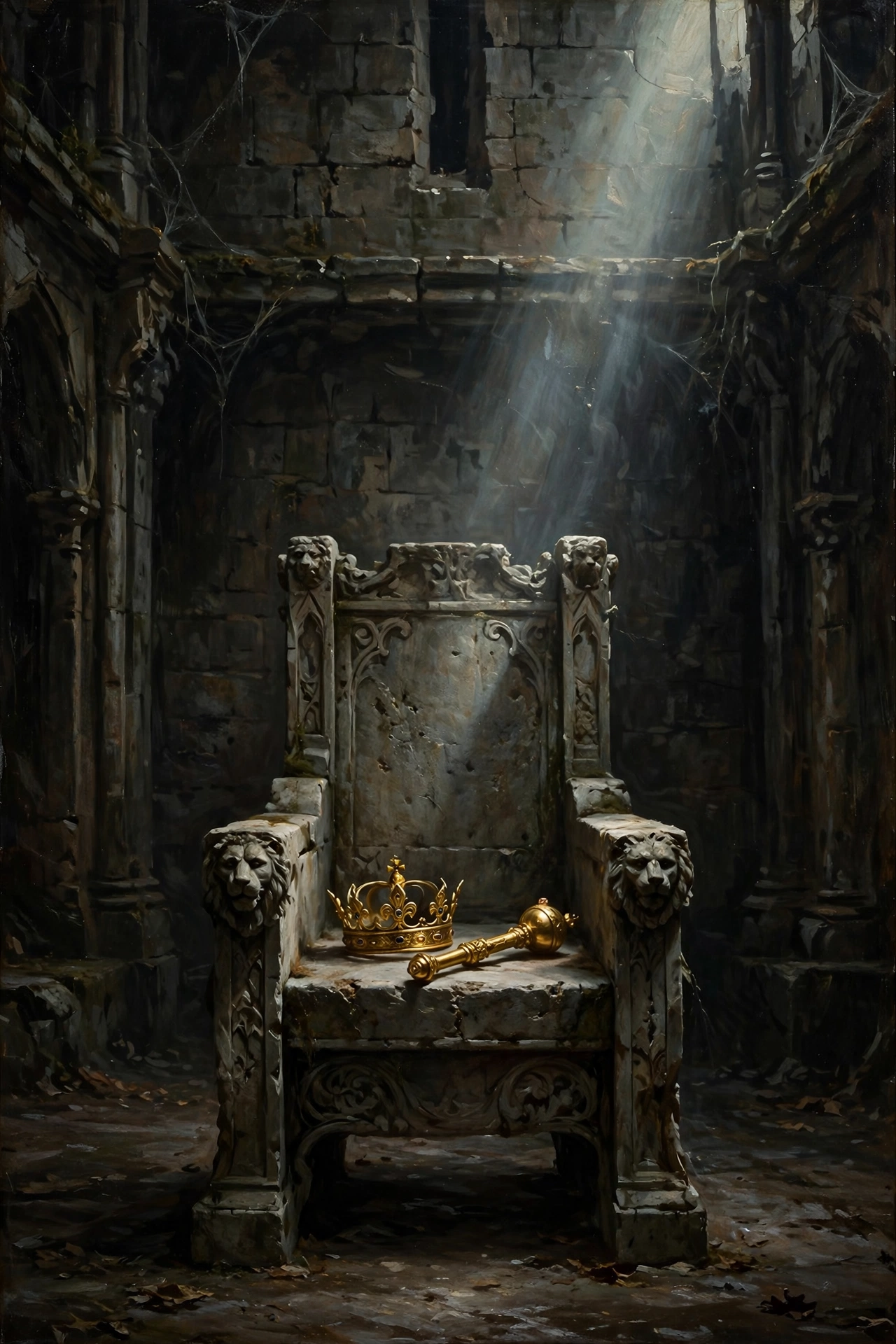
この絵について
描かれているのは、薄暗い石造りの広間に置かれた、誰も座っていない石の玉座である。肘掛けには獅子の頭が刻まれ、座面には金の冠と王笏が置かれている。高い窓から一筋の光が差し込み、玉座を照らしている。人は描かれていない。
この玉座は、入口で見た君主政の像である。monarkhia は monos(ただ一つの)と arkhein(支配する)の合成で、この絵の座もただ一つだけ置かれている。場面で争われるのは、この一つの座の力である。座る者は法に縛られるのか、それとも座る者こそが法なのか。そして、その座は世襲で受け継がれるべきものなのか。
※モチーフは、「君主政」について一般に共有されている像(玉座と王権の印)を既定として選んだ。絵は差し替え可能とする。
君主政とは何か。——最初に口を開いたのはユリシーズだった。われわれはみな王にはなれない。多くの主人がいるのはよくない。一人が最高でなければならない、と。これはホメロス『イリアス』の一節で、君主政を擁護する最古の一句とされる。一人の支配は、まず秩序の要請として置かれて始まった。
Ulysses(ユリシーズ)立てる ― 多くの主人は良くない。一人の王が上に立つべし
われわれはみな王にはなれない。多くの主人がいるのはよくない。 一人が最高でなければならない。策士クロノスの子が、あなたがた全員の上に主権の王笏を与えた、 その一人の王である。
原文
we cannot all be kings; it is not well that there should be many masters; one man must be supreme—one king to whom the son of scheming Saturn has given the sceptre of sovereignty over you all.
— Homer『The Iliad』 BOOK II(Samuel Butler 訳) / `homer_iliad#L823`
サムエルは、その一人が民に何をするかを数え上げた。王はあなたたちの息子を取り戦車や騎兵に任じ、娘を取り、畑やぶどう畑の最上のものを取り上げ、穀物と羊の十分の一を取る。こうしてあなたたちは王の奴隷となる、と。イスラエルの長老たちが王を求めたときの警告で、聖書の中の王政批判の古典である。一人の支配は、その請求書とともに置かれた。
Samuel(サムエル)覆す ― 王は息子と娘と十分の一を取り、汝らは奴隷となる
彼は言った。「あなたたちを治める王のやり方はこうである。 王はあなたたちの息子を取り、自分のために戦車や騎兵に任じ、王の戦車の前を走らせる。 また彼らを千人隊の長、五十人隊の長に任じ、王の畑を耕させ、王の収穫を刈り入れさせ、武器や 戦車の用具を作らせる。あなたたちの娘を取って、香料作りや料理女やパン焼き女にする。 あなたたちの畑やぶどう畑やオリーブ畑の最上のものを取り上げて、家来たちに与える。 あなたたちの穀物とぶどうの十分の一を取り、役人や家来たちに与える。 あなたたちの男女の奴隷、最良の若者、ろばを取って、自分の仕事に使う。 羊の十分の一も取る。こうしてあなたたちは王の奴隷となる。 その日、あなたたちは自分で選んだ王のゆえに叫ぶが、主はその日あなたたちに答えられない。」
原文
8:11 And he said, This will be the manner of the king that shall reign over you: He will take your sons, and appoint them for himself, for his chariots, and to be his horsemen; and some shall run before his chariots. 8:12 And he will appoint him captains over thousands, and captains over fifties; and will set them to ear his ground, and to reap his harvest, and to make his instruments of war, and instruments of his chariots. 8:13 And he will take your daughters to be confectionaries, and to be cooks, and to be bakers. 8:14 And he will take your fields, and your vineyards, and your oliveyards, even the best of them, and give them to his servants. 8:15 And he will take the tenth of your seed, and of your vineyards, and give to his officers, and to his servants. 8:16 And he will take your menservants, and your maidservants, and your goodliest young men, and your asses, and put them to his work. 8:17 He will take the tenth of your sheep: and ye shall be his servants. 8:18 And ye shall cry out in that day because of your king which ye shall have chosen you; and the LORD will not hear you in that day.
— (various)『The King James Version of the Bible』 1 Kings 8:11(King James Version (1611) 訳) / `bible_kjv#L24325`
ホッブズは、王と僭主の区別そのものをずらした。君主制のもとで不満をもつ者はそれを暴政とよび、貴族制を快く思わない者はそれを寡頭政とよぶ。しかし統治を気に入っているときは一つの種類であり、気に入らないとき、あるいは統治者に抑圧されているときは別の種類である、と信じるべきではない、と。王と僭主の差は、政体の差ではなく、治められる側の感情の差だとされた。
Thomas Hobbes(ホッブズ)ずらす ― 僭主政は別の政体ではなく、不満な者がつけた呼び名である
君主制のもとで不満をもつ者はそれを暴政とよび、貴族制を快く思わない者はそれを寡頭政とよぶ。 同じように、民主制のもとで苦しむ者はそれを無政府状態(統治の欠如を意味する)とよぶ。 しかし統治の欠如が新しい種類の統治であると信じる者は誰もいないと思う。 同じ理由で、統治を気に入っているときは一つの種類であり、気に入らないとき、あるいは統治者 に抑圧されているときは別の種類であると、信じるべきでもない。
原文
For they that are discontented under Monarchy, call it Tyranny; and they that are displeased with Aristocracy, called it Oligarchy: so also, they which find themselves grieved under a Democracy, call it Anarchy, (which signifies want of Government;) and yet I think no man believes, that want of Government, is any new kind of Government: nor by the same reason ought they to believe, that the Government is of one kind, when they like it, and another, when they mislike it, or are oppressed by the Governours.
— Thomas Hobbes『Leviathan』 CHAPTER XIX / `hobbes_leviathan#L6165`
アクィナスは、一人の支配を制度の中に置き直した。第一の位置を占めるのは、統治の権力が一人にゆだねられている王制である。しかし最善の統治形態は、一人がすべてを統べる権力を与えられ、その下に統治の権能をもつ他の者たちがいて、統治者はすべての者によって選ばれる国家にある、と。一人の支配は、皆が与る仕組みと組み合わされて初めて最善になるとされた。
Thomas Aquinas(トマス・アクィナス)制度で受ける ― 最善の政体は、一人が統べつつ皆が統治に与る混合政体である
とはいえ、第一の位置を占めるのは、統治の権力が一人にゆだねられている「王制」と、最善の者 たちによる統治を意味し、統治の権力が少数にゆだねられている「貴族制」である。 したがって最善の統治形態は、一人がすべてを統べる権力を与えられ、その下に統治の権能をもつ 他の者たちがいる国家あるいは王国にある。 そしてこの種の統治は、すべての者に共有されている。 すべての者が統治者となる資格をもち、統治者はすべての者によって選ばれるからである。 これこそ最善の政体であり、一人がすべての頭に立つ点では王制であり、多数の者が権威の座にあ る点では貴族制である。
原文
nevertheless the first place is held by the _kingdom,_ where the power of government is vested in one; and _aristocracy,_ which signifies government by the best, where the power of government is vested in a few. Accordingly, the best form of government is in a state or kingdom, where one is given the power to preside over all; while under him are others having governing powers: and yet a government of this kind is shared by all, both because all are eligible to govern, and because the rules are chosen by all. For this is the best form of polity, being partly kingdom, since there is one at the head of all; partly aristocracy, in so far as a number of persons are set in authority;
— Thomas Aquinas『Summa Theologica, Part I-II (Prima Secundae)』 I-II, Q. 105, Art. 1(Fathers of the English Dominican Province 訳) / `aquinas_summa_prima_secundae#L48104`
最後にペインが、主客を転倒させた。われわれが君主制を認める限りにおいて、アメリカでは法が王である。絶対的な政府では王が法であるように、自由な国では法が王であるべきで、ほかに何もあってはならない。そして式典の終わりに冠は壊して、それを持つ権利のある人民の間に撒き散らそう、と。一つの座は、法という名の持ち主へ譲られ、議論は締められた。
Thomas Paine(ペイン)締め ― 自由な国では、王が法なのではなく法が王である
われわれが君主制を認める限りにおいて、アメリカでは法が王である。 絶対的な政府では王が法であるように、自由な国では法が王であるべきで、ほかに何もあってはな らない。しかし、後に何らかの悪用が起こらないように、式典の終わりに冠は壊して、それを持つ 権利のある人民の間に撒き散らそう。
原文
so far as we approve of monarchy, that in America the law is king. For as in absolute governments the King is law, so in free countries the law ought to be King; and there ought to be no other. But lest any ill use should afterwards arise, let the crown at the conclusion of the ceremony be demolished, and scattered among the people whose right it is.
— Thomas Paine『Common Sense』 THOUGHTS ON THE PRESENT STATE OF AMERICAN AFFAIRS / `paine_common_sense#L1243`
一人の王を要請する最古の声、その請求書を読み上げる警告、王と僭主の区別を感情の差へずらす分析、皆が与る制度への組み込み、そして法を王とする転倒。——君主政の姿は、声ごとに違う一人の置き方で描かれた。
控えの一句 ON THE BENCH
Aristotle(アリストテレス)
軸1/軸3 ― 「僭主制とは、ただ一人の者の善だけが統治の目的である君主制である」。王制と僭主制を、目的が共通善か一人の善かで分ける定義的な区別
さて、これらの統治それぞれに伴う堕落は次のとおりである。 王制は僭主制に、貴族制は寡頭政に、国制は民主制に堕落しうる。 僭主制とは、ただ一人の者の善だけが統治の目的である君主制であり、寡頭政は富者だけを、民主 制は貧者だけを顧みる。そしてどれも共通善を目的としていない。
原文
Now the corruptions attending each of these governments are these; a kingdom may degenerate into a tyranny, an aristocracy into an oligarchy, and a state into a democracy. Now a tyranny is a monarchy where the good of one man only is the object of government, an oligarchy considers only the rich, and a democracy only the poor; but neither of them have a common good in view.
— Aristotle『Politics: A Treatise on Government』 CHAPTER VII(William Ellis 訳) / `aristotle_politics#L3189`
Socrates(ソクラテス)
軸3 ― 「哲学者が王となるか、王や君主が哲学の精神と力をもつようにならなければ、諸々の都市は災いから休むことがない」。哲人王の名句。話者は母データの表記のまま(プラトン『国家』の語り手)
私は言った。「哲学者が王となるか、この世の王や君主が哲学の精神と力をもつようになり、政治 的な偉大さと知恵とが一つに合致し、どちらか一方だけを他方を排して追求する通常の素質の者た ちが脇に退かされるのでなければ、諸々の都市は災いから休むことがなく、人類もまたそうだと私 は信じる。そのときにのみ、われわれのこの国家は成り立つ可能性をもち、日の目を見ることにな る。」
原文
I said: ‘Until philosophers are kings, or the kings and princes of this world have the spirit and power of philosophy, and political greatness and wisdom meet in one, and those commoner natures who pursue either to the exclusion of the other are compelled to stand aside, cities will never have rest from their evils,—nor the human race, as I believe,—and then only will this our State have a possibility of life and behold the light of day.’
— Plato『The Republic』 BOOK V(Benjamin Jowett 訳) / `plato_republic#L16740`
Augustine of Hippo(アウグスティヌス)
軸1/軸4 ― 「正義が取り去られたとき、王国とは大きな強盗団でなくて何であろうか」。王国の正統性を正義に架ける一句
では、正義が取り去られたとき、王国とは大きな強盗団でなくて何であろうか。 強盗団とて小さな王国でなくて何であろうか。 その一団もまた人間から成り、頭領の権威によって治められ、盟約の結びつきによって固められ、 獲物は合意された法に従って分けられる。 もしこの悪が、見捨てられた者たちを加えることによって増大し、ついに拠点を占め、住居を定め、 都市を奪い、諸民族を征服するまでに至るなら、それは王国という名をいっそうはっきり帯びる。 その実質が、貪欲の除去によってではなく、罰を受けないという条件が加わることによって、明ら かに与えられたからである。
原文
Justice being taken away, then, what are kingdoms but great robberies? For what are robberies themselves, but little kingdoms? The band itself is made up of men; it is ruled by the authority of a prince, it is knit together by the pact of the confederacy; the booty is divided by the law agreed on. If, by the admittance of abandoned men, this evil increases to such a degree that it holds places, fixes abodes, takes possession of cities, and subdues peoples, it assumes the more plainly the name of a kingdom, because the reality is now manifestly conferred on it, not by the removal of covetousness, but by the addition of impunity.
— Augustine of Hippo『The City of God, Volume I』 BOOK FOURTH(Marcus Dods 訳) / `augustine_city_of_god_v1#L6022`
William Blackstone(ブラックストン)
軸2 ― 「国王は死なない」。法は君主の政治的な資格に絶対的な不死を帰属させ、王権は空位期間も間隔もなく相続人へ帰属するという、王位の永続性。なお原文にイタリック記号(_perpetuity_ ほか)の混入がある
国王の尊厳の第三の属性は、その永続性である。 法は、彼の政治的な資格において、絶対的な不死を彼に帰属させる。 国王は死なない。ヘンリー、エドワード、あるいはジョージは死ぬかもしれない。 しかし国王は彼らすべてより長く生き続ける。 なぜなら、在位する君主がその自然的な資格において没するや直ちに、その王権すなわち皇帝とし ての尊厳は、法の作用によって、空位期間も間隔もなく、直ちにその相続人に帰属するからである。 その者は、その瞬間に、あらゆる意味において国王となる。
原文
A THIRD attribute of the king's majesty is his _perpetuity_. The law ascribes to him, in his political capacity, an absolute immortality. The king never dies. Henry, Edward, or George may die; but the king survives them all. For immediately upon the decease of the reigning prince in his natural capacity, his kingship or imperial dignity, by act of law, without any _interregnum_ or interval, is vested at once in his heir; who is, _eo instanti_, king to all intents and purposes.
— William Blackstone『Commentaries on the Laws of England, Book the First』 OF THE KING'S PREROGATIVE / `blackstone_commentaries_v1#L8989`
Immanuel Kant(カント)
軸3 ― 「王が哲学するか、哲学者が王となることは、期待できない。しかしまた望ましくもない」。権力の所有は理性の自由な行使を避けがたく損なうという、哲人王への近代的な回答
王が哲学するか、哲学者が王となることは、期待できない。 しかしまた望ましくもない。権力の所有は、理性の自由な行使にとって避けがたく致命的だからで ある。
原文
That kings should philosophise, or philosophers become kings, is not to be expected. But neither is it to be desired; for the possession of power is inevitably fatal to the free exercise of reason.
— Immanuel Kant『Perpetual Peace: A Philosophical Essay』 A SECRET ARTICLE FOR PERPETUAL PEACE(Mary Campbell Smith 訳) / `kant_perpetual_peace#L4635`