OBEDIENCE AND RESISTANCE
idea-no-tane の全引用から選んだ超精選による、概念ごとの読み物。
入口 THE WORD
この概念が扱うのは、人の命令や法の前に立ったとき、人はなぜ従い、いつ背くのかという問いである。場面に入る前に、まずこの語そのものの旅をたどる。語源は「真の意味」ではない。だが、語がどこから来て、どう意味を変えてきたかという経緯は、後ろに並ぶ偉人たちの議論を読むための地図になる。
服従の語源 ― obey は「耳を傾ける」
英語の obey は1300年頃に現れ、古フランス語を経てラテン語の oboedire に由来する。oboedire の文字どおりの意味は「耳を傾ける」であり、ob「〜の方へ」と audire「聞く」から成る(Etymonline)。つまり服従の語の底には、命令への盲目的な屈服ではなく、まず「声に耳を向ける」という姿勢が沈んでいる。聞くことと従うことが、もとは一つの動作だったのである。このページのキー画像で、群衆が一斉に頭を垂れているのは、この「聞く」姿勢の像である。
抵抗の語源 ― resist は「踏みとどまって立つ」
これに対して resist は14世紀末に現れ、ラテン語の resistere に由来する。resistere は「対して立ち向かう、踏みとどまる」という意味で、re-「逆らって」と sistere「立つ、踏みとどまる」から成り、その根は「立つ」を意味する印欧祖語にある(Etymonline)。抵抗とは、流されるのではなく、その場に足を止めて立つことだった。服従が「聞く」身体の動作なら、抵抗は「立つ」身体の動作である。キー画像の中で一人だけ直立している人物は、この「立つ」ことの像である。
日本語との対応 ― 服従と抵抗
日本語の「服従」は、「服(したがう)」と「従(したがう)」という、同じ意味の字を重ねた言葉である。英語の obey が持っていた「聞く」という要素はここにはなく、残るのは「したがう」という動作そのものの重なりである。「抵抗」は「抵(あたる、さからう)」と「抗(はりあう、さからう)」の組み合わせで、外から加わる力に対してはむかうことを言う(デジタル大辞泉)。同じ辞書は「抵抗」と「反抗」の違いにも触れていて、「抵抗」は他からの力に張り合いそれを退けようとすることに重点があり、「反抗」は特に権威・権力にさからうことに重点があるという。なお「抵抗」は電気抵抗や流体の抵抗という物理の言葉でもあり、この語がもともと「押し返す力」の像を持つことが、そこにも残っている。
語の旅をまとめると、服従は「耳を傾ける」こととして、抵抗は「踏みとどまって立つ」こととして生まれた。このあとの場面で争われるのは、まさにその境目である。どこまで聞き、どこから立つのか。従う義務はどこから来て、背く権利はどこで始まるのか。
場面 THE SCENE
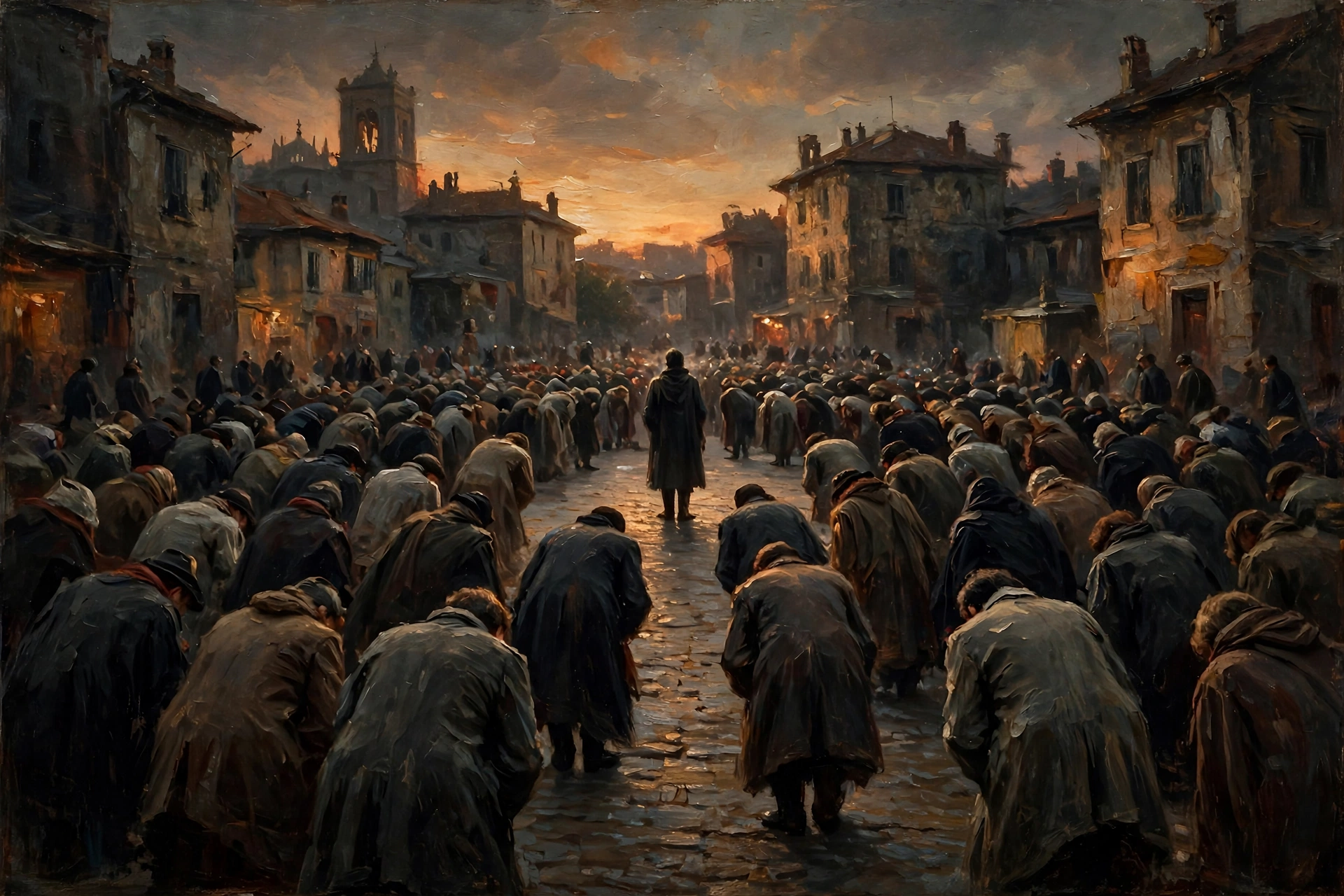
この絵について
描かれているのは、夕暮れの石畳の広場に集まった人々の後ろ姿である。皆が一斉に頭を垂れる中で、ただ一人だけが直立し、前を見ている。
服従の語源は「耳を傾けること」、抵抗の語源は「踏みとどまって立つこと」である。頭を垂れる姿は聞く者の姿であり、直立する姿は立つ者の姿である。この場面で五人が争うのは、まさにその境目——どこまで聞き、どこから立つのか——である。一人だけが立っているのは、抵抗がしばしば少数派の姿で現れるからでもある。
※モチーフは、「服従と抵抗」について一般に共有されている像(従う群衆と背く一人)を既定として選んだ。絵は差し替え可能とする。
服従とは何か。——最初に口を開いたのは、服従の出発点を切り直したルソーだった。
Jean-Jacques Rousseau(ルソー)立てる ― 正当な権力にのみ従う
それでは、力は権利を作らないこと、そしてわれわれが従う義務を負うのは正当な権力だけである ことを認めよう。そうすると、もとの問いが再び現れる。
原文
Let us then admit that force does not create right, and that we are obliged to obey only legitimate powers. In that case, my original question recurs.
— Jean-Jacques Rousseau『The Social Contract & Discourses』 CHAPTER III(G. D. H. Cole 訳) / `rousseau_social_contract#L1853`
ヒュームは、その出発点に実感からの反論を持ち込んだ。人々は、従うと約束したことなどない、と。
David Hume(ヒューム)ずらす ― 服従は生まれたときから
しかし、国民の圧倒的大多数に、支配者の権威に同意したことがあるか、彼らに従うと約束したこ とがあるかと尋ねたなら、彼らはあなたを奇妙に思うだろうし、そのことは同意に依存するのでは なく、自分たちはそのような服従のもとに生まれたのだと答えるのは確実である。 この意見の結果として、われわれはしばしば、そのときあらゆる権力と権威を奪われており、どん な愚かな者でも自ら選ぶことはない人物を、自分たちの自然な支配者だと想像する者たちを目にす る。しかもそれは、ただ彼らが以前に支配した系統にあり、継承が通例であった順位にあるという だけの理由による。あるいはそれは非常に遠い時代のことで、服従の約束をしたことのある人など、 生きている者のなかにほとんどいないかもしれない。 それなら、政府は、そうした者たちに対して、彼らが決してそれに同意しなかったから権威をもた ず、そのような自由な選択を試みること自体を、傲慢で不敬と見なすのであろうか。
原文
But were you to ask the far greatest part of the nation, whether they had ever consented to the authority of their rulers, or promised to obey them, they would be inclined to think very strangely of you; and would certainly reply, that the affair depended not on their consent, but that they were born to such an obedience. In consequence of this opinion, we frequently see them imagine such persons to be their natural rulers, as are at that time deprived of all power and authority, and whom no man, however foolish, would voluntarily chuse; and this merely because they are in that line, which ruled before, and in that degree of it, which used to succeed; though perhaps in so distant a period, that scarce any man alive could ever have given any promise of obedience. Has a government, then, no authority over such as these, because they never consented to it, and would esteem the very attempt of such a free choice a piece of arrogance and impiety?
— David Hume『A Treatise of Human Nature』 PART II / `hume_treatise_human_nature#L18980`
では、不正な法の前ではどうするのか。ソローが三つの道を立てた。
Henry David Thoreau(ソロー)覆す ― 不正な法は直ちに破るか
不正な法は存在する。われわれはそれに従うことで満足するのか、それともそれを改めようと努め、 改めるまでは従うのか、あるいはただちにそれを破るのか。
原文
Unjust laws exist: shall we be content to obey them, or shall we endeavor to amend them, and obey them until we have succeeded, or shall we transgress them at once?
— Henry David Thoreau『On the Duty of Civil Disobedience』 / `thoreau_civil_disobedience#L329`
ペインは「破るな」と答えた。ただしそれは、黙って従えという意味ではない。誤りを示し、廃止を得るためにあらゆる論拠を同時に用いよ——その留保とともに読むべき一句である。
Thomas Paine(ペイン)応答 ― 破らず、論じ尽くして廃止を
私は常に、悪法は、その誤りを示し廃止を得るためにあらゆる論拠を同時に用いつつ従うほうが、 力ずくで破るよりもよいという意見を抱いてきた(そしてそれを実践してもきた)。 悪法を破るという先例は、善い法の力を弱め、それらの恣意的な違反を招くおそれがあるからであ る。
原文
I have always held it an opinion (making it also my practice) that it is better to obey a bad law, making use at the same time of every argument to show its errors and procure its repeal, than forcibly to violate it; because the precedent of breaking a bad law might weaken the force, and lead to a discretionary violation, of those which are good.
— Thomas Paine『The Writings of Thomas Paine — Volume 2 (1779-1792): The Rights of Man』 / `paine_rights_of_man#L4546`
最後にソクラテスが、不服従の最も古い形を示した。それは従うことの拒否ではなく、より高いものへの服従だった。
Socrates(ソクラテス)締め ― あなた方より神に従う
……私の言葉を聞いて、もしあなたがたが私に、ソクラテスよ、今回はアニュトスに従わず、あな たを放免しよう、ただし一つ条件がある、あなたはもうこのように探究したり思索したりしてはな らない、もしまたそうしているところを捕まれば死ぬのだ、と言うなら──もしこれが私を放免す る条件であったなら、私はこう答えるだろう。 アテナイの人びとよ、私はあなたがたを敬い愛している。 しかし私はあなたがたよりも神に従う。 そして命と力のあるかぎり、哲学の実践と教えをやめることはないだろう。 出会う誰にでも私のやり方で勧めて言うだろう。 友よ、あなたは偉大で強大で賢明な都市アテナイの市民でありながら、最大の金と名誉と評判を積 み上げることを恥じず、知恵については少ししか気にかけない……
原文
listening to my words—if you say to me, Socrates, this time we will not mind Anytus, and you shall be let off, but upon one condition, that you are not to enquire and speculate in this way any more, and that if you are caught doing so again you shall die;—if this was the condition on which you let me go, I should reply: Men of Athens, I honour and love you; but I shall obey God rather than you, and while I have life and strength I shall never cease from the practice and teaching of philosophy, exhorting any one whom I meet and saying to him after my manner: You, my friend,—a citizen of the great and mighty and wise city of Athens,—are you not ashamed of heaping up the greatest amount of money and honour and reputation, and caring so little about wisdom and
— Plato『Apology』(Benjamin Jowett 訳) / `plato_apology#L1006`
議論は決着しなかった。ただ五人は、従うことの根拠と限界、そして背くことがもう一つの服従でありうることを、同じ卓の上に置いて帰った。
控えの一句 ON THE BENCH
場面には出なかったが、場面と並べて置く5件。引用はすべて idea-no-tane の精選から一字一句そのまま写したものである。
Thomas Aquinas(アクィナス)
軸6「服従の質と責任」― 救いに十分な服従・完全な服従・無分別な服従の三分類。服従の質を見分ける入口
したがって、服従は三つに区別できる。 第一は救いに十分な服従であり、従う義務があるときに従うことにある。 第二は完全な服従であり、合法的なすべての事柄において従う。 第三は無分別な服従であり、違法な事柄においてさえ従う。
原文
Accordingly we may distinguish a threefold obedience; one, sufficient for salvation, and consisting in obeying when one is bound to obey: secondly, perfect obedience, which obeys in all things lawful: thirdly, indiscreet obedience, which obeys even in matters unlawful.
— Thomas Aquinas『Summa Theologica, Part II-II (Secunda Secundae)』 II-II, Q. 104, Art. 5(Fathers of the English Dominican Province 訳) / `aquinas_summa_secunda_secundae#L45482`
John Stuart Mill(ミル)
軸4「無条件の服従」― あらゆる命令への無条件の服従を要求するのは、緩和されない専制だけである
最も狭い意味では、秩序は服従を意味する。 政府は、自らを従わせることに成功すれば、秩序を保つと言われる。 しかし服従には程度の違いがあり、あらゆる程度が称賛に値するわけではない。 個々の市民が権威をもつ人々のあらゆる命令に無条件に従うことを要求するのは、緩和されない専 制だけである。
原文
In its narrowest acceptation, Order means Obedience. A government is said to preserve order if it succeeds in getting itself obeyed. But there are different degrees of obedience, and it is not every degree that is commendable. Only an unmitigated despotism demands that the individual citizen shall obey unconditionally every mandate of persons in authority.
— John Stuart Mill『Considerations on Representative Government』 Chapter II / `mill_representative_government#L628`
Alexis de Tocqueville(トクヴィル)
軸5「服従と自由」― 権利の観念が、傲慢さなしの独立と卑屈さなしの服従を教えた
無政府と専制を定義することを人々に可能にし、傲慢さなしに独立を保ち、卑屈さなしに従うこと を教えたのは、権利の観念である。暴力に服する者は、その屈従によって卑しめられる。 しかし、同胞に認める権威の権利をもつ者の命令に従うとき、彼は、ある程度まで、命令を下す者 よりも上に立つ。
原文
It is the idea of right which enabled men to define anarchy and tyranny; and which taught them to remain independent without arrogance, as well as to obey without servility. The man who submits to violence is debased by his compliance; but when he obeys the mandate of one who possesses that right of authority which he acknowledges in a fellow-creature, he rises in some measure above the person who delivers the command.
— Alexis de Tocqueville『Democracy in America, Volume 1』 Chapter XIV(Henry Reeve 訳) / `tocqueville_democracy_in_america_v1#L10750`
Leo Tolstoy(トルストイ)
軸6「服従の質と責任」― 政府に従う義務があると思い、悪行の責任は統治者へ移されると思う者は、自らを欺いている
政府に従う義務があり、自分たちが犯す悪行の責任は統治者へ移されると思っている者たちは、自 らを欺いている。
原文
Those who suppose that they are bound to obey the government, and that the responsibility for the misdeeds they commit is transferred from them to their rulers, deceive themselves.
— Leo Tolstoy『\"The Kingdom of God Is Within You\』 CHAPTER I(Constance Garnett 訳) / `tolstoy_kingdom_of_god_within_you#L1038`
Blaise Pascal(パスカル)
軸7「正義と力」― 正しいものが従われるのは正しく、最も強いものが従われるのは必然である
正義、力。正しいものが従われるのは正しく、最も強いものが従われるのは必然である。
原文
_Justice, Power._--It is just that what is just should be obeyed, it is of necessity that what is strongest should be obeyed.
— Blaise Pascal『The Thoughts of Blaise Pascal』 OF JUSTICE, CUSTOMS, AND PREJUDICES(C. Kegan Paul 訳) / `pascal_thoughts#L2787`