POETRY
idea-no-tane の全引用から選んだ超精選による、概念ごとの読み物。
入口 THE WORD
この概念が扱うのは、詩とは何かという問いである。韻律ある言葉か、作ることそのものか、それとも心の志を言葉にすることか。場面の声は、詩の本質と、詩人の力の出どころをめぐって争う。
語源 ― poiēsis は「作ること」
英語の poetry は、ラテン語の poesis を経て、ギリシャ語の poiēsis「作ること、製作」に由来する。その動詞 poiein は「作る」を意味し、poiētēs は「作り手、作者、詩人」である(Etymonline/Merriam-Webster)。つまりギリシャでは、詩人はまず「作る人」だった。古典期の用法では、詩の名はあらゆる種類の著作・制作に広く使われ、16〜17世紀の英語でも詩人はしばしば maker と言い換えられた(Etymonline)。韻律を持つ作品だけが詩なのではなく、無から有を作り出す働きそのものが詩だという考えは、場面と控えに置いたディオティマの言葉にそのまま現れる。詩が韻文の技へ狭まっていくのは、後の時代の話である。
漢字の「詩」 ― 志の赴くところ
中国では、詩の定義は別の根から来る。『説文解字』は「詩、志也」と解し、『毛詩序』は「詩者、志之所之也。在心為志、発言為詩」——詩とは志の赴くところ、心にあれば志、言葉に発すれば詩——と説く(漢語多功能字庫/『説文解字注』所引)。『尚書』舜典にも「詩言志」、詩は志を言うもの、という一句がある。ギリシャの根が「作ること」だったのに対し、中国の根は「心の志を言葉にすること」だった。日本語の「詩」はこの漢語を受け継ぎ、近代になって西洋の poetry の訳語としても使われるようになった。二つの根——作ることと、志を発すること——のあいだで、場面の議論は進む。
場面 THE SCENE
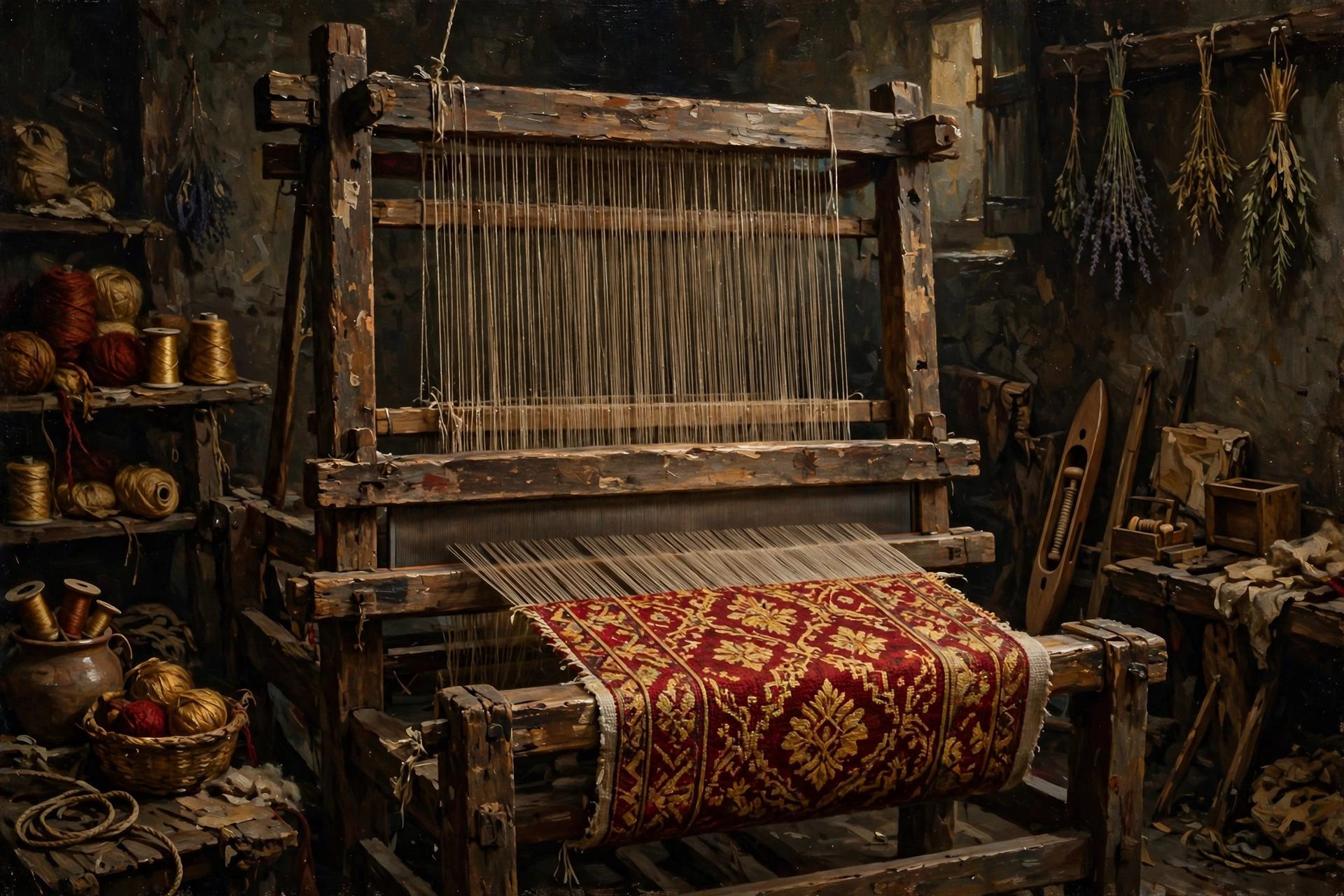
この絵について
描かれているのは、薄暗い工房に置かれた大きな木の織機である。経糸がまっすぐに張られ、その下では深紅と金の文様の織物が、半分ほど織り上がっている。脇の棚には糸玉と糸巻きが並ぶ。織る者は描かれていない。
この織機は、入口で見た poiēsis の像である。詩の語の根は「作ること」にあり、詩人はまず作り手だった。糸が布になるように、言葉が作品になる。場面で争われるのは、その作られたものが真実を運ぶのか嘘を運ぶのか、そして作る力は知から来るのか霊感から来るのか、である。
※モチーフは、「詩」について一般に共有されている像(言葉を織る工房)に、語源の「作ること」を重ねて選んだ。絵は差し替え可能とする。
詩とは何か。——最初に口を開いたのはアリストテレスだった。詩人の役目は、起こったことを語ることではなく、起こりうること、蓋然性または必然性の法則に従って可能なことを語ることである。詩は普遍を表現しようとし、歴史は個別を表現する。したがって詩は歴史よりも哲学的で、より高いものだ、と。虚構は、真理の敵ではなく、普遍への道として置かれた。
Aristotle(アリストテレス)立てる ― 詩人の役目は、起こったことではなく、起こりうることを語ることだ
[アリストテレス]さらに、以上から明らかなように、詩人の役目は、起こったことを語ることで はなく、起こりうること、すなわち蓋然性または必然性の法則に従って可能なことを語ることであ る。詩人と歴史家の違いは、韻文で書くか散文で書くかにあるのではない。 ヘロドトスの作品を韻文にすることもできるが、それでも、韻律があってもなくても歴史の一種で あることに変わりはない。真の違いは、一方が起こったことを語り、他方が起こりうることを語る 点にある。したがって詩は歴史よりも哲学的で、より高いものである。 詩は普遍を表現しようとし、歴史は個別を表現するからである。 普遍とは、ある類型の人物が、蓋然性または必然性の法則に従って、ある場合にどのように語り、 または行動するかということである。そして詩が登場人物に名を付ける際に目指すのは、この普遍 性である。個別とは、たとえばアルキビアデスが何をしたか、あるいは何を被ったかということで ある。喜劇では、このことはすでに明白である。 ここでは詩人はまず蓋然性に沿って筋を組み立て、それから特徴的な名を入れる。 これは特定の個人について書く風刺詩人とは異なる。 しかし悲劇詩人はなお実在の名に固執する。 その理由は、可能なことは信じられるからである。 起こったことのないものを、われわれはすぐに可能だと確信できないが、起こったことは明らかに 可能である。そうでなければ起こらなかったはずだからである。 それでも、よく知られた名が一つか二つしかなく、残りは架空である悲劇もある。 アガトンの『アンテウス』のように、事件も名もすべて架空でありながら、やはり喜びを与える作 品もある。したがって、悲劇の通常の題材である伝承された伝説に、何が何でも固執すべきではな い。そうしようとするのは実に不合理だろう。 知られている題材でさえ、知っているのは少数にすぎないが、それでもすべての人に喜びを与える からである。このことから明らかに、詩人すなわち「作り手」は、韻文よりも筋の作り手であるべ きだということになる。詩人であるのは模倣するからであり、模倣するものは行為だからである。
原文
It is, moreover, evident from what has been said, that it is not the function of the poet to relate what has happened, but what may happen,--what is possible according to the law of probability or necessity. The poet and the historian differ not by writing in verse or in prose. The work of Herodotus might be put into verse, and it would still be a species of history, with metre no less than without it. The true difference is that one relates what has happened, the other what may happen. Poetry, therefore, is a more philosophical and a higher thing than history: for poetry tends to express the universal, history the particular. By the universal, I mean how a person of a certain type will on occasion speak or act, according to the law of probability or necessity; and it is this universality at which poetry aims in the names she attaches to the personages. The particular is--for example--what Alcibiades did or suffered. In Comedy this is already apparent: for here the poet first constructs the plot on the lines of probability, and then inserts characteristic names;--unlike the lampooners who write about particular individuals. But tragedians still keep to real names, the reason being that what is possible is credible: what has not happened we do not at once feel sure to be possible: but what has happened is manifestly possible: otherwise it would not have happened. Still there are even some tragedies in which there are only one or two well known names, the rest being fictitious. In others, none are well known, as in Agathon's Antheus, where incidents and names alike are fictitious, and yet they give none the less pleasure. We must not, therefore, at all costs keep to the received legends, which are the usual subjects of Tragedy. Indeed, it would be absurd to attempt it; for even subjects that are known are known only to a few, and yet give pleasure to all. It clearly follows that the poet or 'maker' should be the maker of plots rather than of verses; since he is a poet because he imitates, and what he imitates are actions.
— Aristotle『The Poetics of Aristotle』 VIII(S. H. Butcher 訳) / `aristotle_poetics#L512`
ソクラテスは、その道を断ち切った。悲劇詩人は模倣者であり、それゆえ他のあらゆる模倣者と同じく、王からも真理からも三つ隔たっているのではないか、と。作られたものは、真理から遠く隔たった模倣でしかない。
Socrates(ソクラテス)覆す ― 悲劇詩人は模倣者であり、王からも真理からも三つ隔たっている
そして悲劇詩人は模倣者であり、それゆえ他のあらゆる模倣者と同じく、王からも真理からも三つ 隔たっているのではないか。
原文
And the tragic poet is an imitator, and therefore, like all other imitators, he is thrice removed from the king and from the truth?
— Plato『The Republic』 BK X(Benjamin Jowett 訳) / `plato_republic#L23359`
そこへ、ムーサたち自身の声が割って入った。荒野の羊飼いども、恥ずべき哀れな者ども、腹だけの者どもよ。われらは、真実であるかのように多くの偽りを語ることができる。だがまた、望むときには、真実を告げることもできる、と。詩の源にいる者たちは、詩を一律には裁かせなかった。
the Muses(ムーサたち)ずらす ― われらは真実であるかのように多くの偽りを語ることができる。だが望むときには真実を告げることもできる
「荒野の羊飼いども、恥ずべき哀れな者ども、腹だけの者どもよ。 われらは、真実であるかのように多くの偽りを語ることができる。 だがまた、望むときには、真実を告げることもできる」。
原文
‘Shepherds of the wilderness, wretched things of shame, mere bellies, we know how to speak many false things as though they were true; but we know, when we will, to utter true things.’
— Hesiod『Hesiod, the Homeric Hymns, and Homerica』 THE THEOGONY(Hugh G. Evelyn-White 訳) / `hesiod_theogony_works_and_days#L2474`
アイスキュロスは、詩人の席を教室に置いた。少年たちには学校の教師がついている。だが我々、詩人こそは大人たちの教師なのだ。我々は正直で清いことを語る義務を負っている、と。詩は、楽しませる前に、教えるものとして置かれた。
Aeschylus(アイスキュロス)責任を置く ― 少年たちには学校の教師がいる。だが詩人こそは大人たちの教師なのだ
少年たちには学校の教師がついている。 だが我々、詩人こそは大人たちの教師なのだ。 我々は正直で清いことを語る義務を負っている。
原文
For boys a teacher at school is found, but we, the poets, are teachers of men. We are BOUND things honest and pure to speak.
— Aristophanes『The Frogs』 THE FROGS(B. B. Rogers 訳) / `aristophanes_frogs#L2019`
最後にカントが、詩の位と、その力の出どころを言った。あらゆる芸術のうちで、詩が第一の位を保つ。その起源はほとんど全面的に天才に負い、規則や模範にもっとも導かれにくい。詩は構想力を自由にすることによって精神を広げるのだ、と。義務でも模倣でもなく、天才による自由な制作が、最後の席に置かれた。
Immanuel Kant(カント)締め ― あらゆる芸術のうちで、詩が第一の位を保つ。その起源はほとんど全面的に天才に負う
あらゆる芸術のうちで、詩(その起源はほとんど全面的に天才に負い、規則や模範にもっとも導か れにくい)が第一の位を保つ。詩は構想力を自由にすることによって精神を広げる。 そして、与えられた概念の限界内で、それに合致しうる可能な形式の際限のない多様性のなかから、 その概念の提示を、どんな言葉による表現も完全には及ばないほどの思想の豊かさと結びつけるも のを提供することによって、美的に理念へと高まる。 詩は、感性にも悟性にも経験においては示されない諸側面に従って自然を現象として考察し判断す る、自由で自発的で自然の規定から独立した精神の能力を感じさせることによって、精神を強くす る。そしてそれによって自然を、超感性的なもののために、またその一種の図式として用いるので ある。詩は、自らが思いのままに生み出す仮象と戯れるが、それによって欺くことはない。 自らの営みがたんなる戯れにすぎないと宣言するからであり、しかしその戯れは悟性によって合目 的的に用いられうるのである。
原文
Of all the arts _poetry_ (which owes its origin almost entirely to genius and will least be guided by precept or example) maintains the first rank. It expands the mind by setting the Imagination at liberty; and by offering within the limits of a given concept amid the unbounded variety of possible forms accordant therewith, that which unites the presentment of this concept with a wealth of thought, to which no verbal expression is completely adequate; and so rising aesthetically to Ideas. It strengthens the mind by making it feel its faculty--free, spontaneous and independent of natural determination--of considering and judging nature as a phenomenon in accordance with aspects which it does not present in experience either for Sense or Understanding, and therefore of using it on behalf of, and as a sort of schema for, the supersensible. It plays with illusion, which it produces at pleasure, but without deceiving by it; for it declares its exercise to be mere play, which however can be purposively used by the Understanding.
— Immanuel Kant『Kant's Critique of Judgement』 SECOND BOOK(J. H. Bernard 訳) / `kant_critique_of_judgement#L7056`
普遍を語る制作、真理から三つ隔たった模倣、嘘も真実も語る女神たち、大人たちの教師、そして天才に負う第一の芸術。——詩の席は、声ごとに違う場所に置かれた。
控えの一句 ON THE BENCH
Socrates(ソクラテス)
軸3 ― 「詩人が詩を書くのは知恵によってではなく、一種の天才と霊感によるのだと知った」。詩人は、自分の詩について詩人自身よりうまく語れない。和文冒頭の話者名の角括弧は母データの表記のまま
[ソクラテス]真実を告白するのはほとんど恥ずかしいが、ここにいる者で、詩人自身より彼らの 詩についてうまく語れなかった者はほとんどいない、と言わなければならない。 そのとき私は、詩人が詩を書くのは知恵によってではなく、一種の天才と霊感によるのだと知った。 彼らは多くの見事なことを語りながら、その意味を理解していない見者や占い師に似ている。 詩人たちもほぼ同じ状態にあるように見えた。 そしてさらに、彼らは自分の詩の力によって、自分が賢くない他の事柄についても、人間の中で最 も賢いと信じていることに、私は気づいた。
原文
I am almost ashamed to confess the truth, but I must say that there is hardly a person present who would not have talked better about their poetry than they did themselves. Then I knew that not by wisdom do poets write poetry, but by a sort of genius and inspiration; they are like diviners or soothsayers who also say many fine things, but do not understand the meaning of them. The poets appeared to me to be much in the same case; and I further observed that upon the strength of their poetry they believed themselves to be the wisest of men in other things in which they were not wise.
— Plato『Apology』(Benjamin Jowett 訳) / `plato_apology#L677`
Diotima(ディオティマ)
軸1 ― 「非存在から存在へのあらゆる創造または移行が詩、すなわち制作であり、技術の達人はみな詩人、すなわち作り手なのです」。詩の名が韻律の一部分に専有される前の、広い定義。和文冒頭の話者名の角括弧は母データの表記のまま
[ディオティマ]彼女は次のように私に答えた。 「あなたも知っているように、詩は複雑で多様です。 非存在から存在へのあらゆる創造または移行が詩、すなわち制作であり、すべての技術の過程は創 造的で、技術の達人はみな詩人、すなわち作り手なのです」「まったくそのとおりです」「それで も」と彼女は言った。「彼らが詩人と呼ばれず、別の名を持つことを、あなたは知っています。 ただ、他から切り離され、音楽と韻律に関わる技術の一部分だけが詩と呼ばれ、この意味で詩を持 つ者が詩人と呼ばれるのです」「まったくそのとおりです」と私は言った。 「愛についても同じことが当てはまります。 善と幸福へのあらゆる欲求は、一般に、愛の偉大で巧妙な力にほかならないと言えるでしょう。 しかし、金儲け、体育、哲学など、他のどんな道によって愛へ引かれる者も、愛する者とは呼ばれ ません――全体の名が、その情愛がただ一つの形をとる者たちによって専有され――その者たちだ けが、そうであると言われるのです」
原文
She answered me as follows: 'There is poetry, which, as you know, is complex and manifold. All creation or passage of non-being into being is poetry or making, and the processes of all art are creative; and the masters of arts are all poets or makers.' 'Very true.' 'Still,' she said, 'you know that they are not called poets, but have other names; only that portion of the art which is separated off from the rest, and is concerned with music and metre, is termed poetry, and they who possess poetry in this sense of the word are called poets.' 'Very true,' I said. 'And the same holds of love. For you may say generally that all desire of good and happiness is only the great and subtle power of love; but they who are drawn towards him by any other path, whether the path of money-making or gymnastics or philosophy, are not called lovers--the name of the whole is appropriated to those whose affection takes one form only--they alone are said to
— Plato『Symposium』(Benjamin Jowett 訳) / `plato_symposium#L2265`
Henri Bergson(ベルクソン)
軸5 ― 「詩人が歌うのは、彼自身の、彼一人だけの、二度と戻らない、ある心の状態である」。内面の表出の側。和文冒頭の話者名の角括弧は母データの表記のまま
[アンリ・ベルクソン]芸術家が画布に定着させるのは、ある場所、ある日、ある時刻に、二度と 見られない色彩を帯びて彼が見た何かである。 詩人が歌うのは、彼自身の、彼一人だけの、二度と戻らない、ある心の状態である。
原文
What the artist fixes on his canvas is something he has seen at a certain spot, on a certain day, at a certain hour, with a colouring that will never be seen again. What the poet sings of is a certain mood which was his, and his alone, and which will never return.
— Henri Bergson『Laughter: An Essay on the Meaning of the Comic』 CHAPTER III(Cloudesley Brereton / Fred Rothwell 訳) / `bergson_laughter#L3025`
Zarathustra(ツァラトゥストラ)
軸2 ― 「不滅なるもの——それはただの比喩にすぎない。そして詩人たちは嘘をつきすぎる」。詩人への最も短い告発
不滅なるもの——それはただの比喩にすぎない。 そして詩人たちは嘘をつきすぎる。
原文
All the imperishable—that’s but a simile, and the poets lie too much.
— Friedrich Nietzsche『Thus Spake Zarathustra』 Part II, \"In The Happy Isles\"(Thomas Common 訳) / `nietzsche_zarathustra#L3873`
Leo Tolstoy(トルストイ)
軸7 ― 「ある作品が詩的だから良いと言うのは、ある硬貨が本物の金に似ているから良いと言うようなものである」。似ていることと本物であることの区別
それゆえ、ある作品が詩的だから、すなわち芸術作品に似ているから良いと言うのは、ある硬貨が 本物の金に似ているから良いと言うようなものである。
原文
And therefore, to say that a certain production is good because it is poetic,—_i.e._ resembles a work of art,—is like saying of a coin that it is good because it resembles real money.
— Leo Tolstoy『What Is Art?』 CHAPTER XI(Aylmer Maude 訳) / `tolstoy_what_is_art#L4941`