Precedent
idea-no-tane の全引用から選んだ超精選による、概念ごとの読み物。
入口 THE WORD
先例は、前に行われた判断が後の判断を縛る仕組みの名である。場面の声たちは、なぜ前に従うのか、従う義務はどこで終わるのか、そして置かれた先例がその後どう育つのかをめぐって争う。
語源 ― 「前に行く」
precedent は、ラテン語 praecedere「前に行く」(prae「前に」+ cedere「行く」)の現在分詞 praecedens に由来する。15世紀初めには「後の類似の事件で規則として引きうる、前の事例」の意味で使われ、法の意味——後の判断の規則となる裁判上の決定——は1680年代に確認される(Online Etymology Dictionary)。先例に従う原理は、ラテン語で stare decisis「決定されたことに立つ」と呼ばれる。前に行く者が、後から来る者の道を作る。その像がこの概念の根にある。
日本語の「先例」と「判例」
日本語では、日常の「前例」と、法の「先例」「判例」とが分かれる。判例は裁判所の判断そのものを指し、先例はそれが後の判断を導く働きを指す。総括が指摘するように、先例という語彙そのものは英米法の制度語であり、大陸法の伝統では判例の働き方は異なる。その日本語の定着の経緯の詳細は未確認である。
場面 THE SCENE
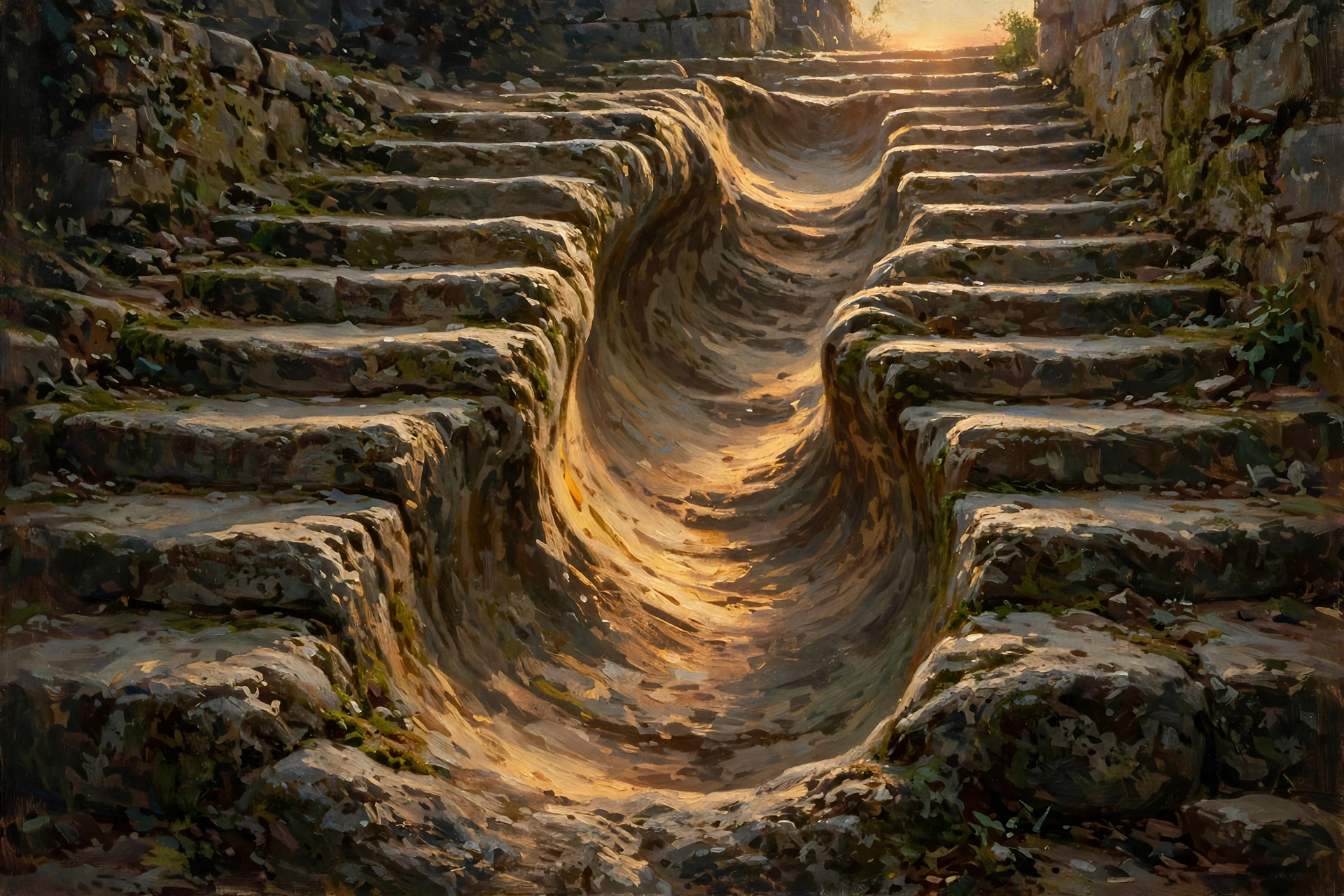
この絵について
古い石の階段の中央が、深い溝のように凹んでいる。何世代もの通行が同じ場所を踏み、硬い石が少しずつ削れて、一本の窪んだ道になった。夕日の光が、その溝に落ちている。
先例とは、前に行った者の足跡である。praecedere は「前に行く」ことだった。後の者は溝のなかを歩く——歩きやすいからであり、そこが道だからである。溝は歩く者を助け、同時に歩く場所を決めてしまう。この概念の争いはすべて、この溝の二つの顔をめぐっている。
絵はモチーフの置き換えが可能であり、この絵でなければならない必然はない。一般に共有される先例の像として、踏み減った石段を選んだ。
場面は、拘束の定式から始まる。ブラックストンは、先例と規則は、まったく不条理ないし不正でない限り、従われなければならないと言う。その理由が一見して明らかでなくとも、我々は往時に対して、彼らがまったく考慮なく行為したとは想定しないだけの敬意を払うべきだからである。溝に従うことが、まず原則として立てられる。
ブラックストン(William Blackstone)立てる
法のドクトリンはすなわちこうである。 先例と規則は、まったく不条理ないし不正でない限り、従われなければならない。 その理由が一見して明らかでなくとも、我々は往時に対して、彼らがまったく考慮なく行為したと は想定しないだけの敬意を払うべきだからである。
原文
THE doctrine of the law then is this: that precedents and rules must be followed, unless flatly absurd or unjust: for though their reason be not obvious at first view, yet we owe such a deference to former times as not to suppose they acted wholly without consideration.
— William Blackstone『Commentaries on the Laws of England, Book the First』 OF THE LAWS OF ENGLAND / `blackstone_commentaries_v1#L2807`
ハミルトンは、その原則に機能の根拠を与える。裁判所における恣意的な裁量を避けるためには、裁判所が厳格な規則と先例によって縛られることが不可欠である。それらはあらゆる個別事件において義務を定義し指示する、と。先例の記録は避けがたく膨大になり、長く骨の折れる研究を要求するだろう。拘束は、判断の自由への制限であると同時に、恣意への制限である。
ハミルトン(Alexander Hamilton)根拠づける
裁判所における恣意的な裁量を避けるためには、裁判所が厳格な規則と先例によって縛られること が不可欠である。それらは、彼らの前に現れるあらゆる個別事件において、その義務を定義し指示 する役割を果たす。そして、人間の愚かさと邪悪さから生じる論争の多様さから容易に察せられる ように、それらの先例の記録は避けがたく非常に大きな量に膨らみ、それに精通するためには長く 骨の折れる研究を要求するだろう。
原文
To avoid an arbitrary discretion in the courts, it is indispensable that they should be bound down by strict rules and precedents, which serve to define and point out their duty in every particular case that comes before them; and it will readily be conceived from the variety of controversies which grow out of the folly and wickedness of mankind, that the records of those precedents must unavoidably swell to a very considerable bulk, and must demand long and laborious study to acquire a competent knowledge of them.
— Hamilton, Madison, Jay『The Federalist Papers』 No. LXXVIII / `federalist_papers#L17749`
ホームズは、その像を裏返す。公式の理論では、各新しい決定は既存の先例から三段論法的に従う。しかし、猫の鎖骨が、それが有用であったある以前の生物の存在を物語るだけであるのとちょうど同じように、先例は、かつて果たした用途が終わり、その理由が忘れ去られた後も、長く法の中に生き残る。溝は、従うべき道である前に、残った痕跡なのである。
ホームズ(Oliver Wendell Holmes Jr.)覆す
公式の理論では、各新しい決定は既存の先例から三段論法的に従う。 しかし、猫の鎖骨が、それが有用であったある以前の生物の存在を物語るだけであるのとちょうど 同じように、先例は、かつて果たした用途が終わり、その理由が忘れ去られた後も、長く法の中に 生き残る。
原文
The official theory is that each new decision follows syllogistically from existing precedents. But just as the clavicle in the cat only tells of the existence of some earlier creature to which a collar-bone was useful, precedents survive in the law long after the use they once served is at an end and the reason for them has been forgotten.
— Oliver Wendell Holmes Jr.『The Common Law』 LECTURE I. -- EARLY FORMS OF LIABILITY / `holmes_common_law#L992`
ケイシー事件の共同意見は、変更の作法に限界を引く。砲火のもとで——政治的な圧力の下で——分水嶺となった判決を覆すことは、再検討する最も有力な理由が無いかぎり、裁判所の正統性をいかなる真剣な疑問をも超えて損なうであろう、と。従う義務には外限がある。しかしその外限は、圧力の側からは開けられない。
オコンナー、ケネディ、サウター(Sandra Day O'Connor, Anthony Kennedy, and David Souter)限界を引く
(中略)**砲火のもとで覆すことは、分水嶺となった判決を再検討する最も有力な理由が無いか ぎり、裁判所の正統性をいかなる真剣な疑問をも超えて損なうであろう。 **
原文
So to overrule under fire in the absence of the most compelling reason to reexamine a watershed decision would subvert the Court's legitimacy beyond any serious question.
— Supreme Court of the United States『Planned Parenthood v. Casey, 505 U.S. 833 (1992)』 Planned Parenthood v. Casey, 505 U.S. 833 (1992) / `case_planned_parenthood_v_casey_1992#L1243`
最後にジャクソンが、置かれた先例のその後を示す。ひとたび司法の意見が差別的な命令を合理化すれば、裁判所はその原理を永遠に有効としたことになる。その原理は、差し迫った必要をもっともらしく主張できる権威の手に用意された、装填された武器のように転がっている。繰り返されるたびに、その原理は法と思考により深く埋め込まれ、新しい目的へと広がる。なお、これはコレマツ事件の判決における反対意見の一節である。溝は、歩く者を導くだけでなく、置かれた場所を超えて転がっていく。
ジャクソン(Robert H. Jackson)締める
しかし、ひとたび司法の意見がそのような命令を合理化して憲法に合致すると示すなら、あるいは むしろ憲法を合理化して憲法がそのような命令を認めると示すなら、**裁判所は永遠に、刑事手 続における人種差別と、アメリカ市民を移送することの原理を有効としたことになる。 その原理はそれから、差し迫った必要をもっともらしく主張できるいかなる権威の手にも用意され た、装填された武器のように転がっている。 **繰り返されるたびに、その原理は我々の法と思考により深く埋め込まれ、新しい目的へと広が る。裁判所の仕事を見守る者は皆、カードーゾ判事が「原理がその論理の極限まで自らを広げよう とする傾向」と呼んだものをよく知っている。
原文
But once a judicial opinion rationalizes such an order to show that it conforms to the Constitution, or rather rationalizes the Constitution to show that the Constitution sanctions such an order, the Court for all time has validated the principle of racial discrimination in criminal procedure and of transplanting American citizens. The principle then lies about like a loaded weapon ready for the hand of any authority that can bring forward a plausible claim of an urgent need. Every repetition imbeds that principle more deeply in our law and thinking and expands it to new purposes. All who observe the work of courts are familiar with what Judge Cardozo described as 'the tendency of a principle to expand itself to the limit of its logic.
— Supreme Court of the United States『Korematsu v. United States, 323 U.S. 214 (1944)』 Korematsu v. United States, 323 U.S. 214 (1944) (Jackson, J., dissenting) / `case_korematsu_v_united_states_1944#L894`
先例は、不条理ないし不正でない限り従うべきものとして立てられ、恣意を防ぐ縛りとして根拠づけられ、理由を失った痕跡として裏返され、砲火のもとで覆すことの戒めによって限界を引かれ、最後に、転がる装填された武器としてその拡大の危険を示された。従うべきか、捨てるべきか。溝のなかを歩き続けることが安定なのか、惰性なのか。この概念の争いは、その問いのあいだで続いている。
控えの一句 ON THE BENCH
オコンナー、ケネディ、サウター(Sandra Day O'Connor, Anthony Kennedy, and David Souter)
軸1・2
先例に従う義務は必要性から始まり、反対の必要性がその外限を画する。
原文
The obligation to follow precedent begins with necessity, and a contrary necessity marks its outer limit.
— Supreme Court of the United States『Planned Parenthood v. Casey, 505 U.S. 833 (1992)』 / `case_planned_parenthood_v_casey_1992#L768`
スカリア(Antonin Scalia)
軸2
先例拘束は先例拘束のドクトリン自体にも適用されるべきだと思われる。 そして、保持したいものだけを保持し、残りを捨て去るという、この新しい版については、私は聞 いたことがないと告白する。
原文
It seems to me that stare decisis ought to be applied even to the doctrine of stare decisis, and I confess never to have heard of this new, keep-what-you-want-and-throw-away-the-rest version.
— Supreme Court of the United States『Planned Parenthood v. Casey, 505 U.S. 833 (1992)』 / `case_planned_parenthood_v_casey_1992#L5321`
ブラック(Hugo Black)
軸2
ブレイディ判決は、自らの十分に考慮された先例との突然の断絶であった。 これらの古い先例――新しいものより健全だと我々は信じる――に戻ることで、我々は公正な司法 制度を達成するために確立された憲法原理を回復するにすぎない。 これらの先例だけでなく、理性と反省もまた、我々の当事者対抗主義の刑事司法において、法廷に 引き出された者が弁護士を雇うには貧しすぎる場合、弁護人が与えられなければ公正な裁判を保証 されえないことを認めるよう我々に求めている。
原文
Brady made an abrupt break with its own well-considered precedents. In returning to these old precedents, sounder we believe than the new, we but restore constitutional principles established to achieve a fair system of justice. Not only these precedents but also reason and reflection require us to recognize that in our adversary system of criminal justice, any person haled into court, who is too poor to hire a lawyer, cannot be assured a fair trial unless counsel is provided for him.
— Supreme Court of the United States『Gideon v. Wainwright, 372 U.S. 335 (1963)』 / `case_gideon_v_wainwright_1963#L217`
カードーゾ(Benjamin Cardozo)
軸3
法は我々をそのような不整合な結論へは導かない。 駅馬車による旅行の時代から引き出された先例は、今日の旅行の条件には適合しない。
原文
The law does not lead us to so inconsequent a conclusion. Precedents drawn from the days of travel by stage coach do not fit the conditions of travel to-day.
— New York Court of Appeals『MacPherson v. Buick Motor Co., 217 N.Y. 382 (1916)』 / `case_macpherson_v_buick_motor_co_1916#L212`
メイン(Henry Sumner Maine)
軸5
先例への明確な追加がなされた。そして、先例を比較して引き出される法の規範は、事件の系列が 一例だけ短縮されていたなら得られたであろうものとは、同じではない。
原文
A clear addition has been made to the precedents, and the canon of law elicited by comparing the precedents is not the same with that which would have been obtained if the series of cases had been curtailed by a single example.
— Henry Sumner Maine『Ancient Law』 CHAPTER II / `maine_ancient_law#L1243`