PROGRESS
idea-no-tane の全引用から選んだ超精選による、概念ごとの読み物。
入口 THE WORD
この概念が扱うのは、前に進むことは良くなることか、という問いである。歴史はどこかへ向かっているのか、それとも「前」の向き自体が思い込みなのか。場面の声は、一歩の意味をめぐって争う。
語源 ― progressus「前へ歩くこと」
progress は、ラテン語の progressus(前進、前へ進むこと)から来ている。動詞 progredi は、pro(前方へ)と gradi(歩む、足を運ぶ)の合成で、gradi は gradus(一歩、歩幅、段階)につながる。英語には15世紀初めに入り、当初の意味は「前へ歩くこと、進行」であり、初期の用法では王侯の公式の巡行を指すことも多かった。「成長、発達、より高い段階への前進」という比喩的な意味が定まるのは1600年ごろである(Online Etymology Dictionary「progress」)。
つまり progress は、生まれつき「改善」の語ではなかった。まず「前へ歩くこと」があり、そこに「良くなること」の意味が後から重なった。この重なりの是非こそが、場面の対立そのものである。ニュートンの絶対時間の「進行」のように、価値を含まない用法も残っている。
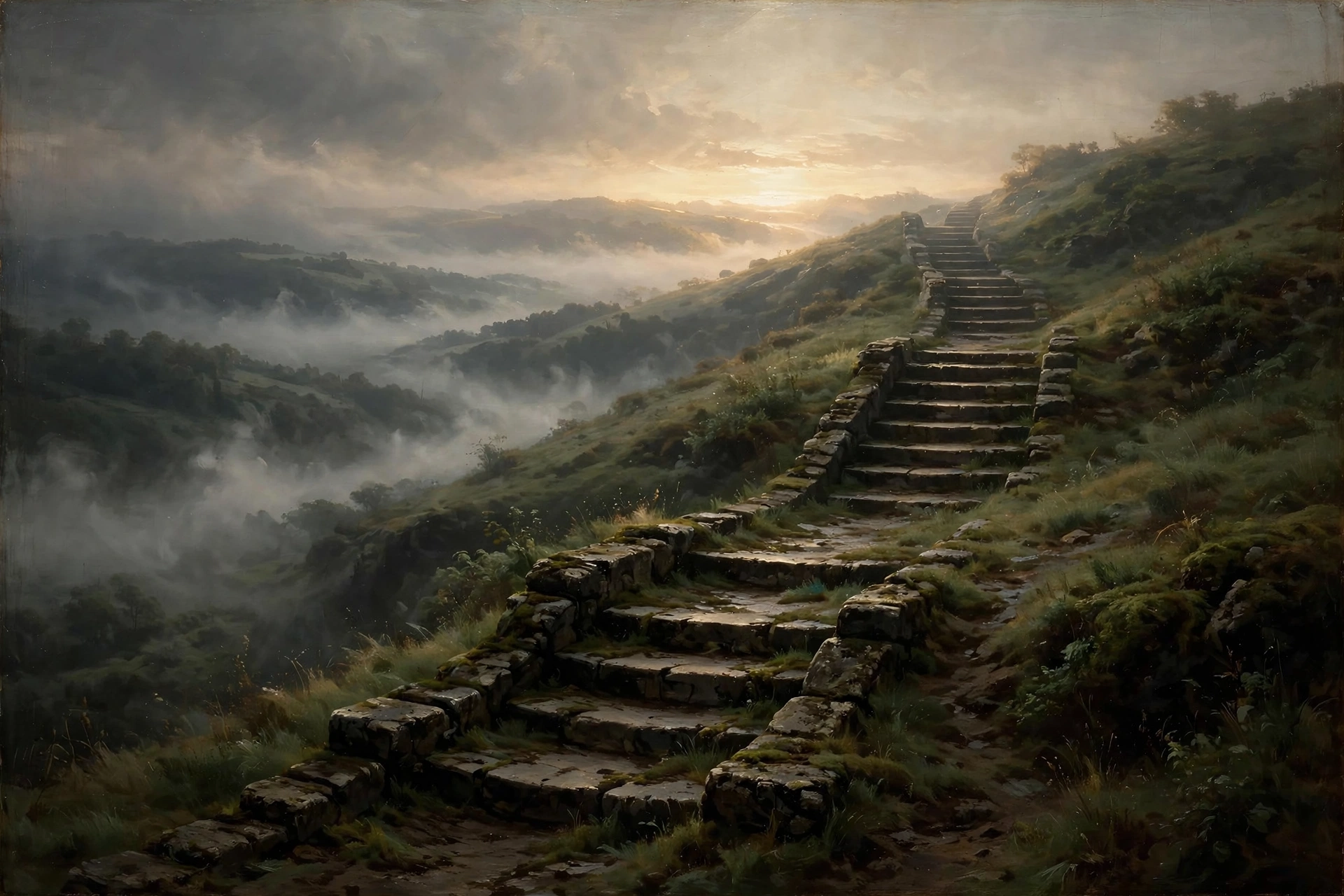
場面の絵に選んだのは、丘を上る石段である。gradus——一歩ずつの段。その段が本当に上へ続いているのか、それともただ前へ続いているだけなのかは、場面の声たちが決める。
日本語の「進歩」 ― 文明と結びついた受容
日本語の「進歩」は、近代以前から「前へ進むこと」の意味で使われていた語である。近代的な progress の概念は明治初期に受容され、福沢諭吉や田口卯吉らを通じて定着したが、その際「文明」と強く結びつき、「文明へ向かう前進」という色を帯びた(「進歩概念の受容と近代日本」要旨)。福沢の『文明論之概略』(1875年)は、その受容の中心にある著作である。「進歩」の近くには「進化」「発展」「前進」が並び、生物の変化には「進化」、経済や組織の伸びには「発展」が当てられることが多い。
場面 THE SCENE
この絵について
描かれているのは、草の丘の斜面を上っていく長い石段である。段は苔むして縁が崩れかけ、下の谷には霧がかかっている。段の先は、朝の光に明るむ地平線へと続いている。人は描かれていない。
この石段は、入口で見た進歩の像である。progressus の gradi は「歩む」ことで、その名詞 gradus は「一歩、段階」を意味した。石段はその語の姿そのものである——一歩ずつ、段を重ねて前へ進む。場面で争われるのは、この段が本当に上へ続いているのか、それとも前へ続いているにすぎないのか、である。
※モチーフは、「進歩」について一般に共有されている像(前へ上る道)を、入口の像と重ねて選んだ。絵は差し替え可能とする。
進歩とは何か。——最初に口を開いたのはデューイだった。進歩は、すでに追求されている目的へいっそう近づくことにあると考えられる。しかし、これは進歩の小さな形態にすぎない。より重要な進歩の様式は、以前からの目的を豊かにし、新しい目的を形成することにある、と。進歩はまず、手段の改善ではなく目的の更新として置かれて始まった。
John Dewey(デューイ)立てる ― より重要な進歩は、目的を豊かにし、新しい目的を形成することにある
一般的に答えるなら、科学は、慣習的な目的への献身から精神が解放されたことを示し、新しい目 的を体系的に追求することを可能にする。 科学は、行為における進歩の作用因である。 進歩は、ときに、すでに追求されている目的へいっそう近づくことにあると考えられる。 しかし、これは進歩の小さな形態にすぎない。 必要なのは行為の手段の改善、すなわち技術的な前進だけだからである。 より重要な進歩の様式は、以前からの目的を豊かにし、新しい目的を形成することにある。 欲望は固定した量ではなく、進歩は満足の量が増すことだけを意味するのでもない。
原文
In general, the reply is that science marks the emancipation of mind from devotion to customary purposes and makes possible the systematic pursuit of new ends. It is the agency of progress in action. Progress is sometimes thought of as consisting in getting nearer to ends already sought. But this is a minor form of progress, for it requires only improvement of the means of action or technical advance. More important modes of progress consist in enriching prior purposes and in forming new ones. Desires are not a fixed quantity, nor does progress mean only an increased amount of satisfaction.
— John Dewey『Democracy and Education』 / `dewey_democracy_and_education#L8033`
ベルクソンは、その前進の地図を描いた。進歩が最初の衝動によって定められた全般的な方向への絶えざる前進を意味するなら、進歩は存在する。しかし、この進歩が成し遂げられるのは、ますます複雑で、ますます高次の形態が現れる、進化の二、三の大きな系統においてだけである。それらの系統の間には無数の小径が走り、そこでは反対に、逸脱、停止、後退が増殖している、と。前進は、後退と並んで描かれた。
Henri Bergson(ベルクソン)広げる ― 大きな系統では前進するが、無数の小径では逸脱・停止・後退が増殖する
そこから増大する無秩序が生じる。確かに、進歩が最初の衝動によって定められた全般的な方向へ の絶えざる前進を意味するなら、進歩は存在する。 しかし、この進歩が成し遂げられるのは、ますます複雑で、ますます高次の形態が現れる、進化の 二、三の大きな系統においてだけである。 それらの系統の間には無数の小径が走り、そこでは反対に、逸脱、停止、後退が増殖している。
原文
Thence results an increasing disorder. No doubt there is progress, if progress mean a continual advance in the general direction determined by a first impulsion; but this progress is accomplished only on the two or three great lines of evolution on which forms ever more and more complex, ever more and more high, appear; between these lines run a crowd of minor paths in which, on the contrary, deviations, arrests, and set-backs, are multiplied.
— Henri Bergson『Creative Evolution』 CHAPTER II(Arthur Mitchell 訳) / `bergson_creative_evolution#L3487`
マルクスは、その前進の裏側を衝いた。資本主義的農業におけるあらゆる進歩は、労働者から略奪する技術の進歩であるだけでなく、土地から略奪する技術の進歩でもある。一定期間の土地の肥沃度を高めるあらゆる進歩は、その肥沃度の永続的な源泉を破滅させることへの進歩である、と。前進と呼ばれるものの請求書が、ここに置かれた。
Karl Marx(マルクス)覆す ― 農業におけるあらゆる進歩は、労働者と土地から略奪する技術の進歩でもある
さらに、資本主義的農業におけるあらゆる進歩は、労働者から略奪する技術の進歩であるだけでな く、土地から略奪する技術の進歩でもある。 一定期間の土地の肥沃度を高めるあらゆる進歩は、その肥沃度の永続的な源泉を破滅させることへ の進歩である。
原文
Moreover, all progress in capitalistic agriculture is a progress in the art, not only of robbing the labourer, but of robbing the soil ; all progress in increasing the fertility of the soil for a given time, is a progress towards ruining the lasting sources of that fertility.
— Karl Marx『Capital: A Critique of Political Economy, Vol. 1』 SECTION 9(Samuel Moore and Edward Aveling 訳) / `marx_capital_v1#L26796`
マルサスは、進歩の射程に留保を付けた。引き出しうる唯一の推論は、人間の改善の正確な限界は知りえない、ということである。そして、無限定な改善と、その限界を確定できない改善との間にある本質的な差異を念押しする。前者は、現在の人間本性の法則のもとでは人間に当てはまらない改善である、と。限界が見えないことは、限界がないことではないとされた。
T. R. Malthus(マルサス)留保する ― 限界を確定できない改善と、無限定な改善とは本質的に異なる
引き出しうる唯一の推論は、人間の改善の正確な限界は知りえない、ということである。 そして私は、この問題では特に注意すべきだと思われる区別を、読者にもう一度念押しせずにはい られない。私が言うのは、無限定な改善と、その限界を確定できない改善との間にある本質的な差 異である。前者は、現在の人間本性の法則のもとでは人間に当てはまらない改善である。
原文
The only inference that can be drawn is that the precise limit of his improvement cannot possibly be known. And I cannot help again reminding the reader of a distinction which, it appears to me, ought particularly to be attended to in the present question: I mean, the essential difference there is between an unlimited improvement and an improvement the limit of which cannot be ascertained. The former is an improvement not applicable to man under the present laws of his nature.
— T. R. Malthus『An Essay on the Principle of Population』 CHAPTER 14 / `malthus_principle_of_population#L3734`
最後にニーチェが、語そのものを退けた。人類は、今日理解されている意味での進歩、すなわちより良い、より強い、より高い段階への進化を表してはいない。この「進歩」は近代的な観念にすぎない。つまり誤った観念である。進化は必ずしも向上、高揚、強化を意味しない、と。前へ歩くことと良くなることの重なりは、ここで剥がされ、議論は締められた。
Friedrich Nietzsche(ニーチェ)締め ― 「進歩」は近代的な観念にすぎない。つまり誤った観念である
人類は、今日理解されている意味での進歩、すなわちより良い、より強い、より高い段階への進化 を表してはいない。この「進歩」は近代的な観念にすぎない。 つまり誤った観念である。今日のヨーロッパ人は、その本質的な価値において、ルネサンスのヨー ロッパ人よりはるかに劣る。進化は必ずしも向上、高揚、強化を意味しない。
原文
Mankind surely does _not_ represent an evolution toward a better or stronger or higher level, as progress is now understood. This "progress" is merely a modern idea, which is to say, a false idea. The European of today, in his essential worth, falls far below the European of the Renaissance; the process of evolution does _not_ necessarily mean elevation, enhancement, strengthening.
— Friedrich Nietzsche『The Antichrist』 §4(H. L. Mencken 訳) / `nietzsche_antichrist#L747`
目的の更新としての進歩、後退を伴う大きな系統の前進、略奪としての技術の進歩、限界への留保、そして誤った観念としての「進歩」。——進歩の姿は、声ごとに違う一歩の測り方で描かれた。
控えの一句 ON THE BENCH
John Stuart Mill(ミル)
軸1/軸5 ― 「進歩とは永続性に何かを加えたものである」。ある事柄における進歩は、あらゆる事柄における進歩を含意せず、同じ種類の永続性を含むという、進歩と秩序の条件づけ
これを認めるとしても、それが証明するのは、進歩が永続性とは類的に異なるものだということで はなく、富が徳とは異なるものだということである。 進歩とは永続性に何かを加えたものである。 ある事柄における進歩があらゆる事柄における永続性を含意しない、と言っても、これへの答えに はならない。同様に、ある事柄における進歩は、あらゆる事柄における進歩を含意しない。 いかなる種類の進歩も、その同じ種類における永続性を含む。 永続性が特定の種類の進歩のために犠牲にされるとき、別の進歩はそれ以上に犠牲にされる。 そして、その犠牲に価値がないなら、無視されたのは永続性の利益だけではなく、進歩の全般的な 利益も取り違えられているのである。
原文
Granting this, what it proves is, not that Progress is generically a different thing from Permanence, but that wealth is a different thing from virtue. Progress is permanence and something more; and it is no answer to this to say that Progress in one thing does not imply Permanence in every thing. No more does Progress in one thing imply Progress in every thing. Progress of any kind includes Permanence in that same kind: whenever Permanence is sacrificed to some particular kind of Progress, other Progress is still more sacrificed to it; and if it be not worth the sacrifice, not the interest of Permanence alone has been disregarded, but the general interest of Progress has been mistaken.
— John Stuart Mill『Considerations on Representative Government』 Chapter II / `mill_representative_government#L764`
Immanuel Kant(カント)
軸3/軸4 ― 「良い政治体制は道徳性の進歩の結果として期待されるものではない。むしろ逆に、国民の良い道徳的状態こそ、そのような体制の最初の果実の一つとして期待されるべきである」。因果の順序の反転
しかし、良い政治体制は道徳性の進歩の結果として期待されるものではない。 むしろ逆に、国民の良い道徳的状態こそ、そのような体制の最初の果実の一つとして期待されるべ きである。
原文
A good political constitution, however, is not to be expected as a result of progress in morality; but rather, conversely, the good moral condition of a nation is to be looked for, as one of the first fruits of such a constitution.
— Immanuel Kant『Perpetual Peace: A Philosophical Essay』 CONCERNING THE GUARANTEE OF PERPETUAL PEACE(Mary Campbell Smith 訳) / `kant_perpetual_peace#L4474`
Adam Smith(スミス)
軸3 ― 社会の進歩につれて、哲学または思索も他のあらゆる仕事と同じく、特定の階級の主要な、あるいは唯一の職業となる。機械の改良だけでなく、観察と思索の専門職化が進歩を支える仕組み
機械の製作が一つの特殊な職業となったとき、その製作者たちの工夫によって多くの改良がなされ た。また、哲学者、すなわち思索する人々と呼ばれる者たちの工夫によってなされた改良もある。 彼らの職業は何かを行うことではなく、あらゆるものを観察することであり、そのため、最も遠く 異質な諸対象の力を結び合わせることがしばしばできる。 社会の進歩につれて、哲学または思索は、他のあらゆる仕事と同じく、特定の市民階級の主要な、 または唯一の職業および生業となる。
原文
Many improvements have been made by the ingenuity of the makers of the machines, when to make them became the business of a peculiar trade; and some by that of those who are called philosophers, or men of speculation, whose trade it is not to do any thing, but to observe every thing, and who, upon that account, are often capable of combining together the powers of the most distant and dissimilar objects in the progress of society, philosophy or speculation becomes, like every other employment, the principal or sole trade and occupation of a particular class of citizens.
— Adam Smith『An Inquiry into the Nature and Causes of the Wealth of Nations』 CHAPTER I / `smith_wealth_of_nations#L439`
Hesiod(ヘシオドス)
軸4 ― 黄金の種族の人間は、労苦と嘆きから遠く、あらゆる災いの届かぬところで宴に興じた。未来への上昇ではなく、失われた黄金時代からの下降という、進歩史観の古典的な反像
まずはじめに、オリュンポスに住む不死の神々は、クロノスが天を治めていた時代に生きた黄金の 種族の人間を作った。彼らは心の悲しみもなく神々のように暮らし、労苦と嘆きから遠く自由であ った。惨めな老いは彼らの上に載らず、脚も腕も衰えることなく、彼らはあらゆる災いの届かぬと ころで宴に興じた。彼らが死ぬときは、眠りに包まれるかのようであった。 彼らはあらゆる良きものを持っていた。 豊かな大地が強いられずして豊富に惜しみなく実りを与えたからである。
原文
First of all the deathless gods who dwell on Olympus made a golden race of mortal men who lived in the time of Cronos when he was reigning in heaven. And they lived like gods without sorrow of heart, remote and free from toil and grief: miserable age rested not on them; but with legs and arms never failing they made merry with feasting beyond the reach of all evils. When they died, it was as though they were overcome with sleep, and they had all good things; for the fruitful earth unforced bare them fruit abundantly and without stint. They dwelt in ease and peace upon their lands with many good things, rich in flocks and loved by the blessed gods.
— Hesiod『Hesiod, the Homeric Hymns, and Homerica』 WORKS AND DAYS(Hugh G. Evelyn-White 訳) / `hesiod_theogony_works_and_days#L1626`
Aristotle(アリストテレス)
軸1/軸4 ― 初めの改善がどれほど小さくても、人は徳へ向かってますます動かされやすくなる。小さな改善が自己強化して人格を転換するという、累積型の進歩論
悪人も、よりよい生活と思考の道へ導かれているなら、どれほどわずかであれ、いくらか前進する ことがありうる。そして、ひとたびほんの少しでも改善すれば、完全に変わるか、少なくともきわ めて大きな進歩を遂げうることは明らかである。 というのも、初めの改善がどれほど小さくても、人は徳へ向かってますます動かされやすくなるか らである。したがって、彼が過去に遂げた以上の進歩をさらに遂げるだろうと考えるのが自然であ る。そしてこの過程が続けば、時間の不足に妨げられないかぎり、彼を完全に変え、反対の状態に 定着させるだろう。
原文
The bad man, if he is being brought into a better way of life and thought, may make some advance, however slight, and if he should once improve, even ever so little, it is plain that he might change completely, or at any rate make very great progress; for a man becomes more and more easily moved to virtue, however small the improvement was at first. It is, therefore, natural to suppose that he will make yet greater progress than he has made in the past; and as this process goes on, it will change him completely and establish him in the contrary state, provided he is not hindered by lack of time.
— Aristotle『The Categories』 Part 10(E. M. Edghill 訳) / `aristotle_categories#L1239`