Restitution
idea-no-tane の全引用から選んだ超精選による、概念ごとの読み物。
入口 THE WORD
この概念が扱うのは、奪われたものを元に戻す義務である。返還は即時でなければならないのか。取った者だけが負うのか、関わった者も負うのか。善意で買った者はどうなるのか。そして、返還しなければ赦しは得られるのか。場面の声は、元に戻すことの条件をめぐって争う。
語源 ― restituere「再び立て直す」
英語の restitution は、ラテン語 restitutio から来ている。その動詞 restituere は「再び立てる、元に戻す、再建する」という意味で、re-「再び」と statuere「立てる、据える」に分かれる(Merriam-Webster「restitution」、Online Etymology Dictionary「restitution」)。
つまりこの語の根にあるのは、物を手から手へ渡す像ではない。倒れたものを再び立てる像である。不当に奪われたものを返すことは、崩れた平等の状態を立て直すこととして考えられてきた。場面の冒頭でアクィナスが返還を「交換的正義の行為」と呼ぶのも、この像の延長にある。
場面の絵に選んだのは、倒れた石柱を縄と木の足場で立て直す場面である。立て直しはまだ途中で、柱は半ばまでしか戻っていない。
日本語の「返還」 ― 戻る動きと、民法の制度
日本語の「返還」は、「返す」と「還る」の組み合わせで、物が持ち主のもとへ戻る動きを指す。restitution の「再び立てる」という像とは、向きが違う。日本語の像は物の移動にあり、ラテン語の像は秩序の回復にある。
日本の民法では、不当利得の制度(第703条以下)がこの概念の中心にある。法律上の原因なく他人の財産や労務によって利益を受けた者は、その利益の存する限度において、これを返還する義務を負う。その効果は原則として原物の返還であり、制度の沿革はローマ法のコンディクティオ(不当利得返還の訴権)にさかのぼる(Wikipedia「不当利得」、民法第703条)。
一方、神学の文脈では restitution は「返還」と訳され、赦しの条件としての返還義務を指してきた。本ページの場面の中心にある決疑論争は、その系譜の議論である。
場面 THE SCENE
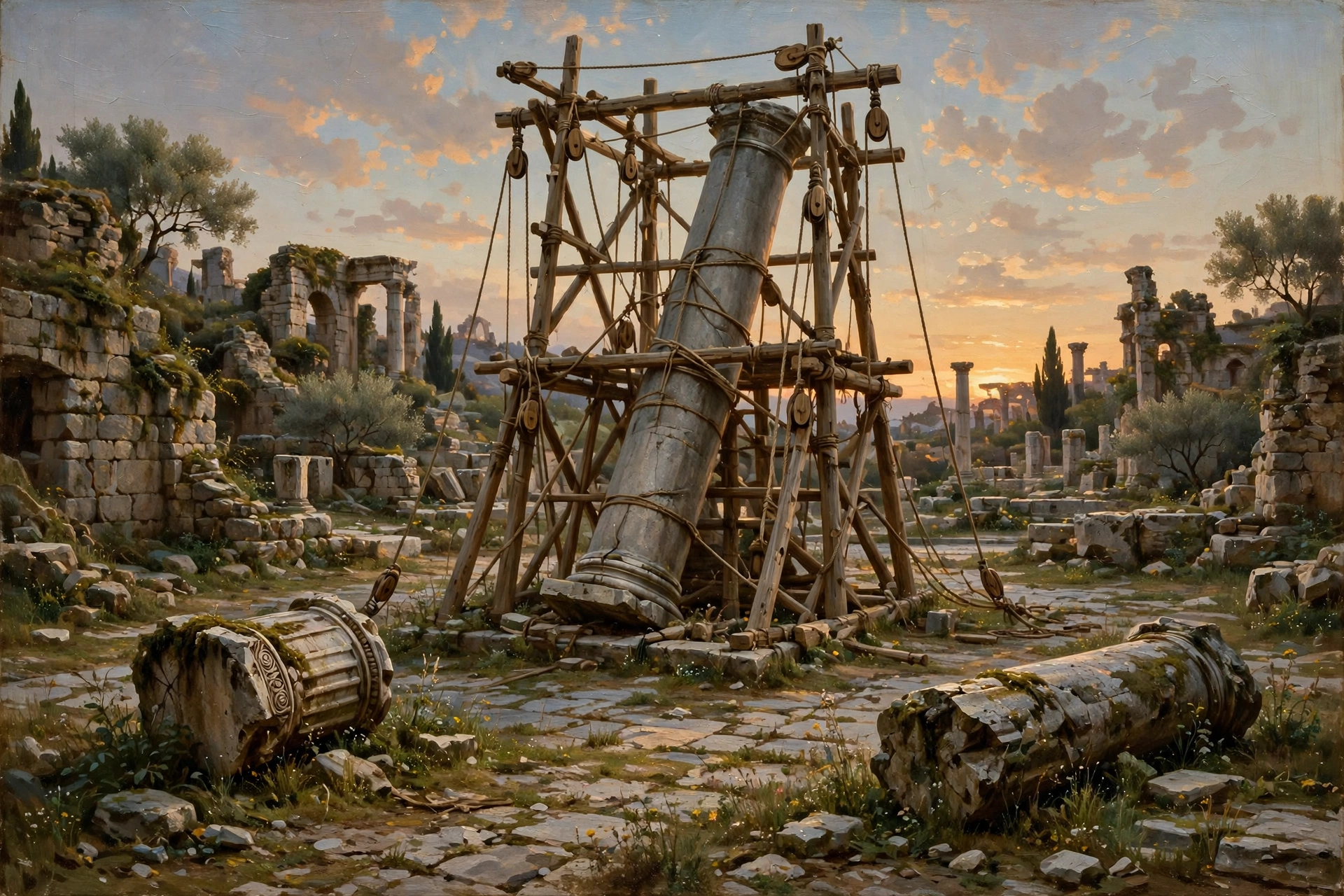
この絵について
遺跡の広場で、倒れた大きな石の円柱が、縄と木の足場と滑車によって、半ばまで立て直されている。そばには、倒れたままの柱がもう数本残っている。
restitution の語源 restituere は「再び立て直す」という意味だった。奪われた物を返すことは、崩れた秩序を立て直すこととして考えられてきた。ただし立て直しは途中であり、セネカの言うように、完全な返還は法によっても保証されない。
絵はモチーフの置き換えが可能であり、この絵でなければならない必然はない。語源の「再び立て直す」という像を、そのまま場面にした。
場面は定義から始まる。アクィナスは、返還とは奪われた物をその持ち主に返すことであり、交換的正義の行為だと言う。返すことが、ここでは正義の名で呼ばれる。
アクィナス(Thomas Aquinas)立てる
したがって返還は交換的正義の行為であり、一方の者が他人のものを保持することから生じる。 それは本人の同意のもとにある場合(たとえば貸借や寄託)もあれば、意思に反する場合(強盗や 窃盗)もある。
原文
Hence restitution is an act of commutative justice, occasioned by one person having what belongs to another, either with his consent, for instance on loan or deposit, or against his will, as in robbery or theft.
— Thomas Aquinas『Summa Theologica, Part II-II (Secunda Secundae)』 II-II, Q. 62, Art. 1(Fathers of the English Dominican Province 訳) / `aquinas_summa_secunda_secundae#L27535`
同じアクィナスが、義務を負う者の範囲を広げる。盗みを命令した者、同意した者、盗品を受け取った者、参加した者、止めなかった者——協力した者はみな、常に返還の義務を負う。返還は、取った者だけの義務ではない。
アクィナス(Thomas Aquinas)範囲を広げる
しかし注意すべきは、これらの場合のうち五つにおいては、協力者は常に返還の義務を負うという ことである。第一に命令の場合。命令する者は主たる動かし手であるから、主として返還の義務を 負う。第二に同意の場合。すなわち、その同意がなければ強盗が起こりえない者の同意である。
原文
It must be observed, however, that in five of these cases the cooperator is always bound to restitution. First, in the case of command: because he that commands is the chief mover, wherefore he is bound to restitution principally. Secondly, in the case of consent; namely of one without whose consent the robbery cannot take place.
— Thomas Aquinas『Summa Theologica, Part II-II (Secunda Secundae)』 II-II, Q. 62, Art. 7(Fathers of the English Dominican Province 訳) / `aquinas_summa_secunda_secundae#L28027`
ここで、義務を消す声が入る。ただし注意が必要で、これは決疑論者レッシウスの言葉を、パスカルが『プロヴァンシャル書簡』のなかで引用したものである。犯罪行為で得たものは、いかなる法によっても返還する義務はない——返還の義務は、神学の内部から緩められていく。
レッシウス(Leonardus Lessius)覆す
「一般的に言って」とレッシウスは言う。 「いかなる者も、姦通のような、たとえ正義に反する行為であっても、犯罪行為を犯すことで得た ものを返還する義務を、自然法によっても実定法によっても(すなわち、いかなる法によっても) 負わない。」
原文
‘No person,’ says Lessius, speaking generally, ‘is bound, either by the law of nature or by positive laws (that is, _by any law_), to make restitution of what has been gained by committing a criminal action, such as adultery, even though that action is contrary to justice.’
— Blaise Pascal『The Provincial Letters』(Thomas M'Crie 訳) / `pascal_provincial_letters#L6857`
パスカルは、その緩和を告発する。返還をせずに赦しを得たい者たちのために、決疑論者たちは逃げ道を用意したのだ、と。義務を広げる声と消す声のあいだで、返還が赦しの条件であり続けるかが問われる。
パスカル(Blaise Pascal)告発する
しかし、返還なしに赦しを得たいと望んで来る別の者がいるとしよう。 彼らが、何らかの種類の、その義務を逃れる手段を用意できないとしたら、それはよほど困難な場 合だろう。その合法性を彼らは保証する用意があるのだから。
原文
But suppose another should come who wishes to be absolved without restitution, and it will be a particularly hard case indeed, if they cannot furnish him with means of evading the duty, of one kind or another, the lawfulness of which they will be ready to guarantee.
— Blaise Pascal『The Provincial Letters』(Thomas M'Crie 訳) / `pascal_provincial_letters#L4518`
最後にセネカが、法の届く範囲に線を引く。いかなる法も、完全な返還をしてくれることは決してない。義務の範囲をめぐる長い争いのあとに残るのは、元に戻すことの不完全さそのものである。
セネカ(Seneca)締める
裁判官があなたを助けてくれると思うなら、それは間違いである。 いかなる法もあなたに完全な返還をしてくれはしない。 あなたは受け手の名誉だけを頼りにしなければならない。
原文
You are mistaken if you suppose that the judge will assist you: no law will make full restitution to you, you must look only to the honour of the receiver.
— Seneca『L. Annaeus Seneca on Benefits』 BOOK III(Aubrey Stewart 訳) / `seneca_on_benefits#L2174`
返還は、正義の行為として定義され、協力者へと広げられ、決疑論によって緩められ、その緩和が告発され、最後に法の不完全さのなかへ置き直された。元に戻すとはどういうことか。義務の範囲と、赦しの条件をめぐる争いが、この概念の姿である。
控えの一句 ON THE BENCH
アクィナス(Thomas Aquinas)
軸4
しかし、それが正当に奪われたのであれば、平等が存することになり、返還の必要はない。 正義は平等に存するからである。したがって、正義の保全が救済に必要である以上、不当に奪われ たものを返すことが救済に必要であることになる。
原文
If, however, it be taken away justly, there will be equality, and so there will be no need for restitution, for justice consists in equality. Since therefore the safeguarding of justice is necessary for salvation, it follows that it is necessary for salvation to restore what has been taken unjustly.
— Thomas Aquinas『Summa Theologica, Part II-II (Secunda Secundae)』 II-II, Q. 62, Art. 2(Fathers of the English Dominican Province 訳) / `aquinas_summa_secunda_secundae#L27607`
カント(Immanuel Kant)
軸1
この改革の目的は、返還の行為(たとえば、第2条で述べたような仕方で奪われた自由を一定の国 家に返すこと)を、アウグストゥスが言ったように「ギリシャのカレンダ」、すなわち決して来な い日まで、無限に遠い日付へ延期することを許さない。 それは非返還を是認することになるだろう。 遅延は、返還があまりに性急になされてわれわれの目指す目的を損なうことのないように、という 意図のもとでのみ許される。
原文
This purpose of reform does not permit of the deferment of an act of restitution (as, for example, the restoration to certain states of freedom of which they have been deprived in the manner described in article 2) to an infinitely distant date—as Augustus used to say, to the “Greek Kalends”, a day that will never come. This would be to sanction non-restitution. Delay is permitted only with the intention that restitution should not be made too precipitately and so defeat the purpose we have in view.
— Immanuel Kant『Perpetual Peace: A Philosophical Essay』 CONTAINING THE PRELIMINARY ARTICLES OF PERPETUAL PEACE BETWEEN STATES(Mary Campbell Smith 訳) / `kant_perpetual_peace#L3361`
グロティウス(Hugo Grotius)
軸3
第七に、他人に属する物の善意の購入者は、真の所有者へ返還する義務があり、支払った価格を回 復することはできない。
原文
Seventhly, a bona-fide purchaser of what belongs to another is obliged to make restitution to the real owner, nor can the price he paid be recovered.
— Hugo Grotius『The Rights of War and Peace』 CHAPTER X(A. C. Campbell 訳) / `grotius_rights_of_war_and_peace#L5228`
グロティウス(Hugo Grotius)
軸5
敵の品物の捕獲は、正しい戦争においてさえ、すべての場合に完全に正当化されるわけではなく、 捕獲者が返還の束縛を免れるわけでも常ではない。 厳密に言えば、純粋な正義の規則によれば、敵が負った債務の正確な額を超えて品物を押収したり 留置したりすることは、合法ではないからである。
原文
The capture of an enemy's goods, even in JUST WAR, is not, in ALL CASES, perfectly justifiable, nor is the captor always exempt from the ties of restitution. For strictly speaking, according to the rules of pure justice, it is not lawful to seize or detain goods except to the exact amount of the debt which the enemy has incurred.
— Hugo Grotius『The Rights of War and Peace』 CHAPTER XIII(A. C. Campbell 訳) / `grotius_rights_of_war_and_peace#L14151`
メイン(Henry Sumner Maine)
軸6
イギリスの批評家たちは準契約を黙示の契約と同一視するのが通例だったが、これは誤りである。 黙示の契約は真の契約だが、準契約はそうではないからである。 黙示の契約では、行為と事情が、明示の契約では言葉によって象徴されるのと同じ要素の象徴であ る。そして人がどちらの象徴の組を用いるかは、合意の理論に関する限り、どうでもよいことのは ずである。しかし準契約は、まったく契約ではない。 そのクラスの最も普通の例は、一方が錯誤によって他方に金を支払った二者の間の関係である。
原文
It has been usual with English critics to identify the Quasi-contracts with _implied_ contracts, but this is an error, for implied contracts are true contracts, which quasi-contracts are not. In implied contracts, acts and circumstances are the symbols of the same ingredients which are symbolised, in express contracts, by words; and whether a man employs one set of symbols or the other must be a matter of indifference so far as concerns the theory of agreement. But a Quasi-Contract is not a contract at all. The commonest sample of the class is the relation subsisting between two persons one of whom has paid money to the other through mistake.
— Henry Sumner Maine『Ancient Law』 CHAPTER IX / `maine_ancient_law#L8035`