SENSE
idea-no-tane の全引用から選んだ超精選による、概念ごとの読み物。
入口 THE WORD
この概念が扱うのは、外の世界が私たちに届く入口の働きである。感覚は真理の基準か、魂を引きずり惑わすものか、それとも知の材料を運ぶ供給者か。場面の声は、感覚の信用をめぐって争う。
語源 ― sentire は「感じる」
英語の sense は、ラテン語の sensus「感覚、感じ、意味」に由来し、その動詞 sentire は「知覚する、感じる」を意味した(Merriam-Webster)。古フランス語の sens は、感覚のほかに「意味」と「方向」をも指し、ゲルマン語の *sinn(心、方向)の流れとも重なったとされる(Wiktionary)。英語の sense が今も「感覚」と「意味」(a sense of the word)の両方を一語で担うのは、この重なりの名残である。感じることと、意味が分かることは、語の上ではもともと隣り合っていた。
ギリシャ語 aisthēsis ― 知覚すること
ギリシャ語の aisthēsis(感覚的知覚)は、動詞 aisthanesthai「感覚や心によって知覚する、感じる」から来て、印欧祖語の根 *au-「知覚する」に遡る(Etymonline「aesthetic」)。後に「美学」を意味する aesthetics がこの語から作られたのは、美の学がもともと感覚的知覚の学として構想されたからである。感覚の語は、美の議論の入口にも立っている。
日本語との対応 ― 感覚と感性
日本語では、五感をはじめとする知覚の働き一般を「感覚」と言う。他方、カントの Sinnlichkeit——悟性的な認識の基盤を構成する、感覚的直感表象を受容する能力——は「感性」と訳し分けられ、場面のカントの声に現れる「感性」はこの哲学用語のほうである(Wikipedia「感性」によるカントの定義)。日常語の「センス」は、英語 sense の「意味・判断」の側の響きを引いている。一つの英語が、日本語では働き(感覚)、能力(感性)、判断(センス)に分かれて届く。その分かれ方が、場面の議論の地図になる。
場面 THE SCENE
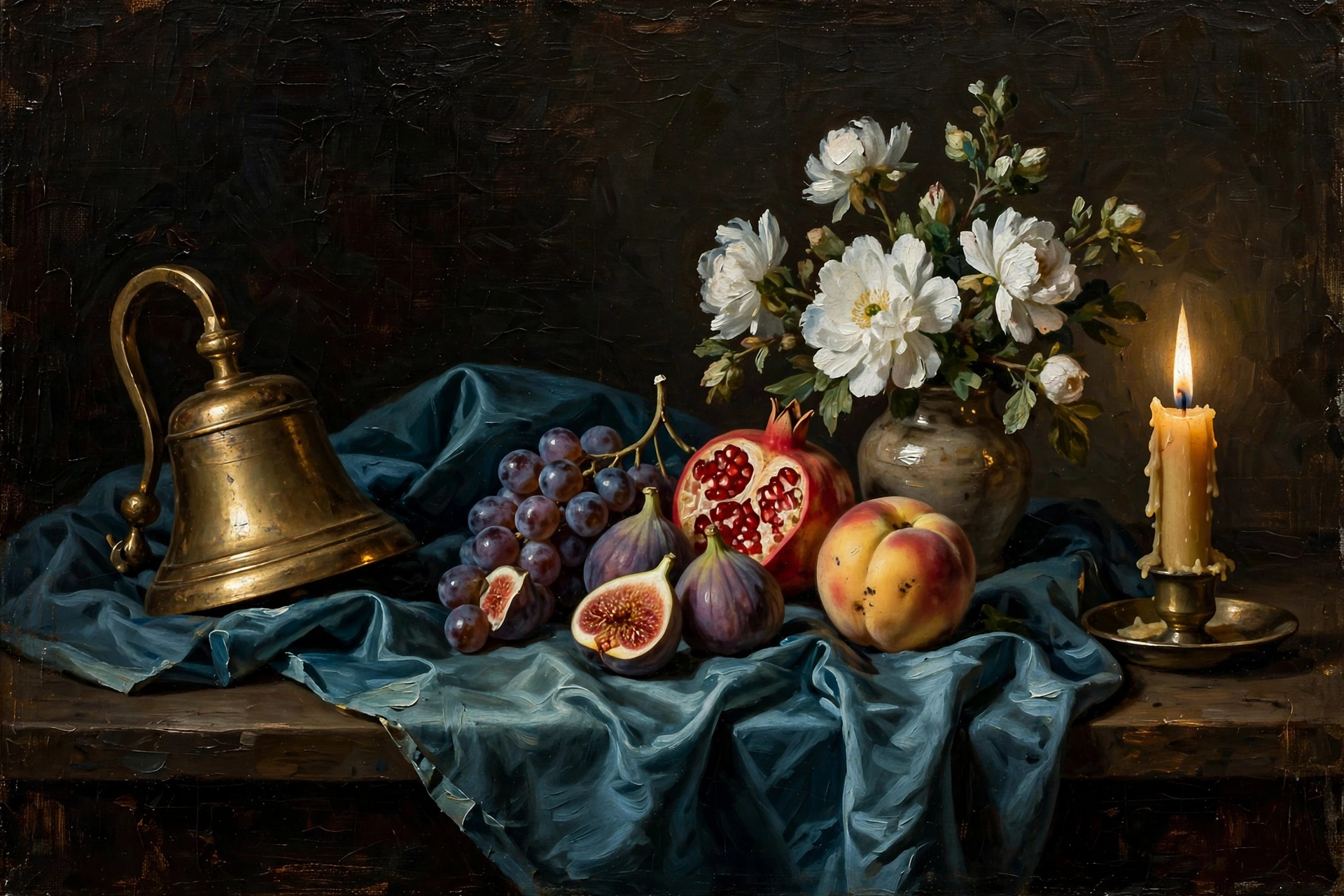
この絵について
描かれているのは、暗い背景の中の卓上の静物である。真鍮の鐘、葡萄と無花果と柘榴、桃、白い花の花瓶、青い絹の布、そして灯る蝋燭が並ぶ。人はおらず、ものだけが光の中にある。
この静物は、五つの感覚への宛名になっている。鐘は聴覚に、果物は味覚と嗅覚に、絹の布は触覚に、花と蝋燭の光は視覚に届く。入口で見たとおり、sense の底には「感じる」ことがあり、その感じることは「意味」の側にも伸びていた。場面で争われるのは、その届いたものの信用である。
※モチーフは、「感覚」について一般に共有されている像(五感に届く静物)を既定として選んだ。絵は差し替え可能とする。
感覚は信用できるか。——最初に口を開いたのはルクレティウスだった。真理の概念が最初に感覚から生まれたこと、そして感覚は反駁されえない。何らかの偽りの感覚から生まれた理性が、あらゆる全体を感覚から生じる、その感覚と矛盾して勝つことなど、ありえないのだ、と。
Lucretius(ルクレティウス)立てる ― 感覚は反駁されえない。感覚から生まれた理性が感覚に勝てるはずがない
君は見いだすだろう、真理の概念が最初に感覚から生まれたこと、そして感覚は反駁されえないこ とを。なぜなら、自らの権威によって偽りを真によって打ち破る、より大きな信頼に値する基準が 見つからねばならないからだ。ではそれは、われわれの感覚以外の何に、より大きな信頼が値する だろうか。何らかの偽りの感覚から生まれた理性が、あらゆる全体を感覚から生じる、その感覚と 矛盾して勝つだろうか。これらが真でなければ、あらゆる理性もまた偽りとなるのだから。
原文
Thou'lt find That from the senses first hath been create Concept of truth, nor can the senses be Rebutted. For criterion must be found Worthy of greater trust, which shall defeat Through own authority the false by true; What, then, than these our senses must there be Worthy a greater trust? Shall reason, sprung From some false sense, prevail to contradict Those senses, sprung as reason wholly is From out the senses?--For lest these be true, All reason also then is falsified.
— Lucretius『On the Nature of Things』 BOOK IV(William Ellery Leonard 訳) / `lucretius_nature_of_things#L5181`
ソクラテスは、正反対の側から答えた。魂が身体を知覚の道具として用いるとき、すなわち視覚や聴覚やその他の感覚を用いるとき、魂もまた身体によって変わるものの領域へ引きずられ、さまよい、混乱する。魂は変化に触れるとき、酔っ払いのようになるのだ、と。
Socrates(ソクラテス)覆す ― 感覚を用いる魂は、変化の領域へ引きずられ、酔っ払いのようにさまよう
そしてわれわれはずっと前に言っていたではないか。 魂が身体を知覚の道具として用いるとき、すなわち視覚や聴覚やその他の感覚を用いるとき(身体 を通して知覚するとは感覚を通して知覚することを意味するのだから)、魂もまた身体によって変 わるものの領域へ引きずられ、さまよい、混乱する。 世界が魂のまわりを回り、魂は変化に触れるとき酔っ払いのようになる、と。
原文
And were we not saying long ago that the soul when using the body as an instrument of perception, that is to say, when using the sense of sight or hearing or some other sense (for the meaning of perceiving through the body is perceiving through the senses)--were we not saying that the soul too is then dragged by the body into the region of the changeable, and wanders and is confused; the world spins round her, and she is like a drunkard, when she touches change?
— Plato『Phaedo』(Benjamin Jowett 訳) / `plato_phaedo#L2612`
ロックは、問いそのものをずらした。感覚は、黄、白、熱、冷、柔、硬、苦、甘といった観念を心に運ぶ。われわれがもつ観念の大部分のこの大きな源は、すべて感覚に依存し、感覚によって悟性に導かれる。彼はこれを感覚、SENSATION と呼んだ、と。
John Locke(ロック)ずらす ― 観念の大部分の大きな源は感覚であり、私はこれを SENSATION と呼ぶ
第一に、個々の感覚される対象に関わるわれわれの感覚は、それらの対象が感覚に作用する様々な 仕方に応じて、事物についての種々の判明な知覚を心に運ぶ。 こうして、われわれは黄、白、熱、冷、柔、硬、苦、甘、そしてわれわれが感覚的性質と呼ぶすべ てのものについてもつ観念を得る。感覚が心にそれらを運ぶと言うとき、私が意味するのは、感覚 が外的な対象から、そこに(心に)それらの知覚を生み出すものを心に運ぶということである。 われわれがもつ観念の大部分のこの大きな源は、すべて感覚に依存し、感覚によって悟性に導かれ るのであり、私はこれを感覚と呼ぶ。
原文
First, our Senses, conversant about particular sensible objects, do convey into the mind several distinct perceptions of things, according to those various ways wherein those objects do affect them. And thus we come by those IDEAS we have of yellow, white, heat, cold, soft, hard, bitter, sweet, and all those which we call sensible qualities; which when I say the senses convey into the mind, I mean, they from external objects convey into the mind what produces there those perceptions. This great source of most of the ideas we have, depending wholly upon our senses, and derived by them to the understanding, I call SENSATION.
— John Locke『An Essay Concerning Humane Understanding, Volume 1』 CHAPTER I / `locke_essay_human_understanding_v1#L3053`
カントは、両者のあいだに立った。感性の能力なくしてはいかなる対象も我々に与えられず、悟性なくしてはいかなる対象も思考されない。内容なき思考は空虚であり、概念なき直観は盲目である、と。
Immanuel Kant(カント)調停する ― 内容なき思考は空虚であり、概念なき直観は盲目である
感性の能力なくしてはいかなる対象も我々に与えられず、悟性なくしてはいかなる対象も思考され ない。内容なき思考は空虚であり、概念なき直観は盲目である。 ゆえに心が自らの概念を感性的にすること(すなわち直観において概念に対象を結びつけること) は、自らの直観を知性的にすること(すなわち直観を概念のもとにもたらすこと)と同じく必要で ある。
原文
Without the sensuous faculty no object would be given to us, and without the understanding no object would be thought. Thoughts without content are void; intuitions without conceptions, blind. Hence it is as necessary for the mind to make its conceptions sensuous (that is, to join to them the object in intuition), as to make its intuitions intelligible (that is, to bring them under conceptions).
— Immanuel Kant『The Critique of Pure Reason』 TRANSCENDENTAL DOCTRINE(J. M. D. Meiklejohn 訳) / `kant_critique_of_pure_reason#L2993`
最後にニーチェが、身体の側から言い放った。「純粋な精神」とは純粋な愚かさである。神経系と感覚、いわゆる「死すべき殻」を取り去れば、残りは計算違いにすぎない。それだけのことだ、と。
Friedrich Nietzsche(ニーチェ)締め ― 「純粋な精神」とは純粋な愚かさである
「純粋な精神」とは純粋な愚かさである。 神経系と感覚、いわゆる「死すべき殻」を取り去れば、残りは計算違いにすぎない。 それだけのことだ。
原文
The "pure spirit" is a piece of pure stupidity: take away the nervous system and the senses, the so-called "mortal shell," and _the rest is miscalculation_--that is all!
— Friedrich Nietzsche『The Antichrist』 THE ANTICHRIST(H. L. Mencken 訳) / `nietzsche_antichrist#L1061`
反駁されえない基準としての感覚、魂を引きずる障害としての感覚、観念の源泉としての感覚、概念と組んで初めて働く感性、そして取り去れば計算違いしか残らない身体の感覚。——感覚の信用は、声ごとに違う顔を見せた。
控えの一句 ON THE BENCH
John Stuart Mill(ミル)
軸4 ― 「感覚の誤りと呼ばれるものは、厳密には感覚の誤りではなく、感覚からの誤った推論である」。欺くのは感覚か判断かへの一つの答え
通俗に感覚の誤りと呼ばれるものの例は、無数に挙げ、同じやり方で分析できる。 それらのどれも厳密には感覚の誤りではなく、感覚からの誤った推論である。 倍増レンズを通して蠟燭を見ると、一本の代わりに十二本ほどの蠟燭が見える。 事態の実際の事情が巧みに偽装されていれば、私は本当にそれだけの数があると思うかもしれない。 それは、いわゆる光学的欺瞞となるであろう。
原文
Innumerable instances might be given, and analyzed in the same manner, of what are vulgarly called errors of sense. There are none of them properly errors of sense; they are erroneous inferences from sense. When I look at a candle through a multiplying glass, I see what seems a dozen candles instead of one; and if the real circumstances of the case were skillfully disguised, I might suppose that there were really that number; there would be what is called an optical deception.
— John Stuart Mill『A System of Logic, Ratiocinative and Inductive』 Chapter I / `mill_system_of_logic#L23026`
Adam Smith(アダム・スミス)
軸5 ― 「感覚はわれわれ自身の人格を越えてわれわれを運んだことはなく、また、けっして運びえない」。兄弟が拷問台にあっても感覚は教えないという、限界の指摘
われわれの兄弟が拷問台にかけられていても、われわれ自身が安楽にしているかぎり、われわれの 感覚は彼が苦しんでいることをけっして知らせない。 感覚はわれわれ自身の人格を越えてわれわれを運んだことはなく、またけっして運びえない。 彼の感覚がどのようなものであるかについて何らかの概念を形成できるのは、想像力によってだけ である。その能力も、彼の立場に置かれたならわれわれ自身の感覚がどのようなものになるかを表 象する以外の仕方でこれを助けることはできない。 われわれの想像力が写すのは、われわれ自身の感覚の印象だけであって、彼の感覚の印象ではない。
原文
Though our brother is upon the rack, as long as we ourselves are at our ease, our senses will never inform us of what he suffers. They never did and never can carry us beyond our own person, and it is by the imagination only that we can form any conception of what are his sensations. Neither can that faculty help us to this any other way, than by representing to us what would be our own, if we were in his case. It is the impressions of our own senses only, not those of his, which our imaginations copy.
— Adam Smith『The Theory of Moral Sentiments』 SECTION I / `smith_moral_sentiments#L311`
Henri Bergson(ベルクソン)
軸5 ― 「私の感覚と意識は、実在の実用的な単純化しか与えない」。感覚を行動のための選択とする一句
私は見て、見ていると思い、聞いて、聞いていると思い、自分を省みて、心の奥底を読んでいると 思う。だが私が外界について見聞きするものは、ただ私の行動を照らすために感覚が行った選択に すぎない。……したがって私の感覚と意識は、実在の実用的な単純化しか与えない。
原文
I look and I think I see, I listen and I think I hear, I examine myself and I think I am reading the very depths of my heart. But what I see and hear of the outer world is purely and simply a selection made by my senses to serve as a light to my conduct; what I know of myself is what comes to the surface, what participates in my actions. My senses and my consciousness, therefore, give me no more than a practical simplification of reality.
— Henri Bergson『Laughter: An Essay on the Meaning of the Comic』 CH III(Cloudesley Brereton / Fred Rothwell 訳) / `bergson_laughter#L2856`
Michel de Montaigne(モンテーニュ)
軸1/軸4 ― 「雪がわれわれには白く見えるとは宣言できても、その本質において実際にそうだと断言するのは、われわれに正当化できる以上のことだ」。懐疑の一手
さて、われわれの知覚がこれほど不確かで争いの種であるなら、雪がわれわれには白く見えるとは 宣言できても、その本質において実際にそうだと断言するのはわれわれに正当化できる以上のこと だと告げられても、もう不思議ではない。 そしてこの基礎が揺らげば、世界のすべての知識は必然的に崩れ去る。
原文
Now, our perception being so uncertain and so controverted, it is no more a wonder if we are told that we may declare that snow appears white to us; but that to affirm that it is in its own essence really so is more than we are able to justify; and, this foundation being shaken, all the knowledge in the world must of necessity fall to ruin.
— Michel de Montaigne『Essays of Michel de Montaigne — Complete』 Chapter XII(Charles Cotton 訳) / `montaigne_essays_complete#L28065`
Yama(ヤマ)
軸6 ― 「感官は馬と呼ばれ、感官の対象は道である」。感覚を御すべき馬とする、東洋の感覚観の基本の比喩。話者は母データの表記のまま
感官は馬と呼ばれ、感官の対象は道である。 アートマンが身体・感官・心と結びついているとき、賢者はそれを享受者と呼ぶ。
原文
The senses are called the horses; the sense objects are the roads; when the Atman is united with body, senses and mind, then the wise call Him the enjoyer.
— (various)『The Upanishads』 Katha-Upanishad, Part Third, IV(Swami Paramananda 訳) / `upanishads#L1379`