SHAME
idea-no-tane の全引用から選んだ超精選による、概念ごとの読み物。
入口 THE WORD
この概念が扱うのは、羞恥とは何か、という問いである。それは徳なのか、徳に至らない未完成の感情なのか。恥じるべきことを決めるのは、他人の眼か、自分の内なる眼か。場面の声は、恥の居場所をめぐって争う。
語源 ― scamu と「覆う」という推測
shame は古英語 scamu(sceamu)に由来し、原ゲルマン語 *skamō にさかのぼる(ドイツ語 Scham、古ノルド語 skömm と同系)。その先の語源は不明とされる。最も有力な推測は、印欧祖語 *skem-、さらに *kem-「覆う」につなぐ説で、自分を覆うことが羞恥のありふれた表れである点が根拠に挙げられる(Online Etymology Dictionary「shame」)。語源は確定していない——だが「覆う」という像は、この感情の姿をよく映している。恥じる者は顔を覆い、身を隠そうとする。
ギリシア語は、shame を二つに分けて持っていた。aiskhynē は悪い意味の恥、すなわち不名誉・汚辱であり、aidōs は良い意味の恥、すなわち慎み・はにかみだった(同上)。古ノルド語には kinnroði「頬の赤み」という語もあり、赤面そのものが恥の名になった。
場面の絵に選んだのは、夕日に赤く染まる石壁の前の石段に、伏せて置かれた白い仮面である。仮面は顔を覆うもの、そして壁と石段の赤は、頬に上る赤みの像である。誰もいない石段に、覆うものだけが残されている。
日本語の「恥」 ― 感情と評価の分かれ
日本語の「恥(はじ)」は和語で、感情としての恥を指す。「羞恥」は漢語で、より分析的な場面で使われる。英語の shame、disgrace、ignominy、infamy は、感情だけでなく、他者からの評価、身分の低下、刑罰に伴う汚名をもまたぐため、日本語でも「恥」「羞恥」「不名誉」「汚名」「屈辱」に分かれ、同じ心理状態を指すとは限らない(総括の未決事項)。場面で「恥」と訳されるものの幅の広さは、この分かれの広さでもある。
場面 THE SCENE
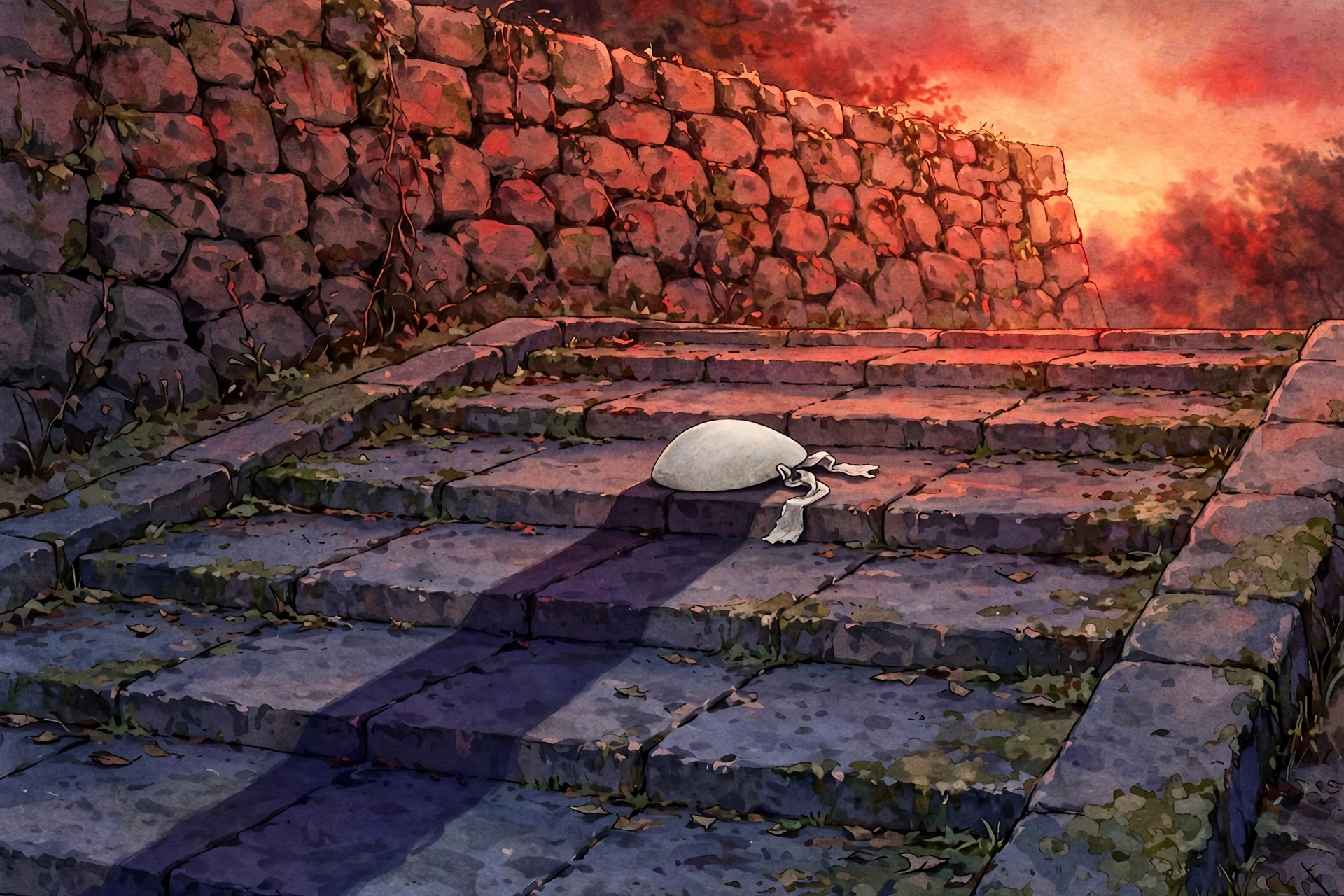
この絵について
描かれているのは、夕日に赤く染まる石壁と石段である。石段の上に、白い仮面が顔を伏せて置かれている。仮面の影が長く伸び、あたりに人はいない。空も壁も、燃えるような赤に染まっている。
この仮面と赤は、入口で見た羞恥の二つの像である。仮面は顔を覆うもの——shame の語源に推測される「覆う」という根の姿であり、赤は頬に上る赤面、古ノルド語で「頬の赤み」と呼ばれた恥の徴である。場面で争われるのは、この恥が誰の眼の前に生じるのかである。他人の眼か、自分の内なる眼か。
※モチーフは、「羞恥」について一般に共有されている像(顔を覆うこと、赤面)と、語源に推測される像を重ねて選んだ。絵は差し替え可能とする。
羞恥とは何か。——最初に口を開いたのはアリストテレスだった。羞恥を徳と呼ぶのは正しくない。羞恥は倫理的状態というより、はるかに感情に近いからである。周知のように、それは「不名誉への一種の恐れ」と定義され、その作用は危険への恐れの作用に似ている。羞恥を感じる者は赤面し、死を恐れる者は青ざめるからである、と。羞恥はまず、徳の名を剥がされ、恐れの一種として置かれて始まった。
Aristotle(アリストテレス)立てる ― 羞恥は徳ではなく、「不名誉への一種の恐れ」である
羞恥を徳と呼ぶのは正しくない。羞恥は倫理的状態というより、はるかに感情に近いからである。 周知のように、それは「不名誉への一種の恐れ」と定義され、その作用は危険への恐れの作用に似 ている。羞恥を感じる者は赤面し、死を恐れる者は青ざめるからである。
原文
To speak of Shame as a Virtue is incorrect, because it is much more like a feeling than a moral state. It is defined, we know, to be “a kind of fear of disgrace,” and its effects are similar to those of the fear of danger, for they who feel Shame grow red and they who fear death turn pale.
— Aristotle『The Nicomachean Ethics of Aristotle』 Chapter XI(D. P. Chase 訳) / `aristotle_nicomachean_ethics#L4435`
ソクラテスは、その恐れの向きを内側へ向けた。アテナイの人々よ、私はあなた方を尊び愛している。しかしあなた方より神に従う。そして命と力のあるかぎり、会う者には誰にでもこう語るだろう。「友よ、偉大で強く賢い都市アテナイの市民でありながら、金銭と名誉と評判を最大限に積み上げることに心を砕き、知恵と真理と魂の最大の向上にはほとんど心を配らず、まったく顧みも注意もしないことを恥じないのか」と。他人の眼の前の恥は、自分の魂への問いとして置き直された。
Socrates(ソクラテス)内なる眼へ ― 魂の向上を顧みないことを、恥じないのか
アテナイの人々よ、私はあなた方を尊び愛している。 しかしあなた方より神に従う。そして命と力のあるかぎり、哲学を実践し教えることを決してやめ ず、会う者には誰にでも勧告し、いつものやり方でこう語るだろう。 「友よ、偉大で強く賢い都市アテナイの市民でありながら、金銭と名誉と評判を最大限に積み上げ ることに心を砕き、知恵と真理と魂の最大の向上にはほとんど心を配らず、まったく顧みも注意も しないことを恥じないのか」と。
原文
Men of Athens, I honour and love you; but I shall obey God rather than you, and while I have life and strength I shall never cease from the practice and teaching of philosophy, exhorting any one whom I meet and saying to him after my manner: You, my friend,—a citizen of the great and mighty and wise city of Athens,—are you not ashamed of heaping up the greatest amount of money and honour and reputation, and caring so little about wisdom and truth and the greatest improvement of the soul, which you never regard or heed at all?
— Plato『Apology』(Benjamin Jowett 訳) / `plato_apology#L1010`
ロックは、恥を動かす眼の仕組みを示した。称賛と不名誉が、人を交際する相手の意見や規則に適合させる強い動機ではないと考える者は、人類の本性または歴史についてほとんど心得がない。人類の大部分は、主として、いやひょっとするともっぱら、この流行の法によって自らを律している。そして彼らは、法律をほとんど顧みず、仲間内での評判を保つことを行うのである、と。なお、この引用の原文は母データの中で文の途中で切れている(記録事項)。恥は、内なる眼の前に、世評という外の法廷の姿で置かれた。
John Locke(ロック)仕組み ― 人を律するのは法律ではなく、称賛と不名誉の「流行の法」である
もし誰かが、私が自分自身の法の観念を忘れたと思うなら、それは、徳と悪徳を判断する法を、法 を作るに足る権威をもたない私人の同意にすぎないものとしたからだろう。 とりわけ彼らは、法にとって不可欠で本質的な、法を執行する力を欠いている。 しかし私はこう言ってよいと思う。称賛と不名誉が、人を、交際する相手の意見や規則に適合させ る強い動機ではないと考える者は、人類の本性または歴史についてほとんど心得がない。 人類の大部分は、主として、いやひょっとするともっぱら、この流行の法によって自らを律してい ることがわかる。そして彼らは、法律をほとんど顧みず、仲間内での評判を保つことを行うのであ る。
原文
If any one shall imagine that I have forgot my own notion of a law, when I make the law, whereby men judge of virtue and vice, to be nothing else but the consent of private men, who have not authority enough to make a law: especially wanting that which is so necessary and essential to a law, a power to enforce it: I think I may say, that he who imagines commendation and disgrace not to be strong motives to men to accommodate themselves to the opinions and rules of those with whom they converse, seems little skilled in the nature or history of mankind: the greatest part whereof we shall find to govern themselves chiefly, if not solely, by this LAW OF FASHION; and so they do that which keeps them in reputation with their company, little regard the laws of
— John Locke『An Essay Concerning Humane Understanding, Volume 1』 CHAPTER XXVIII / `locke_essay_human_understanding_v1#L12520`
ウルストンクラフトは、その法廷の物差し自体を衝いた。そのうえ、貧困が悪徳よりさえ恥ずべきものとされるとき、道徳は急所を刺されているのではないか、と。何を恥とするかの割り当てが歪めば、恥の感情は道徳を守るどころか、道徳を傷つける側に回ることが示された。
Mary Wollstonecraft(ウルストンクラフト)覆す ― 貧困が悪徳より恥ずべきものとされるとき、道徳は急所を刺されている
そのうえ、貧困が悪徳よりさえ恥ずべきものとされるとき、道徳は急所を刺されているのではない か。
原文
Besides, when poverty is more disgraceful than even vice, is not morality cut to the quick?
— Mary Wollstonecraft『A Vindication of the Rights of Woman』 CHAPTER 9 / `wollstonecraft_vindication_of_woman#L6846`
最後にニーチェが、恥の隠すものを見た。人が最も恥じるものは、最悪のものとは限らない。仮面の背後には欺瞞だけでなく、技巧のなかに実に多くの善良さがある。何か高価で壊れやすいものを隠す人が、古く緑色で重い箍をはめた葡萄酒樽のように、不器用に丸々として人生を転がっていく姿を私は想像できる。羞恥に深みをもつ人は、ほとんど誰も到達しない道で自分の運命と繊細な決断に出会うのだ、と。恥は悪の番人である前に、壊れやすい善さの覆いとして置き直されて、議論は締められた。
Friedrich Nietzsche(ニーチェ)締め ― 人が最も恥じるものは、最悪のものとは限らない。羞恥は壊れやすい善さをも隠す
人は少なくとも秘密のなかで唯一の当事者に復讐するため、自分自身の記憶を曇らせ、悪用するこ とさえできる。羞恥は創意に富む。人が最も恥じるものは、最悪のものとは限らない。 仮面の背後には欺瞞だけでなく、技巧のなかに実に多くの善良さがある。 何か高価で壊れやすいものを隠す人が、古く緑色で重い箍をはめた葡萄酒樽のように、不器用に丸 々として人生を転がっていく姿を私は想像できる。 彼の羞恥の繊細さがそうすることを要求するのである。 羞恥に深みをもつ人は、ほとんど誰も到達しない道で自分の運命と繊細な決断に出会う。 その道の存在を最も近しい親密な友人さえ知らないことがある。 彼の死の危険は彼らの目から隠れ、回復した安全も同様に隠れる。
原文
Many a one is able to obscure and abuse his own memory, in order at least to have vengeance on this sole party in the secret: shame is inventive. They are not the worst things of which one is most ashamed: there is not only deceit behind a mask--there is so much goodness in craft. I could imagine that a man with something costly and fragile to conceal, would roll through life clumsily and rotundly like an old, green, heavily-hooped wine-cask: the refinement of his shame requiring it to be so. A man who has depths in his shame meets his destiny and his delicate decisions upon paths which few ever reach, and with regard to the existence of which his nearest and most intimate friends may be ignorant; his mortal danger conceals itself from their eyes, and equally so his regained security.
— Friedrich Nietzsche『Beyond Good and Evil』 CHAPTER II(Helen Zimmern 訳) / `nietzsche_beyond_good_and_evil#L1307`
不名誉への恐れとしての羞恥、魂への問いとしての恥、世評の法としての恥、歪んだ物差しへの告発、そして善さをも隠す覆いとしての羞恥。——羞恥の姿は、声ごとに違う眼の置き場所で描かれた。
控えの一句 ON THE BENCH
Aristotle(アリストテレス)
軸1 ― 羞恥はあらゆる年齢にふさわしい感情ではなく、若者にだけふさわしい。若者は情念の言いなりに生きて多くの過ちを犯し、羞恥がその抑制になる。だが善い人は、そもそも恥ずべきことを自発的にしない
さらに、それはあらゆる年齢にふさわしい感情ではなく、若者にだけふさわしい。 若者は情念の言いなりに生きて多くの過ちを犯し、羞恥がその抑制になるので、羞恥心をもつべき だと私たちは考える。実際、羞恥心のある若者を私たちは称賛するが、それに傾きがちな老人を称 賛する者はいない。老人は羞恥を生じさせることをするべきではないと考えるからである。 羞恥は卑しい悪行から生じるので、善い人にはまったく属さない。 そのような行為はそもそもしてはならないからである。 また、ある事柄は実際に恥ずべきで、別の事柄はそう思われるだけだと言っても違いはない。 どちらもしてはならず、人は羞恥を感じる立場に置かれるべきではないからである。 実のところ、恥ずべきことを何かするような人であるのは、欠陥ある性格のしるしである。 そして、恥ずべきことをすれば羞恥を感じるような人であることを、自分が善い人である根拠と考 えるのは不合理である。羞恥を感じるのは自発的な行為についてだけであり、善い人は決して自発 的に卑しいことをしないからである。
原文
Moreover, it is a feeling not suitable to every age, but only to youth: we do think that the young should be Shamefaced, because since they live at the beck and call of passion they do much that is wrong and Shame acts on them as a check. In fact, we praise such young men as are Shamefaced, but no one would ever praise an old man for being given to it, inasmuch as we hold that he ought not to do things which cause Shame; for Shame, since it arises at low bad actions, does not at all belong to the good man, because such ought not to be done at all: nor does it make any difference to allege that some things are disgraceful really, others only because they are thought so; for neither should be done, so that a man ought not to be in the position of feeling Shame. In truth, to be such a man as to do anything disgraceful is the part of a faulty character. And for a man to be such that he would feel Shame if he should do anything disgraceful, and to think that this constitutes him a good man, is absurd: because Shame is felt at voluntary actions only, and a good man will never voluntarily do what is base.
— Aristotle『The Nicomachean Ethics of Aristotle』 Chapter XI(D. P. Chase 訳) / `aristotle_nicomachean_ethics#L4442`
Immanuel Kant(カント)
軸2(内なる眼) ― 義務を無視すれば避けられた最大の苦境にあっても、誠実な人は、自分の目の前で自己を恥じる理由も、自己吟味の内なるまなざしを恐れる理由もないという意識に支えられる
誠実な人が最大の苦境にあり、義務を無視しさえすればそれを避けられたというとき、自分自身の 人格において人間性を本来の尊厳に保ち、これを尊重したこと、自分の目の前で自己を恥じる理由 も、自己吟味の内なるまなざしを恐れる理由もないことへの意識によって、支えられるのではない か。
原文
When an upright man is in the greatest distress, which he might have avoided if he could only have disregarded duty, is he not sustained by the consciousness that he has maintained humanity in its proper dignity in his own person and honoured it, that he has no reason to be ashamed of himself in his own sight, or to dread the inward glance of self-examination?
— Immanuel Kant『The Critique of Practical Reason』 CHAPTER III(Thomas Kingsmill Abbott 訳) / `kant_critique_of_practical_reason#L3522`
Montesquieu(モンテスキュー)
軸3(統治の抑制) ― 「人間を懲らしめる鞭として羞恥を与えた自然に従おう。そして刑罰の最も重い部分を、それに伴う汚名としよう」。羞恥を刑罰の核心とする政治的一句
人間を懲らしめる鞭として羞恥を与えた自然に従おう。 そして刑罰の最も重い部分を、それに伴う汚名としよう。
原文
Let us follow nature, who has given shame to man for his scourge; and let the heaviest part of the punishment be the infamy attending it.
— Montesquieu『Complete Works, vol. 1 (The Spirit of Laws)』 BOOK VI(Thomas Nugent 訳) / `montesquieu_spirit_of_laws_v1#L5930`
Leo Tolstoy(トルストイ)
軸3(対象の変革) ― 大多数の人が、窃盗や詐欺を恥じるのと同じほど、暴力に加わることやそこから利益を得ることを恥じるようになれば、この複雑で一見強力な社会組織全体が、闘争もなくひとりでに崩壊する
しかし、実際に必然的に起こること、すなわちキリスト教的な社会規準が異教的な社会規準に取っ て代わり、同じ力と普遍性をもって確立され、大多数の人が今日、窃盗、詐欺、物乞い、臆病を恥 じるのと同じほど、暴力に何らかの形で加わることや、そこから利益を得ることを恥じるようにな ることを、一瞬想像しさえすればよい。 そうすれば、この複雑で一見強力な社会組織全体が、闘争もなくひとりでに崩壊するのがただちに わかる。
原文
And yet we need only imagine for a moment what will really inevitably come to pass, that is, the Christian social standard replacing the heathen social standard and established with the same power and universality, and the majority of men as much ashamed of taking any part in violence or in profiting by it, as they are to-day of thieving, swindling, begging, and cowardice; and at once we see the whole of this complex, and seemingly powerful organization of society falls into ruins of itself without a struggle.
— Leo Tolstoy『\"The Kingdom of God Is Within You\』 CHAPTER XI(Constance Garnett 訳) / `tolstoy_kingdom_of_god_within_you#L9737`
La Rochefoucauld(ラ・ロシュフコー)
軸1/軸2 ― 「世間がその動機を見たら、我々は自分の最良の行為をしばしば恥じるだろう」。動機の露出が、最良の行為さえ恥に変える
世間がその動機を見たら、我々は自分の最良の行為をしばしば恥じるだろう。
原文
We should often be ashamed of our very best actions if the world only saw the motives which caused them.
— La Rochefoucauld『Reflections; or Sentences and Moral Maxims』 Maxim 409(J. W. Willis Bund / J. Hain Friswell 訳) / `la_rochefoucauld_maxims#L2992`