TAX
idea-no-tane の全引用から選んだ超精選による、概念ごとの読み物。
入口 THE WORD
この概念が扱うのは、共同の費用として人々から集められるものの、正当性と重さである。それは自由の代償か、力による取り立てか、それとも同意に基づく分担か。場面の声は、税と呼ばれるものの正体をめぐって争う。
語源 ― taxare は「手で触れて見積もる」
英語の tax は、中世ラテン語の taxare「見積もる、評価する」に由来する。taxare はラテン語 tangere「触れる」の反復形で、もとの像は、手で触れて確かめ、値踏みすることだった(Merriam-Webster)。税の語の底には、まず測り、見積もるという行為がある。場面で争われるのは、その見積もりを誰が、どんな資格で、どこまで重くできるのかである。
税の字 ― 『説文解字』「税、租也」
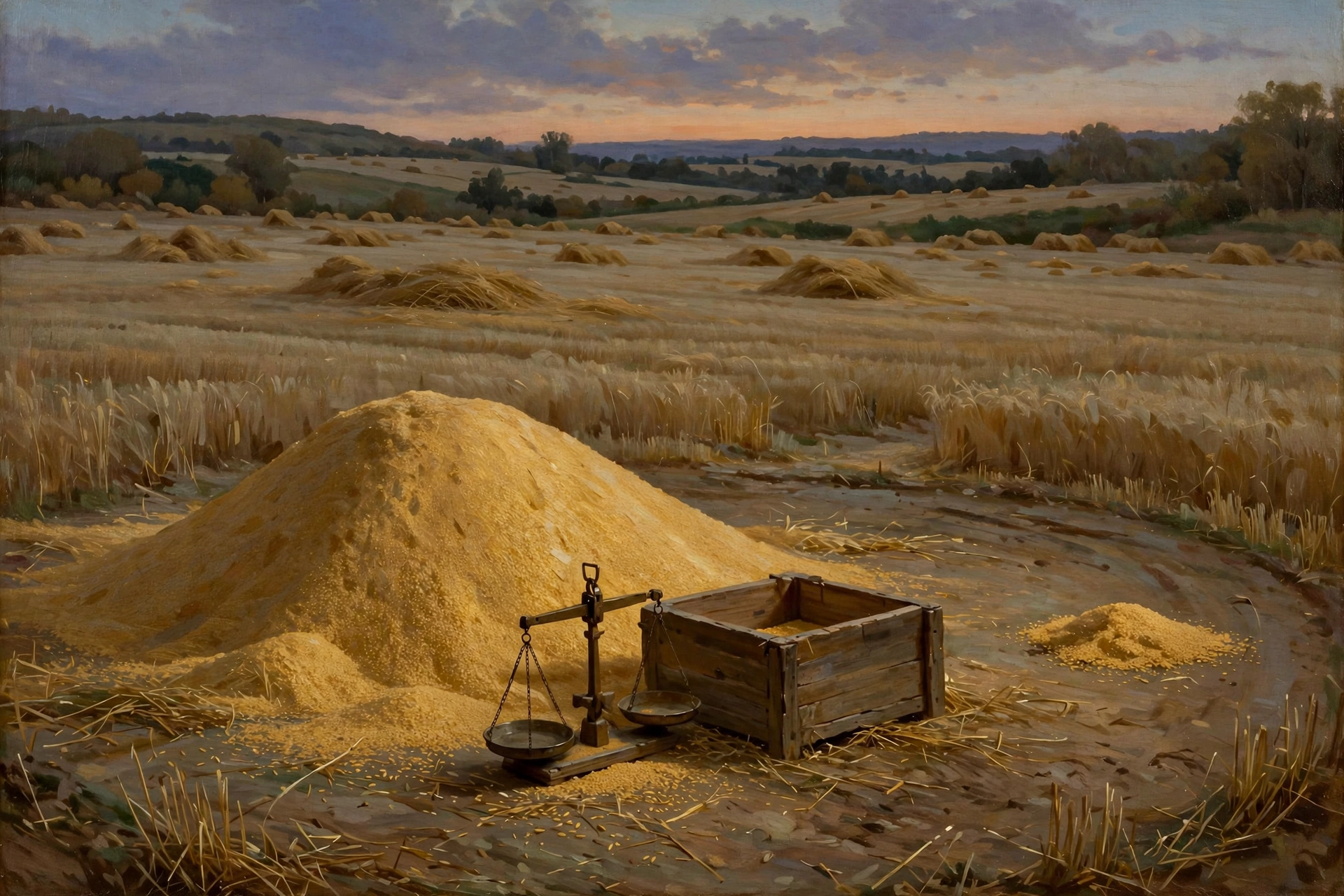
漢字の「税」は、禾(穀物)と兌(音符)から成る。東漢の『説文解字』は「税、租也」と解き、本義は田に課せられる租、すなわち農産物での納付だった。「租税」の「租」も同じく田租を指す。税はもともと、金銭ではなく収穫物の一部を取り分けることであり、その像は日本の年貢にもつながっている。このページのキー画像の、収穫物と秤はそのためである。
日本語との対応 ― 「税」と租税法律主義
日本語の「税」(ゼイ)はこの漢語を受け継いだ。近代に入って tax の訳語として「租税」「税金」が定着し、今日では租税は法律によらなければ課すことができない(租税法律主義)とされる。場面でブラックストンが語る「議会の同意なき課税の禁止」は、この原則の古い形である。他方で日本語の「税」には、年貢以来の「取り立てられるもの」という響きも残っており、場面の声の対立——同意か、強制か——は、その響きの両面に対応している。
場面 THE SCENE
この絵について
描かれているのは、夕暮れの収穫の野である。脱穀場には穀物の大きな山が積まれ、そのそばに天秤と木の枡が置かれている。山から少し離れたところに、取り分けられた小さな穀物の山がある。人はいない。
この取り分けは、入口で見た税の古い姿である。税の本義は田租、すなわち収穫物の一部を取り分けて納めることであり、taxare の底には手で触れて見積もる行為があった。秤と枡は、その見積もりの道具である。場面で争われるのは、この取り分けを誰が、どんな資格で、どこまで大きくできるのか、である。
※モチーフは、「税」について一般に共有されている像(収穫物からの取り分け、見積もり)を既定として選んだ。絵は差し替え可能とする。
税とは何か。——最初に口を開いたのはスミスだった。どの国の臣民も、できるだけ各人の能力に比例して、すなわち国家の保護の下で各人が享受する収入に比例して、政府の維持に貢献すべきである。この原則を守るか怠るかに、いわゆる課税の平等または不平等がある、と。
Adam Smith(スミス)立てる ― 臣民は各人の能力に比例して、国家の保護の下で享受する収入に比例して貢献すべきである
どの国の臣民も、できるだけ各人の能力に比例して、すなわち国家の保護の下で各人が享受する収 入に比例して、政府の維持に貢献すべきである。 大国の個人にとっての政府の経費は、大きな地所の共同借地人にとっての管理費のようなものであ り、彼らはみな、その地所に対するそれぞれの持分に比例して拠出する義務を負う。 この原則を守るか怠るかに、いわゆる課税の平等または不平等がある。 上述の三種の収入のうち一つだけに最終的に帰着する租税は、他の二つに影響しないかぎり、必然 的に不平等であることを、一度で断っておかねばならない。 以下の諸租税の検討では、この種の不平等にはほとんど立ち入らず、多くの場合、特定の租税が、 それによって影響される特定の種類の私的収入に不平等にかかることから生じる不平等に、観察を 限ることにする。
原文
The subjects of every state ought to contribute towards the support of the government, as nearly as possible, in proportion to their respective abilities; that is, in proportion to the revenue which they respectively enjoy under the protection of the state. The expense of government to the individuals of a great nation, is like the expense of management to the joint tenants of a great estate, who are all obliged to contribute in proportion to their respective interests in the estate. In the observation or neglect of this maxim, consists what is called the equality or inequality of taxation. Every tax, it must be observed once for all, which falls finally upon one only of the three sorts of revenue above mentioned, is necessarily unequal, in so far as it does not affect the other two. In the following examination of different taxes, I shall seldom take much farther notice of this sort of inequality; but shall, in most cases, confine my observations to that inequality which is occasioned by a particular tax falling unequally upon that particular sort of private revenue which is affected by it.
— Adam Smith『An Inquiry into the Nature and Causes of the Wealth of Nations』 PART II / `smith_wealth_of_nations#L29723`
ブラックストンは、その徴収の条件を置いた。何人も、議会の法律による共通の同意なしには、いかなる贈与、借入、慈善献金、租税、またはそれに類する負担をも強いられてはならない、と。
William Blackstone(ブラックストン)条件を置く ― 何人も、議会の法律による共通の同意なしには、租税を強いられてはならない
第一に、何人も、議会の法律による共通の同意なしには、いかなる贈与、借入、慈善献金、租税、 またはそれに類する負担をも強いられてはならない。
原文
I, that no man shall be compelled to yield any gift, loan, or benevolence, tax, or such like charge, without common consent by act of parliament.
— William Blackstone『Commentaries on the Laws of England, Book the First』 OF THE COUNTRIES SUBJECT TO THE LAWS OF ENGLAND / `blackstone_commentaries_v1#L5223`
モンテスキューは、税の重さの物差しを変えた。租税は、臣民の自由に比例して重くしてよく、隷属が増すに比例して軽くする必要がある、というのが一般的な規則である、と。
Montesquieu(モンテスキュー)ずらす ― 租税は、臣民の自由に比例して重くしてよく、隷属が増すに比例して軽くする必要がある
租税は、臣民の自由に比例して重くしてよく、隷属が増すに比例して軽くする必要がある、という のが一般的な規則である。
原文
IT is a general rule that taxes may be heavier in proportion to the liberty of the subject, and that there is a necessity for reducing them in proportion to the increase of slavery.
— Montesquieu『Complete Works, vol. 1 (The Spirit of Laws)』 BOOK XIII(Thomas Nugent 訳) / `montesquieu_spirit_of_laws_v1#L10929`
ソローは、その規則の外に立った。私は六年間、人頭税を払っていない。このために一度、一晩だけ牢に入れられた。厚さ二、三フィートの石の壁と鉄格子を見つめながら、私は、まるで私がただの肉と血と骨であって閉じこめられるべきものであるかのように扱うこの制度の愚かさに、打たれずにいられなかった、と。
Henry David Thoreau(ソロー)覆す ― 私は六年間、人頭税を払っていない。このために一度、一晩だけ牢に入れられた
私は六年間、人頭税を払っていない。このために一度、一晩だけ牢に入れられた。 厚さ二、三フィートの堅固な石の壁、厚さ一フィートの木と鉄の戸、光をこす鉄格子を見つめて立 ちながら、私は、まるで私がただの肉と血と骨であって閉じこめられるべきものであるかのように 扱うこの制度の愚かさに、打たれずにいられなかった。
原文
I have paid no poll-tax for six years. I was put into a jail once on this account, for one night; and, as I stood considering the walls of solid stone, two or three feet thick, the door of wood and iron, a foot thick, and the iron grating which strained the light, I could not help being struck with the foolishness of that institution which treated me as if I were mere flesh and blood and bones, to be locked up.
— Henry David Thoreau『On the Duty of Civil Disobedience』 / `thoreau_civil_disobedience#L532`
最後に老子が、税を取る側の姿を描いた。民が飢えるのは、上に立つ者が税を多く食むからである。それゆえ飢えるのである、と。
Laozi(老子)締め ― 民が飢えるのは、上に立つ者が税を多く食むからである
民が飢えるのは、上に立つ者が税を多く食むからである。 それゆえ飢えるのである。民が治めにくいのは、上に立つ者が(過度に)手を出して治めようとす るからである。それゆえ治めにくいのである。
原文
The people suffer from famine because of the multitude of taxes consumed by their superiors. It is through this that they suffer famine. 2. The people are difficult to govern because of the (excessive) agency of their superiors (in governing them). It is through this that they are difficult to govern.
— Laozi『The Tao Teh King, or the Tao and its Characteristics』 Ch. 75(James Legge 訳) / `laozi_tao_te_ching#L1373`
能力への比例としての税、同意を条件とする税、自由に比例して重くなる税、払うことを拒まれた税、そして民を飢えさせる税。——税の正体は、声ごとに違う顔を見せた。
控えの一句 ON THE BENCH
Jean-Jacques Rousseau(ルソー)
軸2 ― 生活の共通の必需品しか持たない者は、まったく何も払うべきではなく、余剰を持つ者への課税は、必需品を超えて持つすべてのものに正当に及ぼしてよい。累進課税の原型
生活の共通の必需品しか持たない者は、まったく何も払うべきではなく、余剰を持つ者への課税は、 単なる必需品を超えて持つすべてのものに、正当に及ぼしてよい。
原文
He who possesses only the common necessaries of life should pay nothing at all, while the tax on him who is in possession of superfluities may justly be extended to everything he has over and above mere necessaries.
— Jean-Jacques Rousseau『A Discourse on Political Economy』(G. D. H. Cole 訳) / `rousseau_political_economy#L11983`
John Marshall(マーシャル)
軸1/軸6 ― 課税する権力は破壊する権力を含む。課税権の大きさを言い切った判決の核心
課税する権力は破壊する権力を含むこと、破壊する権力は創造する権力を挫き無効にしうること、 そして、ある政府に、他の政府の憲法上の措置を統制する権力を与えることには明白な矛盾がある こと、しかも他の政府は、まさにその措置に関しては、統制を行う政府より優越すると宣言されて いること、これらは否定されえない命題である。
原文
That the power to tax involves the power to destroy; that the power to destroy may defeat and render useless the power to create; that there is a plain repugnance in conferring on one government a power to control the constitutional measures of another, which other, with respect to those very measures, is declared to be supreme over that which exerts the control, are propositions not to be denied.
— Supreme Court of the United States『M'Culloch v. Maryland, 17 U.S. 316 (1819)』 / `case_mcculloch_v_maryland_1819#L2856`
John Stuart Mill(ミル)
軸2 ― 租税の配分を論じるときに言及される正義の基準は、なんと多く、なんと相容れないことか。公平の基準そのものが割れるという提示
さらに、租税の配分を論じるときに言及される正義の基準は、なんと多く、なんと相容れないこと か。一つの意見は、国家への支払いは金銭的資力に数量的に比例すべきだというものである。 他の人々は、正義が命じるのは彼らのいわゆる累進課税であり、余裕のある者からより高い百分率 を取ることだと考える。
原文
How many, again, and how irreconcileable, are the standards of justice to which reference is made in discussing the repartition of taxation. One opinion is, that payment to the State should be in numerical proportion to pecuniary means. Others think that justice dictates what they term graduated taxation; taking a higher percentage from those who have more to spare.
— John Stuart Mill『Utilitarianism』 CHAPTER V / `mill_utilitarianism#L2285`
Henry David Thoreau(ソロー)
軸4 ― もし千人の人がこの年に納税通知書を払わなかったとしても、それは、払って国家が暴力を行使するのを可能にするのとは違い、暴力的で血なまぐさい措置にはならない。場面のソローの実践を論理に広げた一句
もし千人の人がこの年に納税通知書を払わなかったとしても、それは、払って国家が暴力を行使し 無辜の血を流すのを可能にするのとは違い、暴力的で血なまぐさい措置にはならないだろう。
原文
If a thousand men were not to pay their tax-bills this year, that would not be a violent and bloody measure, as it would be to pay them, and enable the State to commit violence and shed innocent blood.
— Henry David Thoreau『On the Duty of Civil Disobedience』 / `thoreau_civil_disobedience#L440`
Paul(パウロ)
軸4 ― 貢を納めるべき人には貢を、関税を納めるべき人には関税を。すべての人に、その負うべきものを返しなさいという納税義務の定式
すべての人に、その負うべきものを返しなさい。 貢を納めるべき人には貢を、関税を納めるべき人には関税を、恐れるべき人には恐れを、敬うべき 人には敬意を。
原文
13:7 Render therefore to all their dues: tribute to whom tribute is due; custom to whom custom; fear to whom fear; honour to whom honour.
— (various)『The King James Version of the Bible』 Romans 13:7(King James Version (1611) 訳) / `bible_kjv#L91339`