Temperance
idea-no-tane の全引用から選んだ超精選による、概念ごとの読み物。
入口 THE WORD
この概念が扱うのは、節制とは何か、という問いである。欲望を力で抑え込むことか、それとも欲望そのものが調えられている状態か。場面の声は、「ほどほど」の正体をめぐって争う。
語源 ― sōphrosynē「健全な心」と temperare「混ぜ合わせる」
ギリシア語の sōphrosynē(ソープロシュネー)は、形容詞 sōphrōn「健全な心の」に由来する。もとは自分の分に応じた分別ある振る舞いを指し、後に自制・節度・分別を含む徳の名になった(Dictionary of the History of Ideas「Temperance (Sōphrosynē) and the Canon of the Cardinal Virtues」)。
この語にラテン語の名を与えたのはキケロで、temperantia と訳した。その動詞 temperare は「混ぜ合わせる、混合によって適当な強さ・濃さに整える」の意である(Merriam-Webster「temperament」「temperate」の語源)。節制の古典的な図像で、徳が二つの器のあいだで酒と水を混ぜ合わせる姿で描かれてきたのは、この根の比喩の表れである(同 Dictionary of the History of Ideas)。なおギリシア語には enkrateia「自己を制御すること」という別の語もあり、アリストテレスの時代に作られた。場面と控えで争われる「欲望との葛藤か、調和か」という問いは、この二つの語の分かれ目にも重なる。
場面の絵に選んだのは、石段の上で傾いた真鍮の水差しから、細い水の流れが下の杯へ注がれる静物である。混ぜ合わせて、ちょうどよい濃さにする——temperare の像そのものである。
日本語の「節制」と「節度」 ― 二つの訳語
日本語では、徳の名としては「節制」が、振る舞いのほどよさとしては「節度」が使われる。temperance は四つの枢要徳(知恵・正義・勇気・節制)の一つとして「節制」に当てられることが多い。一方で moderation の側は「節度」「中庸」とも重なる。総括も指摘するとおり、temperance・moderation・continence・self-control がどこまで同じ概念を指すかは一様に決まらず、本ページでも場面の声ごとに射程が違う。訳語の定着の経緯の詳細は未確認である。
場面 THE SCENE
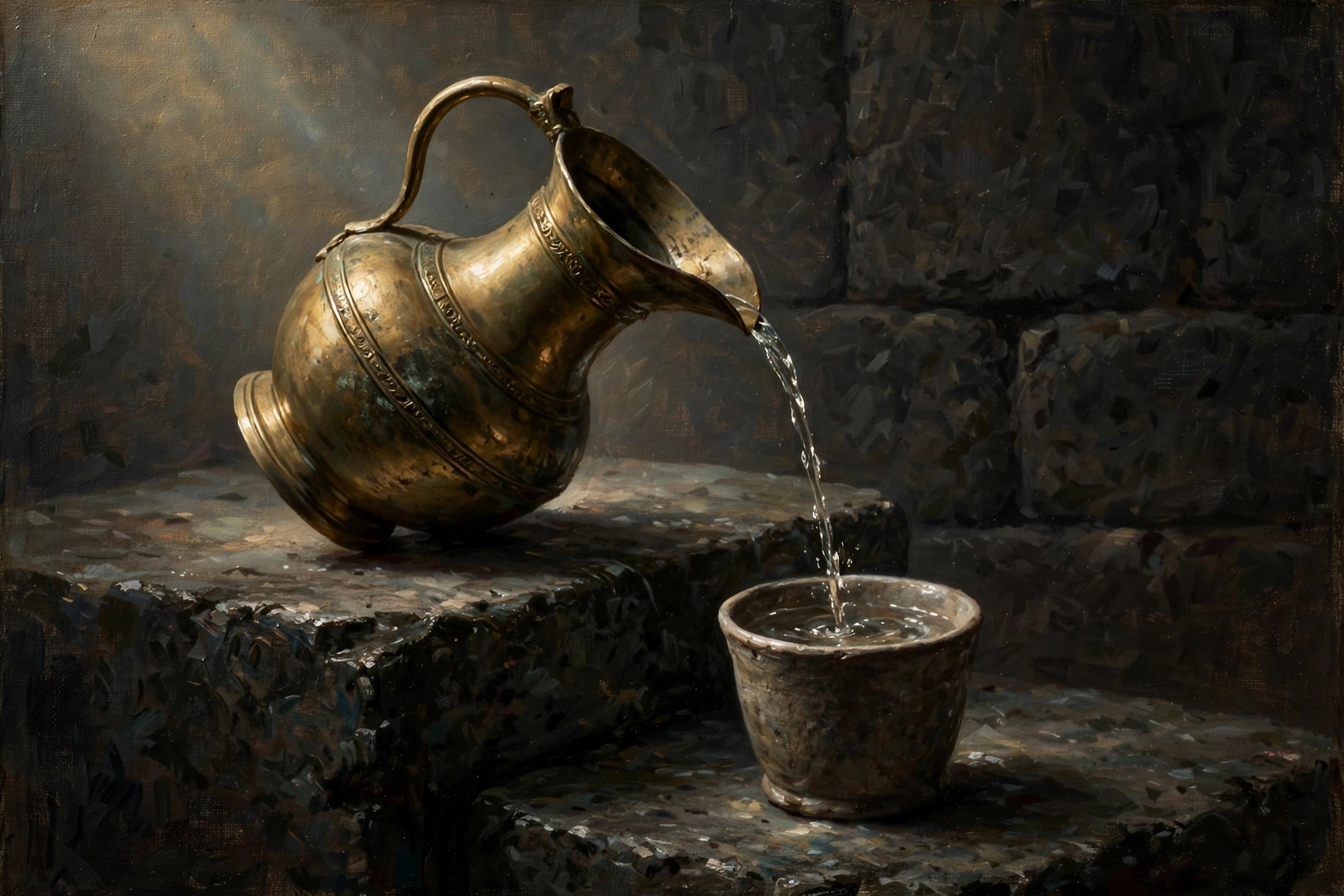
この絵について
節
制
と
は
何
か
。
欲
望
と
の
葛
藤
か
、
欲
望
そ
の
も
の
の
調
和
か
。
無
条
件
の
徳
か
、
条
件
付
き
の
善
か
。
情
念
を
生
か
す
の
か
、
取
り
除
く
の
か
。
節
制
は
欲
望
を
抑
え
る
力
の
名
で
は
な
く
、
欲
望
と
の
つ
き
あ
い
方
の
名
で
あ
る
—
—
こ
の
ペ
ー
ジ
は
、
そ
の
つ
き
あ
い
方
を
め
ぐ
る
五
つ
の
声
の
対
話
で
あ
る
。
総括の対立軸は3本。配役では3本すべてを使用した。
まずアリストテレスが、節制の場所を定める。あらゆる快楽を味わい何一つ控えない者は自制を失い、あらゆる快楽を避ける者は感覚そのものを鈍らせる。節制は、欲望を消すことでも放つことでもなく、そのあいだの中庸に保たれる習慣だという。
Aristotle(アリストテレス)立てる
同様に、あらゆる快楽を味わい、何一つ控えない者は、すべての自制を失うに至る。 他方、鈍感で粗野な者のように、あらゆる快楽を避ける者は、いわば知覚能力を失うに至る。 すなわち、完全な自制と勇気という習慣は、過剰と不足によって損なわれ、中庸の状態によって保 たれるのである。
原文
In like manner too, he that tastes of every pleasure and abstains from none comes to lose all self-control; while he who avoids all, as do the dull and clownish, comes as it were to lose his faculties of perception: that is to say, the habits of perfected Self-Mastery and Courage are spoiled by the excess and defect, but by the mean state are preserved.
— Aristotle『The Nicomachean Ethics of Aristotle』 Chapter II(D. P. Chase 訳) / `aristotle_nicomachean_ethics#L1868`
アクィナスが、その中庸の内側を描く。節欲する人とは、悪しき欲望に理性が抵抗している途中の人のことである。これに対し節制ある人では、感覚的欲求そのものが理性に従い、いわば理性によって馴らされている。だから節制は節欲より完全なのだ、と。
Thomas Aquinas(トマス・アクィナス)立てる(調和の側)
5)絶対的に考えた場合の、貞潔に対する童貞性の卓越について。 別の意味では、節欲は、人のうちで悪しき欲望が激しいときに理性がそれに抵抗することを意味し うる。この意味では節制は節欲よりはるかに優れている。 徳の善は、理性に適合するものから称賛を得るからである。 さて、節制ある人においては、節欲する人におけるよりも理性の善がいっそう栄える。 前者では感覚的欲求さえ理性に従い、いわば理性によって馴らされているのに対し、節欲する人で は、感覚的欲求がその悪しき欲望によって理性に強く抵抗するからである。 したがって節欲は節制に対して、不完全なものが完全なものに対するような関係にある。
原文
5) concerning the preeminence of virginity over chastity considered absolutely. In another way continence may be taken as denoting the resistance of the reason to evil desires when they are vehement in a man: and in this sense temperance is far greater than continence, because the good of a virtue derives its praise from that which is in accord with reason. Now the good of reason flourishes more in the temperate man than in the continent man, because in the former even the sensitive appetite is obedient to reason, being tamed by reason so to speak, whereas in the continent man the sensitive appetite strongly resists reason by its evil desires. Hence continence is compared to temperance, as the imperfect to the perfect.
— Thomas Aquinas『Summa Theologica, Part II-II (Secunda Secundae)』 II-II, Q. 155, Art. 4(Fathers of the English Dominican Province 訳) / `aquinas_summa_secunda_secundae#L62608`
カントが待ったをかける。情動と情念の節度、自制、冷静な熟慮は、人の内的な価値の一部をなすようにさえ見える。しかしそれらが善いのは善意志に仕えるときだけであり、古代人が称賛したとはいえ、無条件に善いと呼ばれるにはほど遠い、と。節制の価値は、それ自体ではなく、それが何に仕えるかで決まる。
Immanuel Kant(イマヌエル・カント)条件を付ける
この善意志そのものに役立ち、その働きを容易にしうる性質さえいくつかあるが、それらには内在 的で無条件な価値はなく、つねに善意志を前提とする。 このことが、それらに対してわれわれが正当に抱く尊重を限定し、それらを絶対的に善とみなすこ とを許さない。情動と情念の節度、自制、冷静な熟慮は、多くの点で善いだけでなく、人の内在的 価値の一部をなすようにさえ見える。しかし古代人がこれらを無条件に称賛したとはいえ、無条件 に善いと呼ばれるにはほど遠い。
原文
There are even some qualities which are of service to this good will itself and may facilitate its action, yet which have no intrinsic unconditional value, but always presuppose a good will, and this qualifies the esteem that we justly have for them and does not permit us to regard them as absolutely good. Moderation in the affections and passions, self-control, and calm deliberation are not only good in many respects, but even seem to constitute part of the intrinsic worth of the person; but they are far from deserving to be called good without qualification, although they have been so unconditionally praised by the ancients.
— Immanuel Kant『Fundamental Principles of the Metaphysic of Morals』 FIRST SECTION(Thomas Kingsmill Abbott 訳) / `kant_metaphysic_of_morals#L302`
ラ・ロシュフコーが、この穏やかな絵を裏返す。節度は、野心に抗いそれを克服した功績を主張できない。節度は魂の倦怠と怠惰であり、野心はその活動と熱である——節制ある人が穏やかなのは、徳の力ではなく、燃える力の欠如かもしれない、と。
La Rochefoucauld(ラ・ロシュフコー)覆す
節度は野心に抗いそれを克服したという功績を主張できない。 両者は決して共にないからである。節度は魂の倦怠と怠惰であり、野心はその活動と熱である。
原文
Moderation cannot claim the merit of opposing and overcoming Ambition: they are never found together. Moderation is the languor and sloth of the soul, Ambition its activity and heat.
— La Rochefoucauld『Reflections; or Sentences and Moral Maxims』 Maxim 293(J. W. Willis Bund / J. Hain Friswell 訳) / `la_rochefoucauld_maxims#L2484`
最後にセネカが、中庸そのものに線を引く。怒りについては、節度あるものにするのではなく、完全に取り除こうという。悪しき習慣と節度に、何の関わりがありうるだろうか——すべての情念が「ほどほど」に値するわけではない、と。
Seneca(セネカ)ずらす
怒りを節度あるものにするのではなく、完全に取り除こう。 悪しき習慣と節度に、何の関わりがありうるだろうか。
原文
Let us not moderate anger, but get rid of it altogether: what can moderation have to do with an evil habit?
— Seneca『Minor Dialogues, Together With the Dialogue on Clemency』 Book III(Aubrey Stewart 訳) / `seneca_minor_dialogues#L5019`
中庸として立てられ、調和として深められ、善意志の条件で留保され、倦怠として裏返され、除去の例外で締めくくられた。節制は「ほどほど」の名で呼ばれるが、そのほどが何であり、誰が決めるのかは、声ごとに違う。
控えの一句 ON THE BENCH
Socrates(ソクラテス)
軸1・軸2(『ゴルギアス』の中のソクラテスの主張。節制ある人は正しく、勇敢で、敬虔でもあり、完全に善い人は幸福でなければならない、と節制から徳全体と幸福を導く)
まったくそのとおりだ。では、その人は勇敢でもなければならないのではないか。 節制ある人の務めは、避けるべきでないものに従ったり、追うべきでないものを避けたりすること ではなく、事物であれ人であれ快楽であれ苦痛であれ、追うべきものを追い、避けるべきものを避 け、耐えるべきときには忍耐強く耐えることだからである。 したがってカリクレスよ、われわれが述べたように、節制ある人は正しく、勇敢で、敬虔でもある のだから、完全に善い人でないはずはない。 また善い人は、何をするにも善く完全に行わずにはいられない。 善く行う人は必然的に幸福で至福でなければならず、悪を行う悪い人は惨めでなければならない。 ところで後者こそ、君が称賛していた人、すなわち節制ある人の反対である不節制な人である。 これが私の立場であり、私はこれらが真実だと断言する。 そして真実ならばさらに、幸福を望む者は節制を追求し実践し、不節制からは脚の続くかぎり速く 逃げ去らねばならない、と断言する。その人は、処罰を必要としないように生活を整える方がよい。 しかし、彼自身であれ友人の誰かであれ、私人であれ国家であれ、処罰を必要とするなら、幸福に なろうとするかぎり、正義が行われ、処罰を受けなければならない。
原文
Very true. And must he not be courageous? for the duty of a temperate man is not to follow or to avoid what he ought not, but what he ought, whether things or men or pleasures or pains, and patiently to endure when he ought; and therefore, Callicles, the temperate man, being, as we have described, also just and courageous and holy, cannot be other than a perfectly good man, nor can the good man do otherwise than well and perfectly whatever he does; and he who does well must of necessity be happy and blessed, and the evil man who does evil, miserable: now this latter is he whom you were applauding—the intemperate who is the opposite of the temperate. Such is my position, and these things I affirm to be true. And if they are true, then I further affirm that he who desires to be happy must pursue and practise temperance and run away from intemperance as fast as his legs will carry him: he had better order his life so as not to need punishment; but if either he or any of his friends, whether private individual or city, are in need of punishment, then justice must be done and he must suffer punishment, if he would be happy.
— Plato『Gorgias』(Benjamin Jowett 訳) / `plato_gorgias#L5769`
Plutarch(プルタルコス)
軸1(節制とは理性が手綱を握り情念をよく馴らされた動物のように扱う状態であり、抑制とは鞭と手綱で強いられる動物の葛藤だ、と調和と葛藤の対比を動物の比喩で描く。原文に脚注番号 [227])
節制とは理性が手綱を握り、情念をおとなしくよく馴らされた動物のように扱う状態であり、情念 は手綱に従順で服し……。これに対して抑制は、理性に導かれるにも苦労がないわけではなく、従 順でなく、轡と手綱と鞭と後退で強いられる動物のように跳ね蹴り、それ自体が葛藤と騒乱に満ち ている。
原文
Now temperance is a state, wherein reason holds the reins, and manages the passions as a quiet and well-broken-in animal, finding them obedient and submissive to the reins and masters over their desires.[227] Continence on the other hand is not driven by reason without some trouble, not being docile but jibbing and kicking, like an animal compelled by bit and bridle and whip and backing, being in itself full of struggles and commotion.
— Plutarch『Plutarch's Morals』 On Moral Virtue(A. R. Shilleto 訳) / `plutarch_morals#L4288`
John Stuart Mill(ジョン・スチュアート・ミル)
軸3(強い感情は強い自制の手段であり要素である。ただしその方向へ培われなければならない、と情念を敵ではなく材料として位置づける)
強い感情は強い自制の手段であり要素である。 しかし、それはその方向へ培われなければならない。
原文
Strong feeling is the instrument and element of strong self-control: but it requires to be cultivated in that direction.
— John Stuart Mill『The Subjection of Women』 CHAPTER III / `mill_subjection_of_women#L2423`
Marcus Aurelius(マルクス・アウレリウス)
軸1(罵られても、泥や糞を投げ込まれても澄み続ける泉の比喩で、節制を外乱に動じない精神の状態として描く)
それでもなお、あなたの精神は純粋で、思慮深く、節制があり、正しくあり続けられないだろうか。 甘く澄んだ水の泉は、傍らに立つ者から罵られても、その湧き水は以前と同じく甘く澄んだまま流 れ続ける。泥や糞を投げ込まれても、投げ込まれるや否やそれは散り、泉は澄むのである。
原文
May not thy mind for all this continue pure, prudent, temperate, just? As a fountain of sweet and clear water, though she be cursed by some stander by, yet do her springs nevertheless still run as sweet and clear as before; yea though either dirt or dung be thrown in, yet is it no sooner thrown, than dispersed, and she cleared.
— Marcus Aurelius『Meditations』 THE EIGHTH BOOK(Meric Casaubon 訳) / `marcus_aurelius_meditations#L3896`
Hamlet(ハムレット)
軸1(シェイクスピアの劇中の人物ハムレットが俳優に与える助言。情熱が奔流や旋風となるただ中でも、それを滑らかにする節制を身につけねばならない、と演技の節制を説く)
また、こうして手で空を切りすぎず、すべてを穏やかに行え。 情熱が奔流となり、嵐となり、いわば旋風となるそのただ中でも、それを滑らかにする節制を身に つけ、生み出さねばならない。がさつな鬘頭の役者が情熱をずたずたに、まさにぼろ切れに引き裂 き、立見客の耳をつんざくのを聞くと、心底腹が立つ。 立見客の大半は、不可解な無言劇と騒音のほかには何も理解できないのだ。
原文
Nor do not saw the air too much with your hand, thus, but use all gently; for in the very torrent, tempest, and, as I may say, whirlwind of passion, you must acquire and beget a temperance that may give it smoothness. O, it offends me to the soul to hear a robustious periwig-pated fellow tear a passion to tatters, to very rags, to split the ears of the groundlings, who, for the most part, are capable of nothing but inexplicable dumb shows and noise.
— William Shakespeare『Hamlet』 ACT III / `shakespeare_hamlet#L3073`