Usury
idea-no-tane の全引用から選んだ超精選による、概念ごとの読み物。
入口 THE WORD
高利は、貸した金に利子を取ることへの、最も古い非難の名である。かつては利子を取ること自体がこの名で呼ばれ、宗教と哲学の双方から断罪された。利子の一部が正当な対価として認められるようになると、この語は「法外な利子」の側へ押しやられた。場面の声たちは、高利は本性において悪なのか、それとも禁止こそが害を生むのかをめぐって争う。
語源 ― トコス、「金から生まれた金」
usury は、中世ラテン語 usuria、ラテン語 usura に由来する。usura は usus(使うこと)に関わる語で、金の使用への対価、すなわち利子そのものを指した。だから古くは、利子を取ることはすべて usury であり、断罪の対象だった。ギリシャ語では利子は tokos(トコス)と呼ばれた。tokos は本来「子、出産」の意であり、利子は金から生まれた子に喩えられた。アリストテレスはこの語源を引き、高利は金から生まれた金であるがゆえに最も憎まれると書いた(場面の最初の引用)。近世に入り利子の一部が正当な対価として認められると、英語の usury の意味は狭まり、法の許す限度を超える利子を指すようになった。
日本語の「高利」
日本語の「高利」は usury の訳語として、法外に高い利子を指す。利子一般は「利息」「利子」と呼ばれ、英語の usury が意味を狭めたのと同じ分かれ方をしている。ただし日本語の「高利」には、usury がかつて持っていた「利子そのものへの断罪」の響きは薄く、その側面は「暴利」の語が担うこともある。その訳語の定着の経緯の詳細は未確認である。
場面 THE SCENE
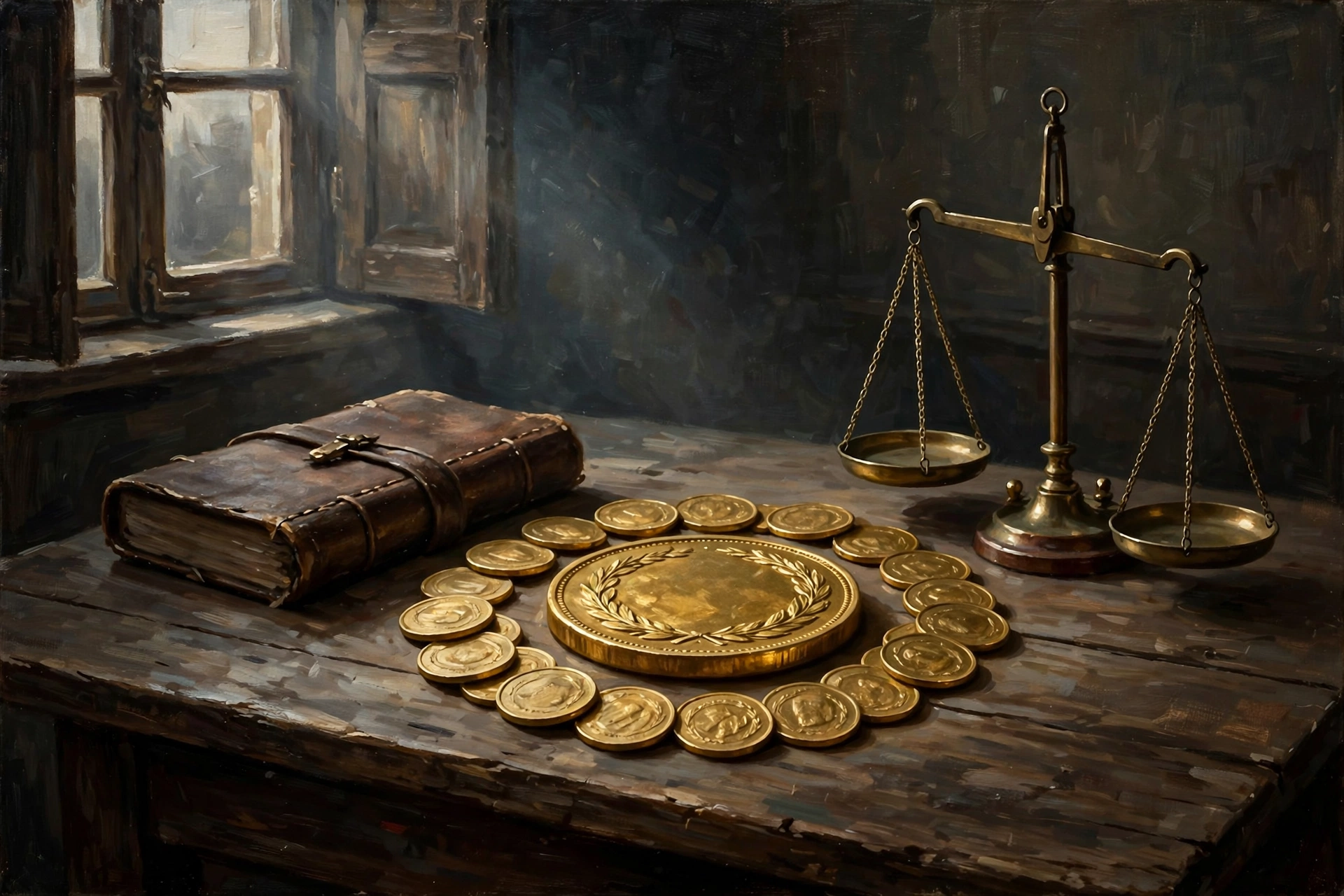
この絵について
木の机の上に、大きな金貨が一枚置かれている。その周りを、小さな金貨が輪をなして取り囲む。子が親に寄り添うようでもあり、生まれた子が親の姿を写し取るようでもある。傍らには、閉じられた革装の帳簿と、真鍮の天秤。
ギリシャ語で利子はトコス——「子」と呼ばれた。金から生まれた金、というアリストテレスの言葉の絵である。天秤は、その子が正当な補償か不当な増殖かを量る問いを担う。
絵はモチーフの置き換えが可能であり、この絵でなければならない必然はない。人物としての貸し手を描かず、一般に共有される高利の像として、金から生まれる金の構図を選んだ。
場面は、最も古い断罪から始まる。アリストテレスは金儲けを二つに分ける。家政のためのそれは必要で称賛に値するが、人々が互いから利得を得る小売商業は正当に非難される。そして高利は最も合理的に憎まれる、と。金は交換のために作られたのに、金自体によって財産を増やすからである。その名トコスは「金の繁殖」を意味する。子が親に似るように、高利は金から生まれた金だ、と。
アリストテレス(Aristotle)立てる
さて、金儲けは我々が言うように二重であり、二つの目的に適用される。 家政のためのものと、小売商業のためのものである。 前者は必要で称賛に値するが、後者は正当に非難される。 それは自然に由来せず、人々が互いから利得を得ることによるからである。 高利は最も合理的に憎まれる。それは、金自体によって我々の財産を増やすことであり、金が本来 意図された目的、すなわち交換のために用いるのではないからである。 そしてこれが、トコスという名の説明である。 それは金の繁殖を意味する。子が親に似るように、高利は金から生まれた金である。
原文
Now money-making, as we say, being twofold, it may be applied to two purposes, the service of the house or retail trade; of which the first is necessary and commendable, the other justly censurable; for it has not its origin in [1258b] nature, but by it men gain from each other; for usury is most reasonably detested, as it is increasing our fortune by money itself, and not employing it for the purpose it was originally intended, namely exchange. And this is the explanation of the name (TOKOS), which means the breeding of money. For as offspring resemble their parents, so usury is money bred of money.
— Aristotle『Politics: A Treatise on Government』 CHAPTER X(William Ellis 訳) / `aristotle_politics#L1139`
アクィナスは、その憎悪に論理の形を与える。貸した金に対して高利を取ることは、それ自体において不正である。存在しないものを売ることだからだ、と。金の使用は金そのものと分かちがたい。元本を渡してなお使用への対価を取れば、無いものを売ったことになり、正義に反する不平等が生じる。高利の悪は、ここでは率の高さではなく、取引の構造そのものにある。
アクィナス(Thomas Aquinas)基礎づける
答えて言う。貸した金に対して高利を取ることは、それ自体において不正である。 存在しないものを売ることであり、これは明らかに、正義に反する不平等を生むからである。
原文
_I answer that,_ To take usury for money lent is unjust in itself, because this is to sell what does not exist, and this evidently leads to inequality which is contrary to justice.
— Thomas Aquinas『Summa Theologica, Part II-II (Secunda Secundae)』 II-II, Q. 78, Art. 1(Fathers of the English Dominican Province 訳) / `aquinas_summa_secunda_secundae#L33472`
ベーコンは、断罪の言葉を受け止めたうえで、現実の側へずらす。金が金を生むのは自然に反する、などと言われる。私はただこれだけを言う。高利は心の硬さゆえの許容である、と。借りと貸しがなければならない以上、人が無償で貸そうとしないほど心が硬いなら、高利は許されなければならない。悪であることと、許されなければならないことは、ここでは両立する。
ベーコン(Francis Bacon)ずらす
金が金を生むのは自然に反する、など。 同様のことが言われる。私はただこれだけを言う。 高利は心の硬さゆえの許容(concessum propter duritiem cord is)である。借りと貸しがなければならない以上、人が無償で貸そうとしないほど心が硬いなら、 高利は許されなければならない。
原文
That it is against nature for money to beget money; and the like. I say this only, that usury is a concessum propter duritiem cordis; for since there must be borrowing and lending, and men are so hard of heart, as they will not lend freely, usury must be permitted.
— Francis Bacon『The Essays or Counsels, Civil and Moral』 Of Usury / `bacon_essays#L3579`
グロティウスは、断罪の根拠そのものを覆す。金の、あるいは他の何かの使用への補償を許す人間法は、自然法にも啓示法にも反しない、と。オランダでは通常の貸付が八パーセントのところ、商人に十二パーセントを要求しても不正ではなかった。危険がより大きかったからである。利息は本性上の悪であることをやめ、危険への補償として量られるものになる。
グロティウス(Hugo Grotius)覆す
金の、あるいは他の何かの使用への補償を許す人間法は、自然法にも啓示法にも反しない。 オランダでは、通常の貸付の利率が八パーセントであったところ、商人には十二パーセントを要求 しても不正ではなかった。危険がより大きかったからである。
原文
Those human laws, which allow a compensation to be made for the use of money or any other thing, are neither repugnant to natural nor revealed law. Thus in Holland, where the rate of interest upon common loans was eight per cent, there was no injustice in requiring twelve per cent of merchants; because the hazard was greater.
— Hugo Grotius『The Rights of War and Peace』 CHAPTER XII(A. C. Campbell 訳) / `grotius_rights_of_war_and_peace#L6234`
最後にベンサムが、議論を犯罪の目録の問題に落とす。高利は、犯罪でなければならないとしても、同意のもとに犯される犯罪である。すなわち、被害を受けたとされる側の同意のもとに、と。その同意が不正に得られた場合は詐欺と一致し、自由でなかった場合は強要と一致する。それ以外では、犯罪の目録に場所を占める資格はない。本性の悪は、ここで同意の有無へと解体される。
ベンサム(Jeremy Bentham)締める
62. 高利は、犯罪でなければならないとしても、同意のもとに犯される犯罪である。 すなわち、被害を受けたとされる側の同意のもとに。 その同意が不正に得られたか、自由でなかった場合を除き、犯罪の目録に場所を占める資格はない。 前者の場合は詐欺と一致し、後者の場合は強要と一致する。
原文
62.Usury, which, if it must be an offense, is an offense committed with consent, that is, with the consent of the party supposed to be injured, cannot merit a place in the catalogue of offenses, unless the consent were either unfairly obtained or unfreely: in the first case, it coincides with defraudment; in the other, with extortion.
— Jeremy Bentham『An Introduction to the Principles of Morals and Legislation』 Chapter XVII / `bentham_principles_of_morals_and_legislation#L12646`
断罪は本性の言葉で語られ、反論は同意と危険の言葉で語られた。禁止と許容のあいだの線は、この場面では決着しない。控えには、神の禁止の声と、禁止の内部で引かれた例外と、率の設計と、禁止の逆効果と、意図の転換による骨抜きの声を置く。
控えの一句 ON THE BENCH
神(God)
軸1
利子を貪り食う者は、復活の日に、悪魔に触れられて取り憑かれた者のようにしか起き上がれない。 それは彼らが「売買は利子と同じだ」と言ったからだ。 だが神は売買を許し、利子を禁じた。
原文
They who swallow down usury, shall arise in the resurrection only as he ariseth whom Satan hath infected by his touch. This, for that they say, "Selling is only the like of usury:" and yet God hath allowed selling, and forbidden usury.
— (various)『The Koran (Al-Qur'an)』 Sura II(J. M. Rodwell 訳) / `koran#L19886`
アクィナス(Thomas Aquinas)
軸4
したがって、当面の問題についても答えなければならない。 高利を条件に貸すよう人を誘うことは決して合法ではない。 しかし、すでにそうする用意があり高利貸しを業とする者から、高利で借りることは合法である。 借り手に、自分のまたは他者の必要を救うような善い目的がある場合に限る。
原文
Accordingly we must also answer to the question in point that it is by no means lawful to induce a man to lend under a condition of usury: yet it is lawful to borrow for usury from a man who is ready to do so and is a usurer by profession; provided the borrower have a good end in view, such as the relief of his own or another's need.
— Thomas Aquinas『Summa Theologica, Part II-II (Secunda Secundae)』 II-II, Q. 78, Art. 4(Fathers of the English Dominican Province 訳) / `aquinas_summa_secunda_secundae#L33841`
ベーコン(Francis Bacon)
軸2
高利には二つの率がなければならない。 一つは自由で万人に一般的なもの、もう一つは免許制で、特定の人々と特定の商業の場所に限られ る。まず一般の高利を百分の五に下げ、その率を自由で通用するものと宣言し、国家はそれに対す る罰を取ることから自らを閉め出すべきである。
原文
That there be two rates of usury: the one free, and general for all; the other under license only, to certain persons, and in certain places of merchandizing. First, therefore, let usury in general, be reduced to five in the hundred; and let that rate be proclaimed, to be free and current; and let the state shut itself out, to take any penalty for the same.
— Francis Bacon『The Essays or Counsels, Civil and Moral』 Of Usury / `bacon_essays#L3644`
モンテスキュー(Montesquieu)
軸2
マホメットの法は、高利と利息付き貸付を混同する。 高利は、禁止の厳しさに比例して、マホメット教諸国で増大する。
原文
The laws of Mahomet confound usury with lending upon interest. Usury increases in Mahometan countries in proportion to the severity of the prohibition.
— Montesquieu『Complete Works, vol. 2 (The Spirit of Laws)』 BOOK XXII(Thomas Nugent 訳) / `montesquieu_spirit_of_laws_v2#L4639`
エスコバル(Antonio Escobar y Mendoza)
軸4
「あなたは実にそのことを少しも知らない」と彼は答えた。 「我々の父たちによれば、高利は、利息を高利として取る意図にほぼ存する。 したがってエスコバルは、意図の単純な転換によって高利を回避する方法を示す。 『借り手から利息を取ることは、それを正義において当然のものとして要求するなら、真っ向から の高利である。しかし、感謝において当然のものとして要求するだけなら、高利ではない。 また、貸した金によって利益を得る意図を直接持つことは合法ではない。 しかし、借り手の好意を媒介として(media benevolentia)それを請求するこ とは、高利ではない。』これらは巧妙な方法である。 しかし私の考えでは、その最良のもの(選択肢は大いにあるのだが)は、モハトラ契約の方法であ る。」
原文
“You know little about it indeed,” he replied. “Usury, according to our fathers, consists in little more than the intention of taking the interest as usurious. Escobar, accordingly, shows you how you may avoid usury by a simple shift of the intention. ‘It would be downright usury,’ says he, ‘to take interest from the borrower, if we should exact it as due in point of justice; but if only exacted as due in point of gratitude, it is not usury. Again, it is not lawful to have directly the intention of profiting by the money lent; but to claim it through the medium of the benevolence of the borrower—_media benevolentia_—is not usury.’ These are subtle methods; but, to my mind, the best of them all (for we have a great choice of them) is that of the Mohatra bargain.”
— Blaise Pascal『The Provincial Letters』(Thomas M'Crie 訳) / `pascal_provincial_letters#L6694`