WISDOM
idea-no-tane の全引用から選んだ超精選による、概念ごとの読み物。
入口 THE WORD
この概念が扱うのは、単なる知識や情報ではなく、深い経験と洞察に基づく判断力である。「知っていること」と「賢いこと」は、どう違うのか。知恵の語の旅は、その問いに二つの古い比喩で答える。見ることと、味わうことである。
語源(1)―「見ること」
英語の wise は古英語の wīs にさかのぼり、原ゲルマン語 *wissaz を経て、印欧祖語の語根 *weid-「見る」に由来する(Etymonline)。「見る」が「知る」を意味するのはこの語根の特徴で、ラテン語の videre(見る)、ギリシャ語の eidos(形、姿)も同じ根を持つ。wisdom はこの wise の名詞形であり、ドイツ語の Weisheit も同根である。DWDS によれば Weisheit は「(一生のうちに得られた)知識・経験・洞察」を意味し、本来は「賢くあることの状態」を指した。古高ドイツ語の wīsheit は9世紀に現れる。この系譜では、知恵は「見通す力」である。物事のつながりが見えること、そしてそれには一生という時間が要ることが、ドイツ語の定義に刻まれている。
なお、英語 wisdom の名詞形(古英語 wīsdōm)の初出年次は、本調査では確認できなかった(未確認)。
語源(2)―「味わうこと」
もう一つの系譜は、ラテン語の sapere である。この動詞の原義は「味わう、味のよしあしを分ける」ことで、そこから「分別がある、賢い」へ意味が移った。名詞形 sapientia が知恵を指し、フランス語の sage(賢い)も、俗ラテン語 *sapius を経て sapere に由来する(Etymonline「sage」)。フランス語の sagesse について、Littré は第一義を「物事についての正しい知識」とし、さらに「神と人の事柄についての、霊感を受けた知識」、「巧みさと慎慮と善い行いを兼ねた性質」、「理性に促された節度」といった義を並べる。この系譜では、知恵は「味わい分ける力」である。舌が味を判別するように、事柄のよしあしを判別する感覚の名になった。
ギリシャ語 ― sophia(ソフィア)
ギリシャ語の σοφία(sophia)は、sophos(熟練した、巧みな、賢い)に由来し、意味は wisdom、とくに神の知恵である(Merriam-Webster の語源欄)。sophos がまず「腕の確かさ、巧みさ」を含む語だったことは重要で、ギリシャの知恵は当初、抽象的な思索だけでなく、確かな技の名でもあった。この語の運命を分けたのはアリストテレスである。彼は知恵を二つに分けた。第一原因と原理を知る理論的な知恵(sophia)と、個々の行為を案内する実践的な思慮(phronesis、フロネーシス)である。場面の声の二番目に立つアリストテレスの言葉(『形而上学』)と、控えに置いた『ニコマコス倫理学』の実践知の言葉は、この区別の両側である。
経緯のまとめ ― 眼と舌と、一生の時間
知恵の語の像は三つの要素からなる。第一に「見る」こと(印欧祖語 *weid-):つながりを見通す力。第二に「味わう」こと(ラテン語 sapere):よしあしを判別する感覚。第三に「時間」:DWDS の定義が言うように、知恵は一生のうちに得られるもので、若さと速さの対極にある。この三要素のどれを前面に出すかで、知恵の姿は変わる。場面で偉人たちが争うのは、まさにこの配分である。知恵は最高の知識か(見ることの完成か)。それとも知識とは別のものか。苦しみから来るのか、無知の自覚から来るのか、それとも捨てるべきものなのか。
日本語との対応 ― 知恵と智慧
日本語の「知恵(ちえ)」は、一語で二つの大きな伝統を受け止めている。『精選版 日本国語大辞典』の「知恵・智慧・智恵」の項は、意味を四つに分ける。第一は仏語としての智慧で、梵語 prajñā(プラジュニャー)の訳語であり、六波羅蜜の一つ。第二は「物事の道理をさとり、是非・善悪をわきまえる心のはたらき」。第三は「才知のはたらき、機知、工夫」。第四は「(ギリシア語 sophia・英語 wisdom の訳語)学問、知識を積み重ねただけのものではなく、人生の真実を悟り、物事の本質を理解する能力、または知識を正しく使用できる実践的な英知」。デジタル大辞泉も、智慧について「物事をありのままに把握し、真理を見極める認識力」とする。『日本大百科全書(ニッポニカ)』の「知恵」の項は、見出しの対応語として sophia(ギリシア語)、sapientia(ラテン語)、wisdom(英語)、sagesse(フランス語)、Weisheit(ドイツ語)を並べ、仏教の智慧(般若)はサンスクリット語 prajñā、パーリ語 paññā に対応すると述べる。さらに仏教の内部では、識別する働きの「智」(jñāna、ジュニャーナ)と、それを超えて統合する「慧」(prajñā)とが区別されてきた(『改訂新版 世界大百科事典』)。
つまり日本語の「ちえ」は、仏教の超越的な智慧、日常の分別と工夫、そして西洋の sophia の訳語という三層を一語に重ねて担っている。本ページの概念名は「知恵」だが、場面に立つ声たち(ソクラテス、ブッダ、老子)の議論は、この三層のすべてに触れている。
場面 THE SCENE
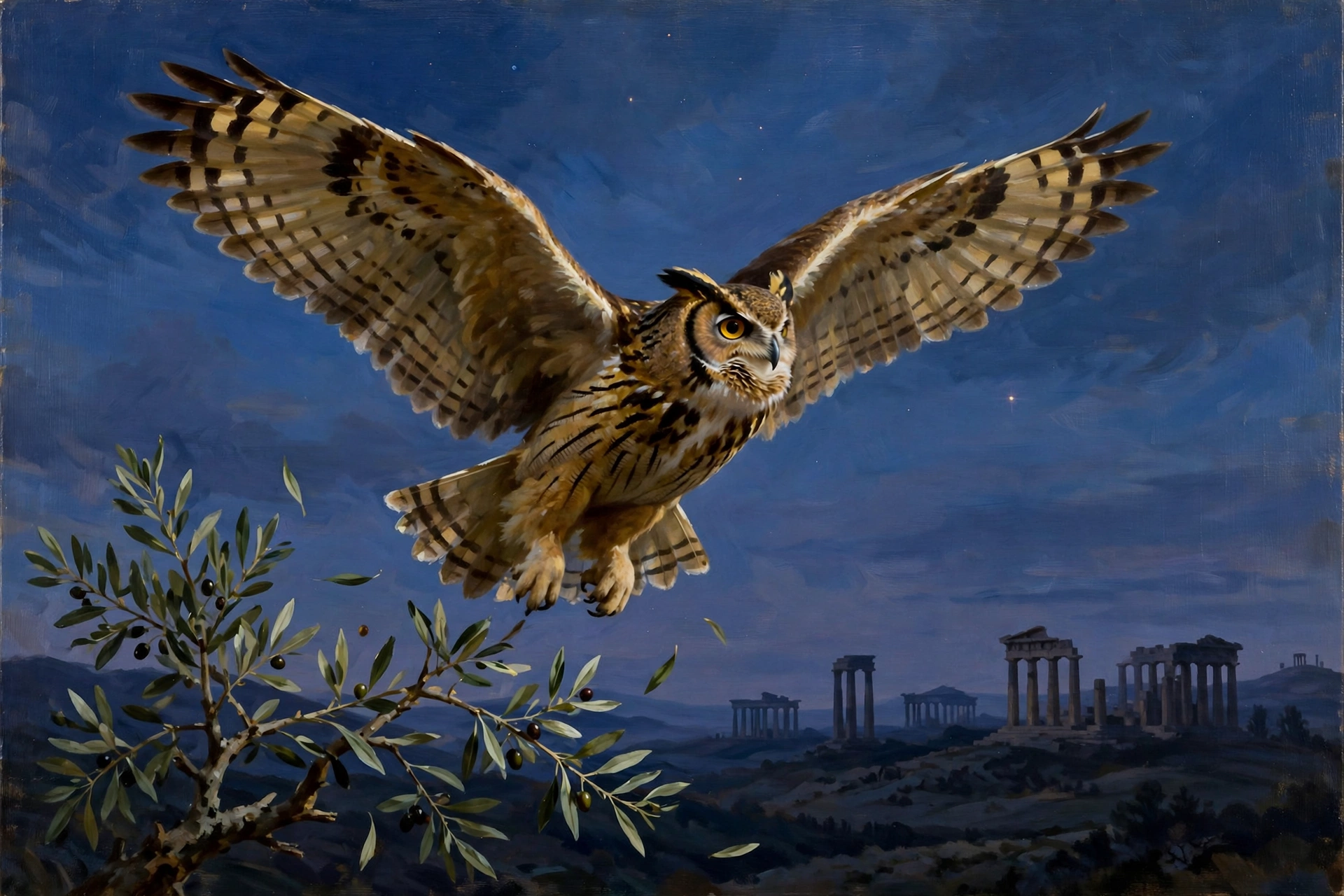
この絵について
描かれているのは、夕暮れの空へ飛び立つ大きなフクロウである。手前にはオリーブの枝、遠くには古代ギリシャ神殿の柱のシルエットが見える。
フクロウは知恵の一般的な像である。古代ギリシャ以来、知恵の女神アテナ(ローマではミネルヴァ)の鳥とされ、ヘーゲルの「ミネルヴァのフクロウは夕暮れに飛び立つ」という言葉でも広く知られている。夕暮れに飛び立つのは、一日が終わって初めて全体を見渡せる、という知恵の時間の性質にも重なる。入口で見た通り、知恵の語根 *weid- は「見る」ことであり、暗闇で目の利くこの鳥は、その像にも合っている。
※モチーフは、「知恵」について一般に共有されている像(ミネルヴァのフクロウ)を既定として選んだ。絵は後から差し替え可能とする。
知恵とは何か。最初に口を開いたのは、その基準を人間の外に置いた男だった。神のみが賢い。人間の知恵とは、自分が知らないことを、知っていると思い込まないことだ、と。
Socrates(ソクラテス)立てる ― 基準
そして私は賢者と呼ばれる。聞き手はいつも、私が他人に欠けていると見いだす知恵を私自身がも っていると想像するからだ。しかし真実は、アテナイの人々よ、神のみが賢いのであり、その答え によって神は、人間の知恵がほとんど、あるいはまったく価値がないことを示そうとしているのだ。 神はソクラテスのことを言っているのではなく、ただ私の名を例として用いているにすぎない。 いわば、「人々よ、最も賢い者とは、ソクラテスのように、自分の知恵が実は何の価値もないと知 っている者だ」と言うかのように。そこで私は神に従って世を歩き回り、賢いと見える者の知恵、 市民であれ外国人であれ、その知恵を探り、問いただす。 そしてその人が賢くないなら、神託の正しさを立証するために、彼が賢くないことを示す。 この仕事に私は完全に没頭し、公共の関心事にも自分の事にも割く暇がない。 神への奉仕のために、私は極貧のうちにある。
原文
And I am called wise, for my hearers always imagine that I myself possess the wisdom which I find wanting in others: but the truth is, O men of Athens, that God only is wise; and by his answer he intends to show that the wisdom of men is worth little or nothing; he is not speaking of Socrates, he is only using my name by way of illustration, as if he said, He, O men, is the wisest, who, like Socrates, knows that his wisdom is in truth worth nothing. And so I go about the world, obedient to the god, and search and make enquiry into the wisdom of any one, whether citizen or stranger, who appears to be wise; and if he is not wise, then in vindication of the oracle I show him that he is not wise; and my occupation quite absorbs me, and I have no time to give either to any public matter of interest or to any concern of my own, but I am in utter poverty by reason of my devotion to the god.
— Plato『Apology』(Benjamin Jowett 訳) / `plato_apology#L702`
アリストテレスは、その知恵に中身を与えた。知恵とは第一原因と原理の知識であり、最も神的な科学だ、と。
Aristotle(アリストテレス)立てる ― 最高の知識
技術と学問およびその他の近縁の能力とのあいだにどんな違いがあるかは……。 だが今の議論の要点は、知恵と呼ばれるものは第一の原因と事物の原理にかかわるとすべての人が 想定している、ということである。だから先に述べたように、経験ある人は、いかなる感覚をもつ だけの人よりも賢いと考えられ、技術者は経験ある人よりも、棟梁は職人よりも賢いと考えられ、 観想的な種類の知識は、制作的な種類の知識よりも知恵の性格が強いと考えられる。 ゆえに、知恵とは、ある原因と原理についての知識であることは明らかである。
原文
what the difference is between 25 art and science and the other kindred faculties; but the point of our present discussion is this, that all men suppose what is called Wisdom to deal with the first causes and the principles of things. This is why, as has been said before, the man of 30 experience is thought to be wiser than the possessors of any perception whatever, the artist wiser than the men of experi- ence, the master-worker than the mechanic, and the theoretical kinds of knowledge to be more of the nature of Wisdom than the productive. Clearly then Wisdom is knowledge about 982% certain causes and principles.
— Aristotle『Metaphysica (The Works of Aristotle, vol. 8)』 BOOK I(W. D. Ross 訳) / `aristotle_metaphysics#L989`
しかしアイスキュロスの老いた合唱隊は、知恵の来り方を語った。知恵は、望まぬ者の魂にも、苦しみを通して訪れる。学ぶことは、苦しむことだ、と。
Chorus of Argive elders(アイスキュロス『アガメムノン』の合唱隊)ずらす ― 苦しみ
夜の幻のうちに、滴る雨のように、数多の苦痛の記憶が魂の目の前に降りてくる。 涙と嘆きを通って、知恵は望まぬ魂の上に訪れる——思うに、空の上に力強く聖なる玉座を持つ神 性からの賜物なのだ。
原文
In visions of the night, like dropping rain, Descend the many memories of pain Before the spirit’s sight: through tears and dole Comes wisdom o’er the unwilling soul— A boon, I wot, of all Divinity, That holds its sacred throne in strength, above the sky!
— Aeschylus『The House of Atreus (Agamemnon, Libation Bearers, Furies)』 AGAMEMNON(E. D. A. Morshead 訳) / `aeschylus_house_of_atreus#L381`
老子は、議論そのものをひっくり返した。聖を捨て、智を棄てよ。知恵を尊ぶこと自体が、民を苦しめるのだ、と。
Laozi(老子)覆す ― 知恵を捨てよ
もし聖を捨て智を棄てることができれば、民にとって百倍もよいことになろう。 仁を捨て義を棄てることができれば、民はふたたび孝行で慈しみ深くなろう。 巧みな工夫を捨て(利を図ることを)棄てれば、盗賊はいなくなろう。
原文
If we could renounce our sageness and discard our wisdom, it would be better for the people a hundredfold. If we could renounce our benevolence and discard our righteousness, the people would again become filial and kindly. If we could renounce our artful contrivances and discard our (scheming for) gain, there would be no thieves nor robbers.
— Laozi『The Tao Teh King, or the Tao and its Characteristics』 Ch. 19(James Legge 訳) / `laozi_tao_te_ching#L340`
最後に、知恵を極めた伝道者が、その代償を告げた。知恵が多ければ、悲しみも多い、と。
the Preacher(伝道者/コヘレト)ずらす ― 知恵の代償(締め)
知恵が多ければ憤りも多い。知識を増す者は悲しみを増す。
原文
1:18 For in much wisdom is much grief: and he that increaseth knowledge increaseth sorrow.
— (various)『The King James Version of the Bible』 Ecclesiastes 1:18(King James Version (1611) 訳) / `bible_kjv#L55835`
知恵は、神のものか、最高の知識か、苦しみの贈り物か、捨てるべきものか、それとも悲しみの源か。五つの声は一致しなかった。ただ、知恵の語が「見ること」と「味わうこと」に根を持ち、一生の時間を要するものとして定義されてきたことだけは、入口の語の歴史が示している。
控えの一句 ON THE BENCH
場面には出なかったが、場面と並べて置く五件。引用はすべて idea-no-tane の精選から一字一句そのまま写したものである。
Aristotle(アリストテレス)
軸2「実践的判断」
しかし思慮は人間にかかわる事柄、すなわち熟慮の対象となる事柄にかかわる(実際、よく熟慮す ることこそ、この思慮をもつ人の最も固有のはたらきだとわれわれは言う)。 そして別様でありえないものについては誰も熟慮しないし、道徳的行為から生じる善であるような、 何か定まった目的をもつもの以外について熟慮する者もいない。 端的に、限定なく「よく思案する人」と呼ばれるべきなのは、計算によって、人間にとって実践的 な善のうち最善のものに到達する能力をもつ人である。
原文
But Practical Wisdom is employed upon human matters, and such as are objects of deliberation (for we say, that to deliberate well is most peculiarly the work of the man who possesses this Wisdom), and no man deliberates about things which cannot be otherwise than they are, nor about any save those that have some definite End and this End good resulting from Moral Action; and the man to whom we should give the name of Good in Counsel, simply and without modification, is he who in the way of calculation has a capacity for attaining that of practical goods which is the best for Man.
— Aristotle『The Nicomachean Ethics of Aristotle』 Chapter VIII(D. P. Chase 訳) / `aristotle_nicomachean_ethics#L5852`
Paul(パウロ)
軸6・軸8「世の知恵は愚か」
1:19 「わたしは知者の知恵を滅ぼし、賢い者の悟りを無にする」と書かれているからである。 1:20 知者はどこにいるのか。学者はどこにいるのか。 この世の論客はどこにいるのか。神は、この世の知恵を愚かなものにされたではないか。 1:21 神の知恵のゆえに、世は知恵によって神を知ることがなかったので、神は宣教の愚かさ によって、信じる者を救うことをよしとされた。 1:22 ユダヤ人はしるしを求め、ギリシア人は知恵を探す。 1:23 しかしわたしたちは十字架につけられたキリストを宣べ伝える。 それはユダヤ人にはつまずき、ギリシア人には愚かなものである。 1:24 だが、召された者には、ユダヤ人にもギリシア人にも、キリストは神の力、神の知恵で ある。1:25 神の愚かさは人より賢く、神の弱さは人より強いからである。 1:26 兄弟たち、あなたがたの召しを見なさい。 肉によれば、賢い者は多くなく、力ある者も多くなく、身分の高い者も多くない。 1:27 しかし神は、知者を恥じ入らせるために世の愚かなものを選び、強いものを恥じ入らせ るために世の弱いものを選ばれた。1:28 また神は、あるものを無にするために、世の卑しい もの、軽んじられているもの、さらには無いものを選ばれた。 1:29 それは、肉なる者が神の前で誇ることがないためである。
原文
1:19 For it is written, I will destroy the wisdom of the wise, and will bring to nothing the understanding of the prudent. 1:20 Where is the wise? where is the scribe? where is the disputer of this world? hath not God made foolish the wisdom of this world? 1:21 For after that in the wisdom of God the world by wisdom knew not God, it pleased God by the foolishness of preaching to save them that believe. 1:22 For the Jews require a sign, and the Greeks seek after wisdom: 1:23 But we preach Christ crucified, unto the Jews a stumblingblock, and unto the Greeks foolishness; 1:24 But unto them which are called, both Jews and Greeks, Christ the power of God, and the wisdom of God. 1:25 Because the foolishness of God is wiser than men; and the weakness of God is stronger than men. 1:26 For ye see your calling, brethren, how that not many wise men after the flesh, not many mighty, not many noble, are called: 1:27 But God hath chosen the foolish things of the world to confound the wise; and God hath chosen the weak things of the world to confound the things which are mighty; 1:28 And base things of the world, and things which are despised, hath God chosen, yea, and things which are not, to bring to nought things that are: 1:29 That no flesh should glory in his presence.
— (various)『The King James Version of the Bible』 1 Corinthians 1:19(King James Version (1611) 訳) / `bible_kjv#L91662`
Buddha(ブッダ)
軸3「自分の愚かさを知る」
自分の愚かさを知る愚者は、少なくともその点で賢い。 だが自分を賢いと思う愚者こそ、愚者と呼ばれる。
原文
63. The fool who knows his foolishness, is wise at least so far. But a fool who thinks himself wise, he is called a fool indeed.
— (various)『Dhammapada, a Collection of Verses』 CH V v.63(F. Max Müller 訳) / `dhammapada#L334`
John Stuart Mill(ミル)
軸3「意見との接触」
人間が一つの主題の全体を知ることにいくらかでも近づけるのは、あらゆる種類の意見をもつ人々 がそれについて言いうることを聞き、あらゆる性格の心がそれを見うる全ての仕方を研究すること によってのみだ、と彼は感じたからである。 賢い人で、この方法以外で知恵を得た人はいない。 人間の知性の本性からして、他のやり方で賢くなることもできない。
原文
Because he has felt, that the only way in which a human being can make some approach to knowing the whole of a subject, is by hearing what can be said about it by persons of every variety of opinion, and studying all modes in which it can be looked at by every character of mind. No wise man ever acquired his wisdom in any mode but this; nor is it in the nature of human intellect to become wise in any other manner.
— John Stuart Mill『On Liberty』 CHAPTER II / `mill_on_liberty#L1163`
Michel de Montaigne(モンテーニュ)
軸3「自分の知恵によってのみ」
私はこの、他人に頼る物乞いのような理解は好まない。 他人の学識によって学者になることはできても、人は自分自身の知恵によってしか賢くなれないか らである。
原文
I do not like this relative and mendicant understanding; for though we could become learned by other men’s learning, a man can never be wise but by his own wisdom:
— Michel de Montaigne『Essays of Michel de Montaigne — Complete』 CHAPTER XXIV(Charles Cotton 訳) / `montaigne_essays_complete#L7111`