WOMAN
idea-no-tane の全引用から選んだ超精選による、概念ごとの読み物。
入口 THE WORD
この概念が扱うのは、女性そのものについての論——女性の本性・地位・教育・法的身分——である。家族や愛の概念とは区別し、女であること自体がどう語られてきたかを追う。場面に入る前に、まずこの語そのものの旅をたどる。語源は「真の意味」ではない。だが、語がどこから来て、どう意味を変えてきたかという経緯は、後ろに並ぶ偉人たちの議論を読むための地図になる。
語源 ― wifmann(女・人)から
英語の woman は、古英語の wifmann に由来する。これは wif(女)と mann(人)の複合語で、直訳すれば「女である人」である。当時の mann は性別を問わない「人間」の語であり、男性を指す語は別に wer があった(wer は現代では werewolf「人狼」の中にだけ残る)。『センチュリー辞典』は、女の人を指すためには wif を「人」の語に結びつける必要があると考えられた、と註記している(Etymonline が引く)。ノルマン征服の後、man は次第に「男性」の意味を担うようになり、wif のほうは「妻」の意味に狭まった(Etymonline、Wikipedia「Woman」)。つまり英語で女を言う語は、「人」という一般の語に女の印を付けて作られた。この成り立ち自体が、このページの場面で争われる問い——女は「人」の一方としてどう位置づけられるのか——の古さを映している。
female ― male とは無関係の語
よく似た話が female にもある。female はラテン語の femina(女、その原義は「乳を飲ませる者」とされる)から来た語で、male とは語源上まったく無関係である。ところが英語では、音と形の近さから綴りが male に引き寄せられて書き換えられた(Etymonline、Merriam-Webster)。語の形の上でも、女は男に引き寄せられてきたのである。なお femina はフランス語の femme の祖先でもある。
ギリシャ語・ラテン語
ギリシャ語で女は gyne(ギュネー)と言い、『国家』でソクラテスが女の守護者を論じるときもこの語が使われる。ラテン語には femina のほかに mulier があり、ヨーロッパの諸言語はこの二系統から女の語を受け継いだ。
日本語との対応 ― 女・女性
日本語の「女(おんな)」は和語であり、英語の woman のように「人」に印を付けて作られた複合語ではない。女を指す語はほかに「女性(じょせい)」「婦人(ふじん)」「女子(じょし)」などがあり、時代と場面で使い分けられてきた。このページの場面に並ぶ議論の多くは、女の本性と地位をめぐる西洋の議論だが、その問いの形——女は男と対等の「人」か、それとも別の本性を持つ存在か——は、語の違いを越えて届く。
語の旅をまとめると、女を言う語は「人」の語の片側に作られ、その綴りまでも男の語に引き寄せられてきた。このあとの場面で争われるのは、まさにその位置づけである。従属は定めなのか、本性は劣るのか、教育と法は何を変えるのか。
場面 THE SCENE
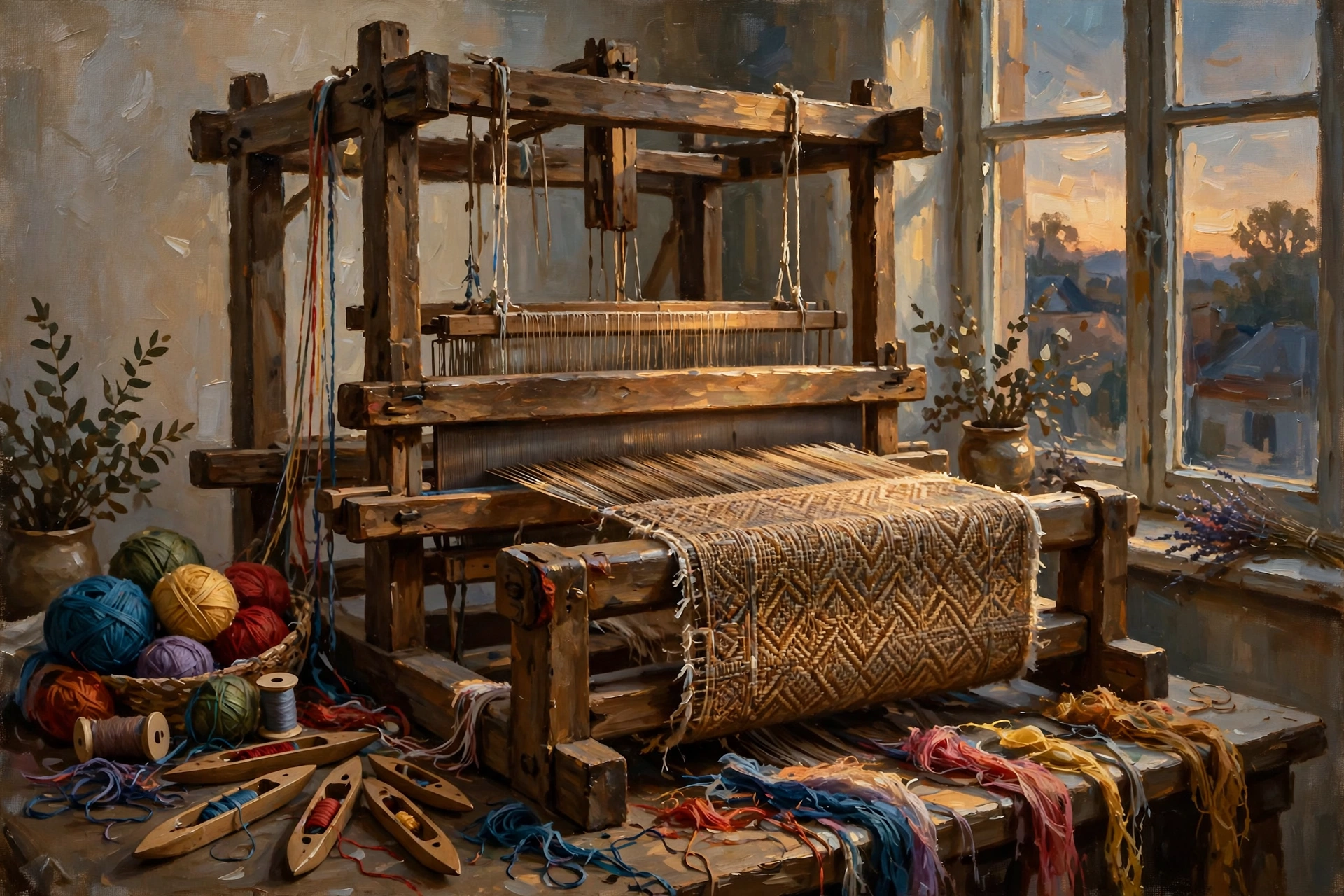
この絵について
描かれているのは、窓辺に置かれた大きな木製の織機である。布は織りかけで、色糸の玉と杼(シャトル)が脇に置かれている。織り手は席を外したところで、人物は描かれていない。
機織りは、長いあいだ女の仕事の代表だった。ペネロペイアは求婚者たちを退けるために機を織っては解いた話で知られ、機織りは女に割り当てられた持ち場であると同時に、女の機知の象徴でもあった。この場面で五人が争うのは、その持ち場が本性による定めなのか、それとも人が作った決まりなのかである。
※モチーフは、「女性」について一般に共有されている像(機織り)を既定として選んだ。絵は差し替え可能とする。
女とは何か。——従属を神の言葉として置く者から、完全な平等を要求する者まで、五人が一つの問いのまわりに集まった。最初に置かれたのは、最も古い言葉だった。
God(神(創世記の言葉))立てる ― 従属の定め
主は女に言われた。わたしはあなたの苦しみと懐妊を大いに増す。 あなたは苦しみのうちに子を産む。そしてあなたは夫を慕い、彼はあなたを治める。
原文
Unto the woman he said, I will greatly multiply thy sorrow and thy conception; in sorrow thou shalt bring forth children; and thy desire shall be to thy husband, and he shall rule over thee.
— (various)『The King James Version of the Bible』 Genesis 3:16(King James Version (1611) 訳) / `bible_kjv#L325`
ソクラテスは、統治の能力に性ゆえの持ち分はないと言った。自然の賜物は両性に同じように散らばっている、と。ただし彼の言葉には、あらゆる仕事で女は男に劣るという留保がそのまま付いている。
Socrates(ソクラテス)覆す ― 素質は両性に
そしてもしそうなら、友よ、とわたしは言った。 国家における管理の能力のうちで、女が女であるがゆえに持つもの、あるいは男がその性のゆえに 持つ特別なものは何もなく、自然の賜物は両者に同じように散らばっている。 男のあらゆる仕事は女の仕事でもあるが、そのすべてにおいて女は男に劣るのである。
原文
And if so, my friend, I said, there is no special faculty of administration in a state which a woman has because she is a woman, or which a man has by virtue of his sex, but the gifts of nature are alike diffused in both; all the pursuits of men are the pursuits of women also, but in all of them a woman is inferior to a man.
— Plato『The Republic』 BOOK V(Benjamin Jowett 訳) / `plato_republic#L15601`
アリストテレスはソクラテスを名指しで退けた。徳は男女で同じではない、と。
Aristotle(アリストテレス)覆す ― 命じる勇気、従う勇気
支配する者は倫理的な徳において完全でなければならない。 その仕事はまったく棟梁のそれであり、理性こそ棟梁だからである。 他方、他の者たちは自分の持ち場に足りるだけのその部分を必要とするにすぎない。 このことから明らかなのは、倫理的な徳はわれわれが語ったすべての者に共通であるけれども、男 の節制と女の節制は同じでなく、勇気も正義も同じではない、ということである――ソクラテスは そう考えなかったが。男の勇気は命じることにあり、女の勇気は従うことにあるからであり、他の 点でも同様である。このことは、さまざまな徳を個別に吟味する人には明らかになるであろう。 一般的な言葉を用いる人々は、徳とは心の良き状態であるとか、正しいことを行うことであるとか、 その種のことを言うときに、自分自身を欺いているのである。
原文
he who is to govern ought to be perfect in moral virtue, for his business is entirely that of an architect, and reason is the architect; while others want only that portion of it which may be sufficient for their station; from whence it is evident, that although moral virtue is common to all those we have spoken of, yet the temperance of a man and a woman are not the same, nor their courage, nor their justice, though Socrates thought otherwise; for the courage of the man consists in commanding, the woman's in obeying; and the same is true in other particulars: and this will be evident to those who will examine different virtues separately; for those who use general terms deceive themselves when they say, that virtue consists in a good disposition of mind, or doing what is right, or something of this sort.
— Aristotle『Politics: A Treatise on Government』 CHAPTER XIII(William Ellis 訳) / `aristotle_politics#L1304`
二千年を跳んで、ウルストンクラフトは問いの向きを変えた。求めるのは男への力ではなく、自分自身への力だ、と。
Mary Wollstonecraft(メアリ・ウルストンクラフト)ずらす ― 自分自身への力
これこそまさにわたしの目指す点である。 わたしは女が男に対して力を持つことを望まない。 女自身に対して力を持つことを望むのである。
原文
This is the very point I aim at. I do not wish them to have power over men; but over themselves.
— Mary Wollstonecraft『A Vindication of the Rights of Woman』 CHAPTER 4 / `wollstonecraft_vindication_of_woman#L2961`
最後にミルが、原理そのものの差し替えを要求した。
John Stuart Mill(ジョン・スチュアート・ミル)締め ― 完全な平等
二つの性のあいだの現存の社会関係を規制している原理――一方の性の他方への法的な従属――は、 それ自体として誤っており、今では人間の進歩の主要な妨げの一つである。 そしてそれは、一方の側にいかなる権力や特権も、他方の側にいかなる無能力も認めない、完全な 平等の原理によって置き換えられるべきである。
原文
That the principle which regulates the existing social relations between the two sexes--the legal subordination of one sex to the other--is wrong in itself, and now one of the chief hindrances to human improvement; and that it ought to be replaced by a principle of perfect equality, admitting no power or privilege on the one side, nor disability on the other.
— John Stuart Mill『The Subjection of Women』 CHAPTER I / `mill_subjection_of_women#L75`
議論は決着しなかった。ただ五人は、女の位置が定めと本性と教育と法のあいだで揺れ続けることを、同じ卓の上に置いて帰った。
控えの一句 ON THE BENCH
場面には出なかったが、場面と並べて置く5件。引用はすべて idea-no-tane の精選から一字一句そのまま写したものである。
Paul the Apostle(パウロ)
軸1「従属は定めか」― 聖典内部の対句。キリストにあって男も女もない
ユダヤ人もギリシア人もなく、奴隷も自由人もなく、男も女もない。 あなたがたは皆、キリスト・イエスにあって一つだからである。
原文
There is neither Jew nor Greek, there is neither bond nor free, there is neither male nor female: for ye are all one in Christ Jesus.
— (various)『The King James Version of the Bible』 Galatians 3:28(King James Version (1611) 訳) / `bible_kjv#L93802`
Thomas Aquinas(トマス・アクィナス)
軸3「出来損ないか」― 個別の本性では欠陥、人間本性としては自然の意図の内
個別の本性に関しては、女は欠陥あるもの、出来損ないである。 男性の種子のうちにある能動的な力は、男性の性における完全な似姿の産出へと向かうのに対し、 女の産出は能動的な力の欠陥から、あるいは何らかの質料の不適合から、あるいは外からの影響、 たとえば哲学者(アリストテレス)が指摘するように(『動物発生論』第四巻2)湿った南風の影 響からさえ生じるからである。他方、人間本性一般に関しては、女は出来損ないではなく、生殖の 働きへと向けられたものとして自然の意図のうちに含まれている。 ところで自然の一般的な意図は、自然の普遍的な作者である神にかかっている。 それゆえ神は、自然を産出するにあたって、男性だけでなく女性をも形づくったのである。
原文
As regards the individual nature, woman is defective and misbegotten, for the active force in the male seed tends to the production of a perfect likeness in the masculine sex; while the production of woman comes from defect in the active force or from some material indisposition, or even from some external influence; such as that of a south wind, which is moist, as the Philosopher observes (De Gener. Animal. iv, 2). On the other hand, as regards human nature in general, woman is not misbegotten, but is included in nature's intention as directed to the work of generation. Now the general intention of nature depends on God, Who is the universal Author of nature. Therefore, in producing nature, God formed not only the male but also the female.
— Thomas Aquinas『Summa Theologica, Part I (Prima Pars)』 I, Q. 92, Art. 1(Fathers of the English Dominican Province 訳) / `aquinas_summa_prima_pars#L43310`
William Blackstone(ウィリアム・ブラックストン)
軸4「法的身分」― 夫と妻は法において一人格(カヴァチャー)
婚姻によって、夫と妻は法において一人の人となる。 すなわち、女の存在そのもの、つまり法的な存在は婚姻のあいだ停止される、あるいは少なくとも 夫のそれに組み込まれ統合される。彼女は夫の翼と保護と「庇護」の下であらゆることを行い、そ れゆえわれわれの法律フランス語で「フェム・カバート(庇護下の妻)」と呼ばれる。 彼女は「カバート・バロン」、すなわち夫、彼女の「バロン」つまり主人の保護と影響の下にある と言われ、婚姻中の彼女の状態は「カバーチャー(妻の庇護状態)」と呼ばれる。
原文
BY marriage, the husband and wife are one person in law[l]: that is, the very being or legal existence of the woman is suspended during the marriage, or at least is incorporated and consolidated into that of the husband: under whose wing, protection, and _cover_, she performs every thing; and is therefore called in our law-french a _feme-covert_; is said to be _covert-baron_, or under the protection and influence of her husband, her _baron_, or lord; and her condition during her marriage is called her _coverture_.
— William Blackstone『Commentaries on the Laws of England, Book the First』 OF HUSBAND AND WIFE / `blackstone_commentaries_v1#L16259`
Jean-Jacques Rousseau(ジャン=ジャック・ルソー)
軸5「教育」― 女の教育は男との関係で計画せよ(ウルストンクラフトの標的)
それゆえ女の教育は男との関係において立てられなければならない。 男の目に好ましくあること、男の尊敬と愛を勝ち得ること、子どもの頃に男を育て、成人した男を 世話し、助言し慰め、男の生活を快く幸福なものにすること、これらがいつの時代にも女の務めで あり、これこそ女が若いうちに教えられるべきことである。
原文
A woman's education must therefore be planned in relation to man. To be pleasing in his sight, to win his respect and love, to train him in childhood, to tend him in manhood, to counsel and console, to make his life pleasant and happy, these are the duties of woman for all time, and this is what she should be taught while she is young.
— Jean-Jacques Rousseau『Emile』 BOOK V([要確認] 訳) / `rousseau_emile#L17316`
Friedrich Nietzsche(フリードリヒ・ニーチェ)
軸7「解放への反論」― 権利と請求が増えるほど女の影響は衰える
女がこうして新しい権利をわがものとし、「主人」になろうと志し、女の「進歩」を旗や幟に書き 記すあいだに、まさに正反対のことが恐ろしいほど明らかに実現している。 すなわち、「女は退歩する」。フランス革命以来、ヨーロッパにおける女の影響力は、女がその権 利と要求を増やしたのに比例して「低下した」。 そして「女性の解放」は、それが(男の浅はかな頭の持ち主によってだけでなく)女自身によって 望まれ要求される限りで、最も女らしい本能がますます弱まり鈍っていくことの注目すべき徴候で あることがわかる。この運動のうちには「愚かさ」が、ほとんど男性的な愚かさがあり、よく育て られた女――それはつねに分別のある女である――なら心から恥じ入るかもしれない。 自分が最も確実に勝利を収めうる地盤についての直観を失うこと。 自分にふさわしい武器を用いる鍛錬を怠ること。 かつては自制し、洗練された技巧的な謙虚さのうちに身を保っていたところで、男の前で、ひょっ とすると「本に至るまで」羽目を外すこと。 女のうちにある「覆われた」、根本的に異なる理想、何か永遠に、必然的に女性的なものへの男の 信仰を、その徳ある大胆さによって無力にすること。 女は何か繊細な、奇妙に野性的な、そしてしばしば快い家畜のように保たれ、世話され、守られ、 甘やかされなければならないという考えを、強調して饒舌に男に思いとどまらせること。 これまでの社会秩序における女の地位がもたらし、今なおもたらしている、隷属と束縛の性質を持 つあらゆるものを、不器用に憤慨して寄せ集めること(あたかも奴隷制が反論であって、むしろあ らゆる高い文化の、文化のあらゆる高揚の条件ではないかのように)――これらすべては、女らし い本能の解体、脱女性化でなければ、何を示しているのか。
原文
While she thus appropriates new rights, aspires to be "master," and inscribes "progress" of woman on her flags and banners, the very opposite realises itself with terrible obviousness: WOMAN RETROGRADES. Since the French Revolution the influence of woman in Europe has DECLINED in proportion as she has increased her rights and claims; and the "emancipation of woman," insofar as it is desired and demanded by women themselves (and not only by masculine shallow-pates), thus proves to be a remarkable symptom of the increased weakening and deadening of the most womanly instincts. There is STUPIDITY in this movement, an almost masculine stupidity, of which a well-reared woman--who is always a sensible woman--might be heartily ashamed. To lose the intuition as to the ground upon which she can most surely achieve victory; to neglect exercise in the use of her proper weapons; to let-herself-go before man, perhaps even "to the book," where formerly she kept herself in control and in refined, artful humility; to neutralize with her virtuous audacity man's faith in a VEILED, fundamentally different ideal in woman, something eternally, necessarily feminine; to emphatically and loquaciously dissuade man from the idea that woman must be preserved, cared for, protected, and indulged, like some delicate, strangely wild, and often pleasant domestic animal; the clumsy and indignant collection of everything of the nature of servitude and bondage which the position of woman in the hitherto existing order of society has entailed and still entails (as though slavery were a counter-argument, and not rather a condition of every higher culture, of every elevation of culture):--what does all this betoken, if not a disintegration of womanly instincts, a defeminising?
— Friedrich Nietzsche『Beyond Good and Evil』 CHAPTER VII(Helen Zimmern 訳) / `nietzsche_beyond_good_and_evil#L4275`